Lying Incline Hip Raise
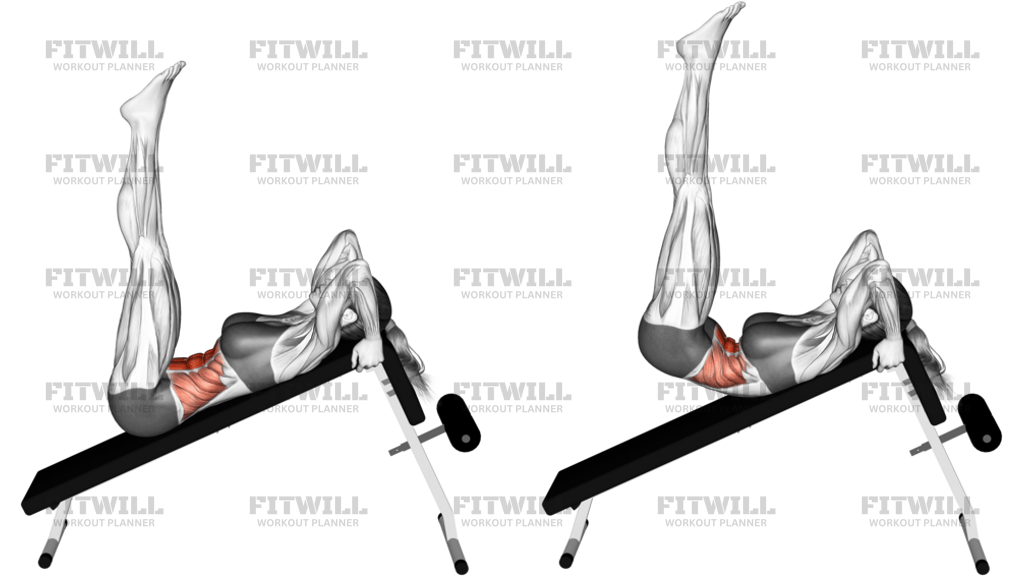
Lying Incline Hip Raise is a bodyweight core exercise performed on an incline bench with your head higher than your hips. The bench angle lengthens the body lever and gives you room to lift the pelvis cleanly, so the movement feels more demanding than a flat-floor hip raise. It is useful when you want to train controlled trunk flexion and posterior pelvic tilt without adding load to the spine.
The exercise emphasizes the lower abdominals and deep core, with the hip flexors helping bring the legs and pelvis through the range. Because the torso is supported, the challenge comes from keeping the ribs down, preventing the lower back from arching, and lifting the hips instead of simply swinging the legs. That makes Lying Incline Hip Raise a good accessory drill for ab-focused sessions, warm-ups, or finisher work after heavier compound lifts.
Set your upper back and shoulders on the bench, grip the sides or rear handles beside your head, and keep your pelvis near the lower edge of the pad. Straighten the legs above the hips and brace before the first rep. The starting position matters: if the lower back is already arched, the rep turns into momentum instead of a controlled hip raise.
From there, exhale and curl the pelvis upward, bringing the tailbone slightly off the bench while the legs stay stacked over the hips. The top position should feel like the abs are shortening hard, not like the lower back is cranking. Lower slowly until the hips settle back onto the pad, then reset the brace before the next rep. Keep the neck relaxed and avoid kicking the legs to start the rep.
Lying Incline Hip Raise works best with deliberate reps and a small to moderate range of motion. It is especially useful for people who want a bodyweight core exercise that can be progressed with tempo, pauses, or longer sets. If the hip flexors dominate or the lower back takes over, shorten the range and focus on the pelvic tuck at the top rather than chasing height. A spotter is usually unnecessary, but a stable bench and a secure grip matter so the body does not slide.
[ Workout Log & Planner ]
Put your next workout in Fitwill
Keep your plan and training log ready when you are.


Instructions
- Lie face up on an incline bench with your head and shoulders supported and your hands gripping the bench beside your head.
- Set your pelvis near the lower edge of the pad and keep your legs together above your hips.
- Straighten your knees, keep your feet relaxed, and press your lower back lightly into the bench by drawing your ribs down.
- Exhale, tighten your abs, and curl your pelvis upward so the tailbone and hips lift off the pad.
- Keep your legs stacked over your hips while the pelvis rises; do not swing your feet or kick to start the rep.
- Pause briefly at the top when your abs are fully shortened and your lower back stays quiet.
- Lower your hips slowly until your back touches the bench again, keeping tension instead of dropping onto the pad.
- Reset your brace before the next rep and finish the set by lowering your legs and releasing your grip only once you are stable.
Tips & Tricks
- Use your hands on the bench for balance, not to yank your torso through the rep.
- If the bench angle feels too steep, shorten the range and keep the lift small and crisp.
- Start each rep with a pelvic tuck; if the legs move first, the abs lose the job.
- Keep your shoulders quiet on the pad so the motion stays centered in the trunk and hips.
- A short pause at the top makes the exercise stricter than adding more swing or speed.
- Bend the knees slightly if tight hamstrings pull your pelvis out of position.
- Lower for two to three seconds so the return phase stays on the abs instead of dropping under gravity.
- If your lower back arches early, think ribs down and belt buckle up before every rep.
Frequently Asked Questions
What muscles does Lying Incline Hip Raise work?
It mainly trains the lower abdominals and deep core, with the hip flexors helping move the legs and pelvis through the range.
Is Lying Incline Hip Raise suitable for beginners?
Yes, as long as the range stays small and the bench grip is stable. Beginners usually do best with slow reps and no swinging.
Should my legs stay straight during Lying Incline Hip Raise?
Straight legs match the version shown here, but a slight knee bend is fine if hamstrings or hip flexors keep pulling you out of position.
Where should I grip the bench on Lying Incline Hip Raise?
Hold the side rails or the bench edges beside your head so you can stay anchored without shrugging or pulling yourself through the rep.
Why do I feel this mostly in my hip flexors?
That usually means the pelvis is not curling first. Bring your ribs down, tuck the pelvis, and lift the hips before the legs try to swing.
How high should my hips lift on this exercise?
Only high enough for a clear pelvic curl and a short lift off the pad. Chasing a bigger range usually turns the rep into momentum.
What is the most common mistake on Lying Incline Hip Raise?
Letting the legs kick the movement instead of curling the pelvis. If the feet swing, the abs stop controlling the rep.
How can I make Lying Incline Hip Raise harder without adding weight?
Slow the lowering phase, add a pause at the top, or keep the bench angle and reps strict for longer sets.