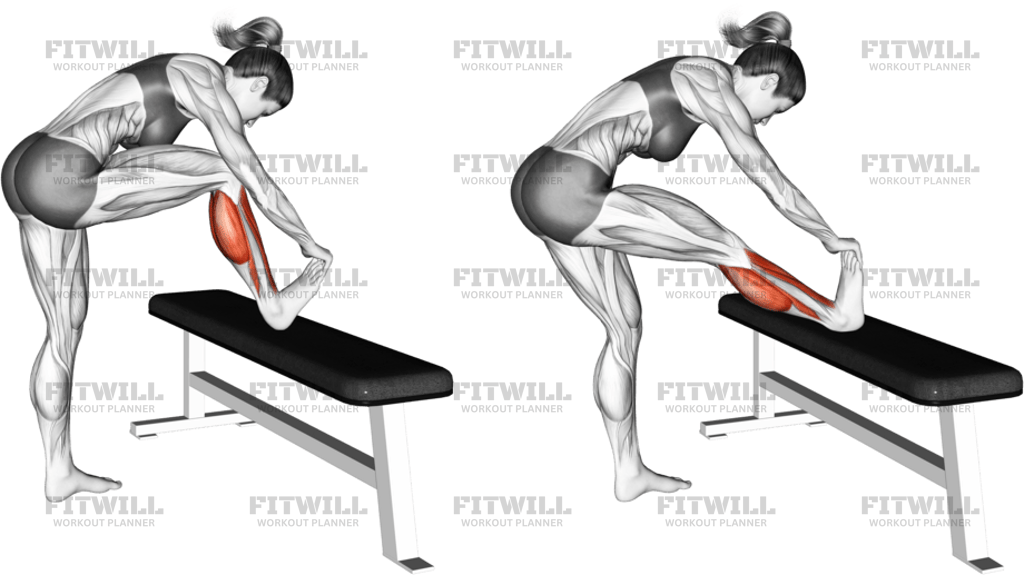
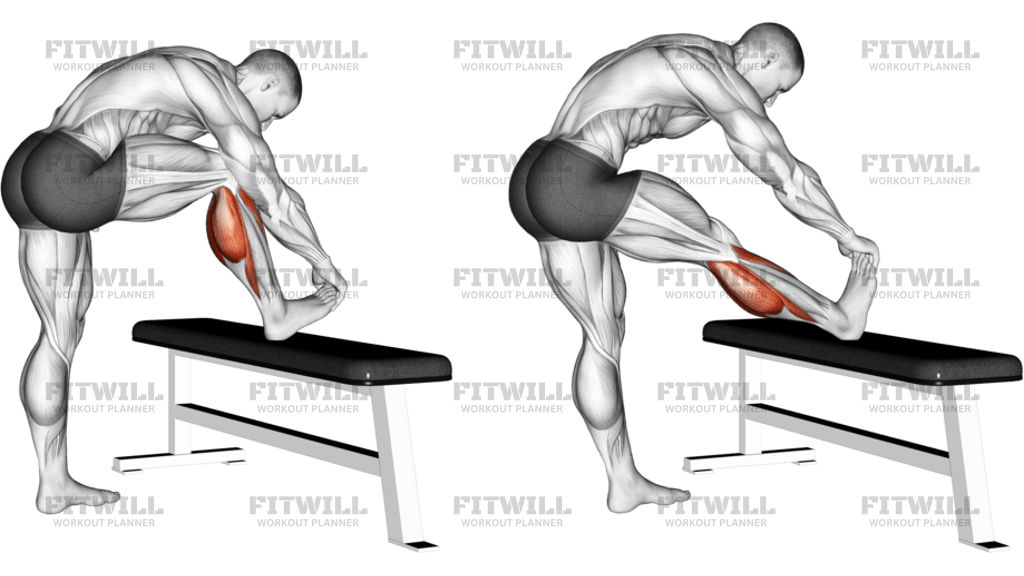
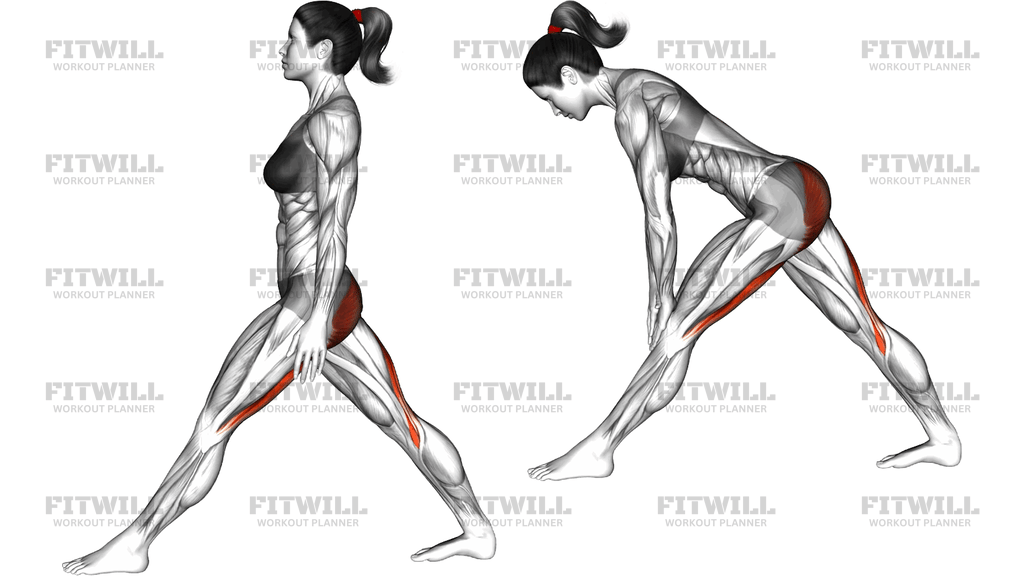
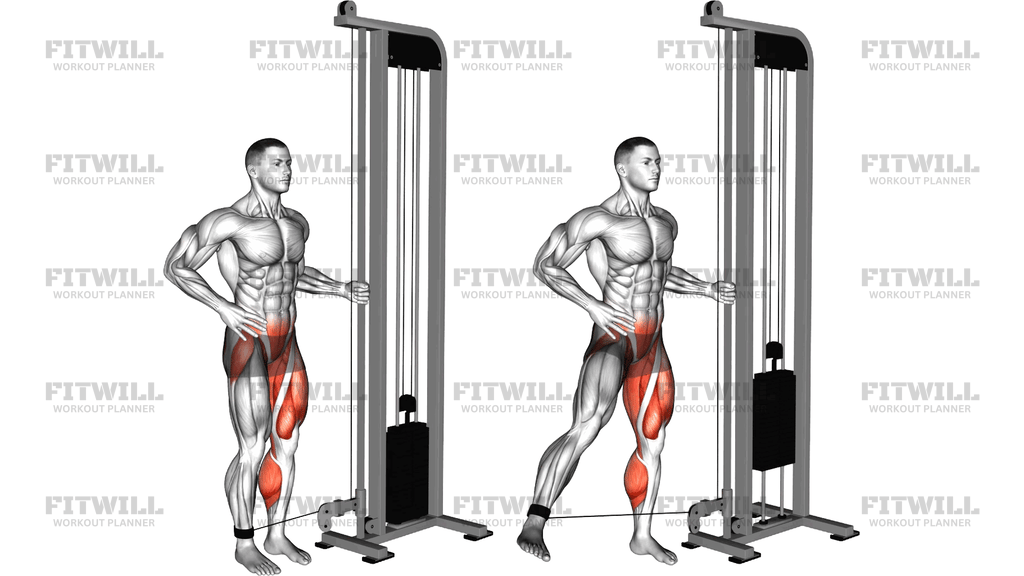
Lying Calf Stretch
Lying Calf Stretch is a floor-based calf mobility drill performed on an exercise mat with the body fully supported on the back. It is useful after running, jumping, calf raises, or long periods of standing when the lower legs feel stiff and the ankles do not move freely. Because the body is lying down, you can focus on the calf and ankle without having to balance or brace against a machine.
The position also makes it easier to feel side-to-side differences. Keep the working leg long and the pelvis heavy on the mat so the stretch comes from the ankle and calf instead of from twisting through the hips or lower back. With the knee straight, the movement emphasizes the larger upper calf; a softer knee shifts some of the tension lower toward the soleus and Achilles area.
The key action is to reach through the heel while drawing the toes back toward the shin. That combination lengthens the back of the lower leg and creates the classic calf stretch sensation. The stretch should build gradually, stay smooth, and remain well below the point where the foot cramps or the knee feels pulled.
Lying Calf Stretch fits well in a warm-up after a few ankle circles, in a cooldown after lower-body training, or between other mobility drills when the calves feel tight from repeated impact work. It is also easy to scale: keep the leg higher for a stronger stretch, lower it slightly if the hamstrings take over, or bend the knee a little if you want to bias the deeper calf. Clean setup matters more than force, because a quiet pelvis and a relaxed breath make it easier to tell whether the calf is actually lengthening.
Use the stretch as a controlled reset rather than a forced reach. Hold long enough for the calf to soften, then come out smoothly and switch sides or compare both legs. If the foot turns outward, the arch cramps, or the lower back starts to arch, the setup has drifted and the stretch has become less specific to the calf.
[ Workout Log & Planner ]
Put your next workout in Fitwill
Keep your plan and training log ready when you are.


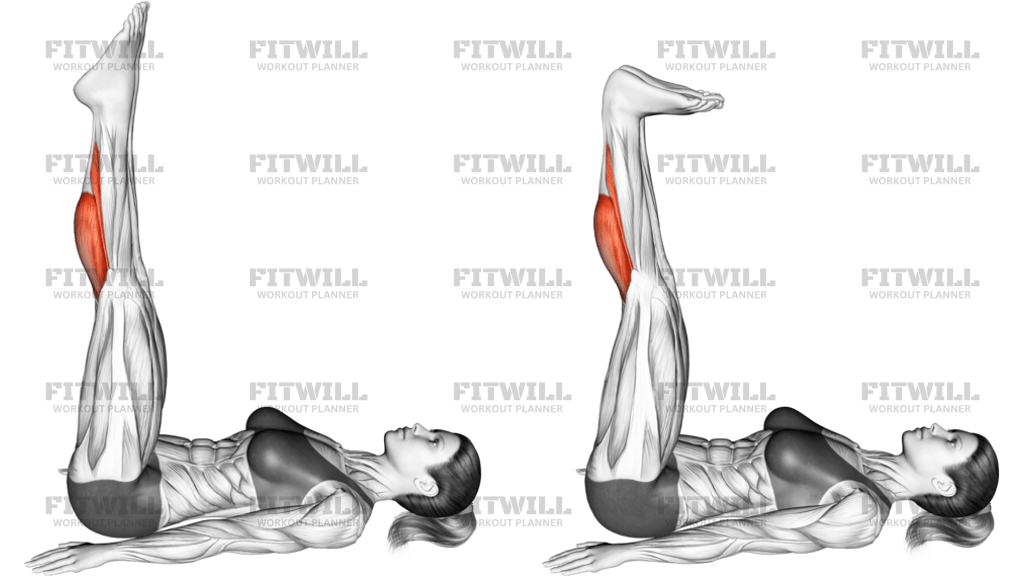
Instructions
- Lie on your back on an exercise mat and raise one leg toward the ceiling, keeping the other leg long or bent on the floor for support.
- Square your hips and keep the raised knee straight so the leg tracks above the hip instead of drifting outward.
- Reach through the heel as if you are lengthening the back of the leg, then pull the toes back toward the shin.
- Stop when you feel a clear stretch through the calf, not a sharp pull in the foot, knee, or hamstring.
- Keep the ankle active and avoid letting the foot roll in or out as you hold the position.
- Breathe slowly and keep the shoulders, jaw, and lower back relaxed against the mat.
- Hold the stretch for a steady count, then ease off without bouncing or jerking the leg.
- Lower the leg with control and repeat on the other side or keep both legs matched if you are stretching both calves together.
Tips & Tricks
- A straight knee biases the gastrocnemius; a small bend shifts more of the stretch toward the soleus.
- If the stretch jumps into the hamstring first, lower the leg slightly and keep the pelvis heavier on the mat.
- Keep the heel reaching upward while the toes draw back so the calf stretch stays specific to the ankle.
- Do not let the foot turn outward, or the stretch will drift away from the calf and into the hip.
- If your shoulders tense up while you hold the leg, use a towel or strap around the forefoot instead of gripping harder.
- A mild stretch should settle after the first few seconds; if it keeps intensifying, ease the leg back a little.
- Use the same leg height and ankle angle on both sides so tightness differences are easy to compare.
- This stretch works well after running or calf training when the tissue is warm and more responsive.
Frequently Asked Questions
What muscles does Lying Calf Stretch target?
It mainly targets the calf muscles, especially the gastrocnemius with a straight knee. A slight knee bend shifts some of the emphasis lower toward the soleus.
Should my knee stay straight during Lying Calf Stretch?
Yes, a straight knee gives you the classic calf stretch. If you soften the knee a little, the stretch becomes a bit lower and can feel easier on the foot.
Do I need a strap or towel for this stretch?
Not always, but a strap or towel can help if you cannot hold the leg comfortably without shrugging or losing the position. It is especially useful if your hamstrings are tight too.
Why do I feel Lying Calf Stretch in my hamstrings?
The leg is probably too high or the pelvis is curling off the mat. Lower the leg a little and keep your hips heavy so the stretch stays in the calf.
Can I do both legs at once?
Yes, if both legs can stay relaxed and aligned. If one side is tighter or your low back starts to arch, work one leg at a time for a cleaner stretch.
How long should I hold Lying Calf Stretch?
A steady 20-40 second hold per side is usually enough for mobility work. Repeat it for a few rounds after training or during a dedicated cooldown.
Is Lying Calf Stretch good after running?
Yes, it is a good post-run choice because it can help the calves settle after repeated impact and ankle loading. Keep the stretch gentle if the lower leg feels crampy.
What should I do if my foot cramps during the stretch?
Back off a few degrees, relax the toes, and reduce how hard you are pulling the ankle back. Cramps usually mean the position is too aggressive for the current level of fatigue.