Lying Leg Raise
Lying Leg Raise is a floor-based core exercise that builds control through the lower abs, hip flexors, and deep stabilizers while keeping the torso pinned to the ground. It is most effective when the pelvis stays quiet and the legs move because the abs are working, not because the lower back is arching or the hips are swinging. For that reason, the setup matters more here than on many other bodyweight drills.
This movement trains anti-extension control: your body has to resist the urge to let the ribs flare and the low back lift as the legs lower. When the rep is done well, the abs have to shorten to lift the legs and then keep tension as the legs lower back down. The secondary work from the hip flexors is normal, but they should not take over by turning the exercise into a fast leg swing.
Start by lying flat on your back with the shoulders relaxed, arms beside you or lightly pressing into the floor for balance. Legs should begin long and together, then move in a smooth arc rather than dropping straight down. The lower you can lower them without losing your low-back position, the more useful the rep. If your back arches or your thighs start to shake wildly, the range is too deep for the current set.
Lying leg raise is useful in core-focused sessions, warmups before lifting, or accessory work when you want more trunk control without loading the spine. It pairs well with dead bugs, reverse crunches, hollow holds, and plank variations because all of them reward the same rib and pelvis position. The exercise is simple, but the quality bar is high: if the torso moves around, the target muscles are no longer doing the job you want.
Use slower lowering, smaller range, or bent knees when needed to keep the pelvis tucked and the low back heavy on the floor. That keeps the exercise honest and makes the reps repeatable instead of turning them into momentum-based leg swings.
[ Workout Log & Planner ]
Put your next workout in Fitwill
Keep your plan and training log ready when you are.


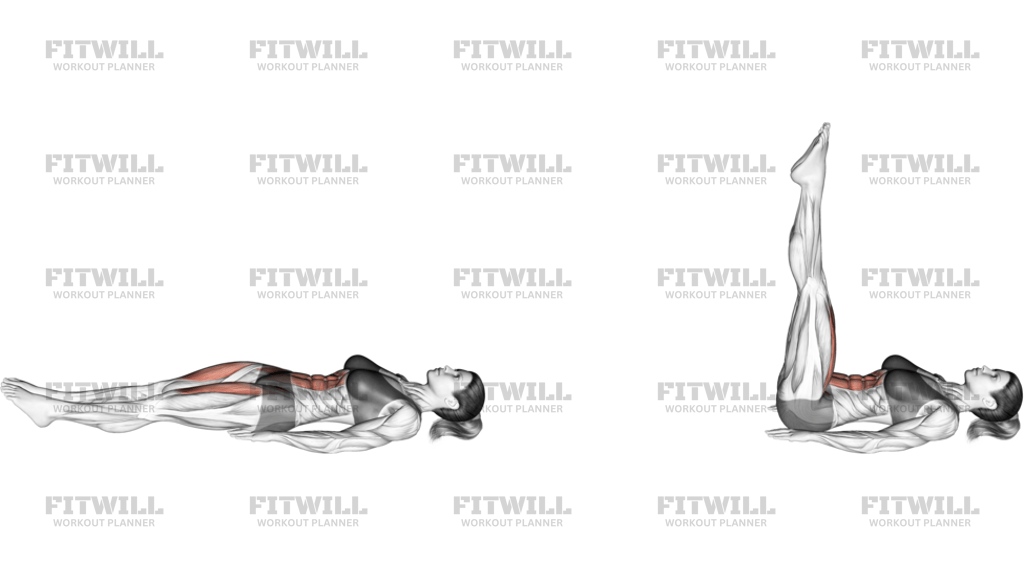
Instructions
- Lie on your back on a mat with your legs straight, feet together, and your arms flat by your sides or lightly braced against the floor.
- Tuck your pelvis so your lower back stays heavy on the mat before the first rep starts.
- Press your ribs down and keep your chin slightly tucked so your neck stays long.
- Lift both legs together until they are vertical over your hips without letting your torso rock.
- Begin lowering the legs in a slow arc, keeping them straight and together as long as you can control the descent.
- Stop the lowering phase before your lower back starts to arch or lift off the mat.
- Reverse the motion by drawing the legs back up with your abs instead of swinging them.
- Exhale as the legs lift or lower through the hardest part of the rep, then reset your brace at the top or bottom.
- Repeat for the planned reps, then lower the legs with control and relax your brace only after the set is finished.
Tips & Tricks
- If your low back lifts, shorten the lowering range before you try to lower the legs all the way to the floor.
- Keep the legs straight only if you can hold the pelvis steady; a small knee bend is better than losing spinal position.
- Think about sliding the ribs toward the hips as the legs rise so the torso stays braced instead of flaring.
- Move slowly on the way down; the eccentric phase is where most people lose the lumbar position.
- Keep the feet together so one leg does not drift ahead and twist the pelvis.
- Use your hands on the floor only for light balance, not to press and cheat the rep upward.
- A smaller range with perfect pelvic control is more valuable than a bigger range with a visible back arch.
- Stop the set when you can no longer lower both legs together without momentum.
Frequently Asked Questions
What does the lying leg raise train most?
It primarily challenges the lower abs and deep core to keep the pelvis stable while the legs move.
Should my lower back stay on the floor during a lying leg raise?
Yes. If your low back arches off the mat, the legs are dropping too far or the set is too hard for clean control.
Why do my hip flexors feel this more than my abs?
The hip flexors help lift the legs, but if they dominate, usually the lowering range is too deep or the ribs are flaring.
Can I bend my knees during the movement?
Yes. Bent knees reduce the lever arm and make it easier to keep the pelvis tucked and the lower back flat.
How low should I lower my legs?
Only as low as you can go without your low back arching or your hips tipping toward the floor.
What is the biggest mistake people make on this exercise?
They swing the legs and let the torso move instead of controlling the pelvis and lowering phase.
Is lying leg raise a good beginner core exercise?
Yes, if you keep the range short and use a bent-knee version until you can hold the low back down.
How can I make the set harder without adding weight?
Slow the lowering phase, pause near the top, or keep the legs straighter while maintaining the same pelvis position.