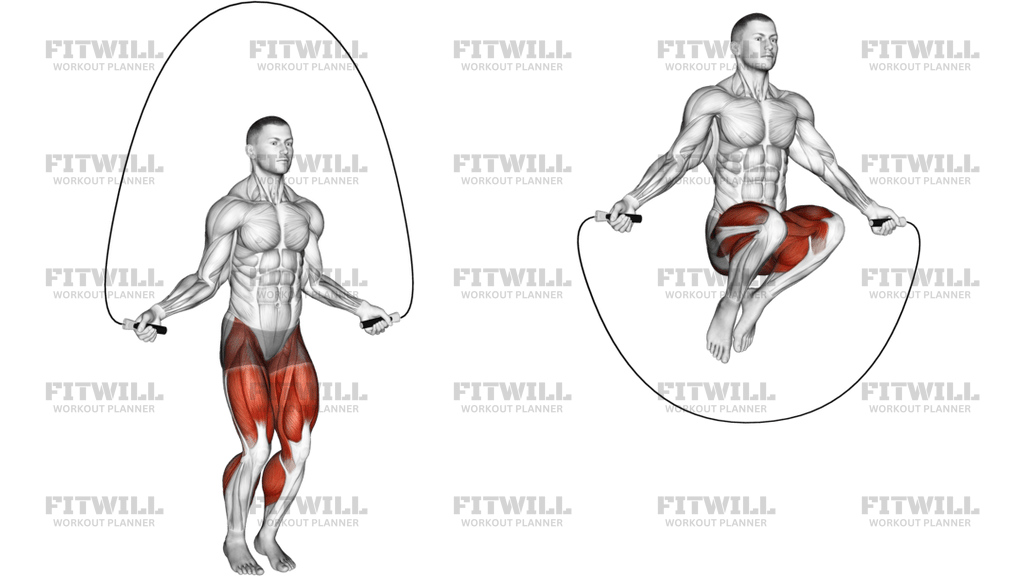
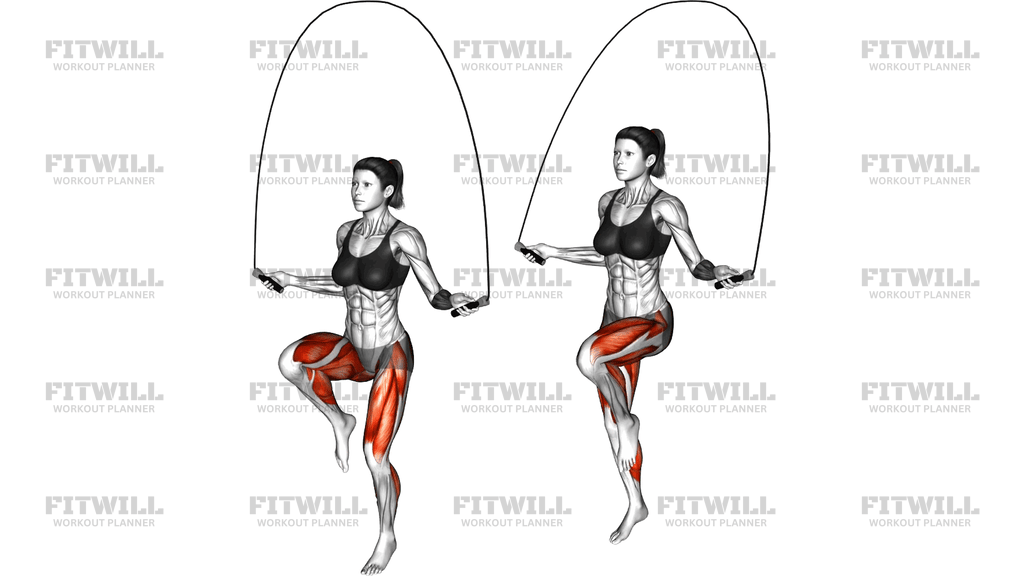
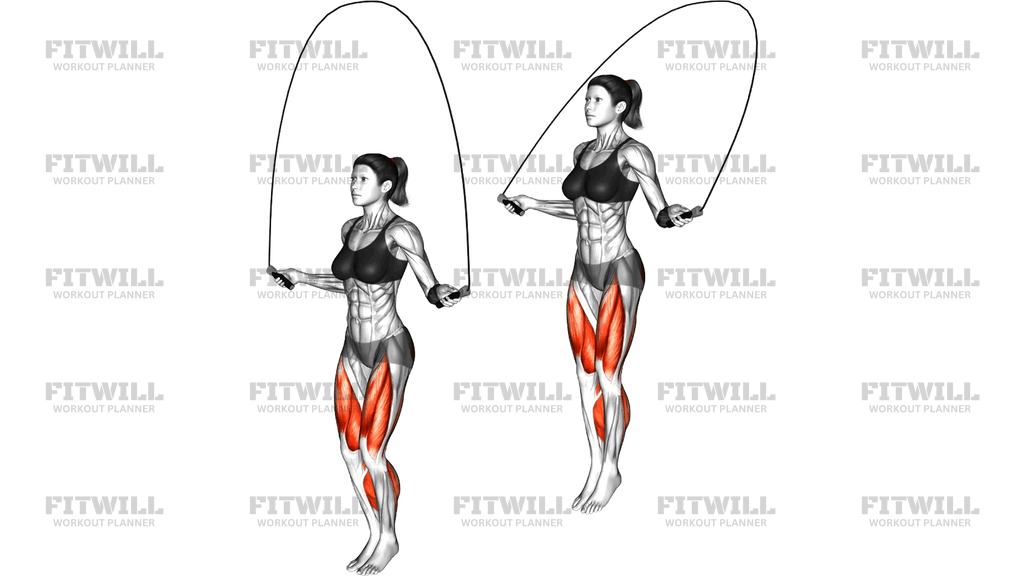
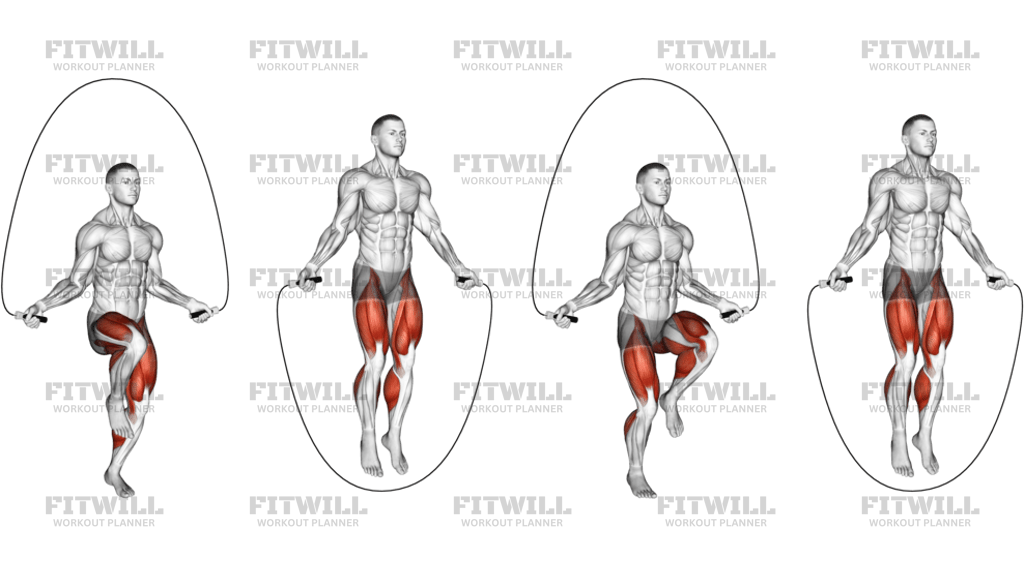
Double Jump Rope
Double Jump Rope is a fast-paced jump-rope variation that challenges coordination, rhythm, calf drive, and conditioning at the same time. The rope has to clear twice for each jump, so the movement demands quicker wrist turnover, a compact jump, and steady timing rather than a big leap. Even though it is listed as a cardio exercise, the repeated takeoff and landing pattern also puts meaningful work into the quads, calves, feet, and trunk stabilizers.
Because the rope moves so quickly, setup matters more than people expect. Stand tall with the handles held at your sides, elbows close to your ribs, and the rope length adjusted so the handles reach around the lower chest when you stand on the middle of the rope. If the rope is too long, the rotation gets sloppy; if it is too short, you will start reaching with your shoulders and mistiming the turns. A compact stance and relaxed shoulders make the double-under rhythm much easier to keep.
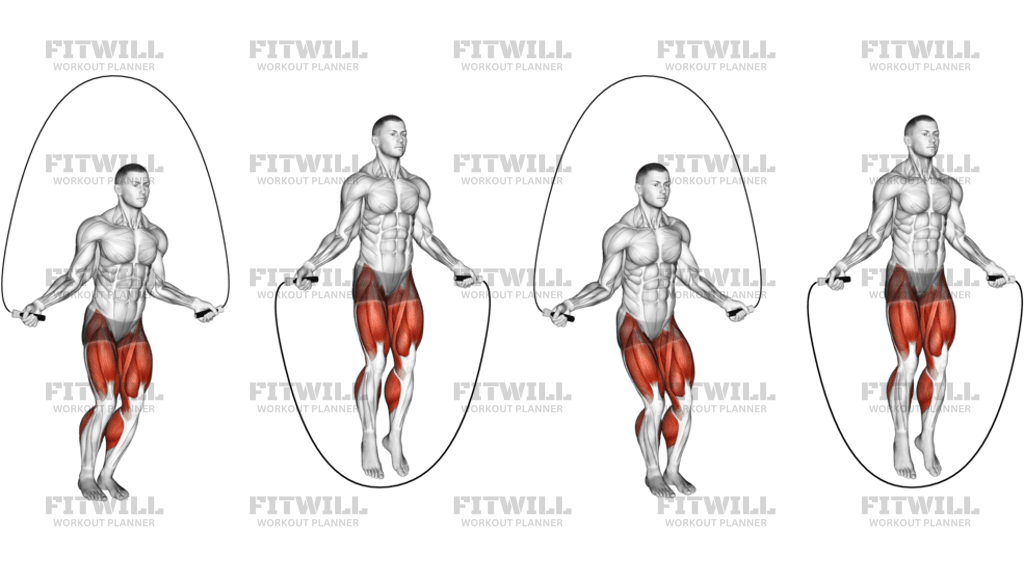
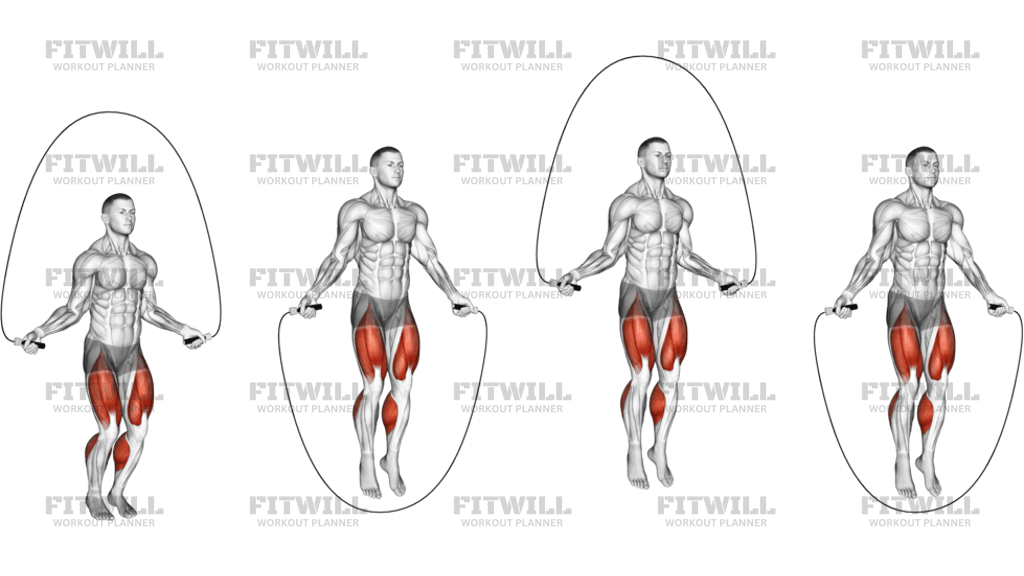
The jump itself should stay small and efficient. Use the wrists to turn the rope, keep the elbows quiet, and hop just high enough for the rope to pass twice under your feet. Land softly through the midfoot with a slight knee bend, then rebound immediately into the next repetition without letting the heels crash or the torso sway. The goal is a quick, elastic bounce, not a high jump.
This exercise is useful as a conditioning drill, warmup challenge, or finisher when you want to push coordination and work capacity together. It also teaches better timing for athletes who need fast foot turnover and control under fatigue. When the pacing is right, Double Jump Rope can be done in short intervals, broken sets, or skill-practice blocks without turning into a sloppy cardio shuffle.
The most common problems are jumping too high, turning the rope with the shoulders, and letting the rope drift forward because the handles are not staying close to the body. Fatigue usually shows up as mistimed swings or repeated tripping, so stop the set before your rhythm completely falls apart. If you are still learning the pattern, use single jumps first, then work in brief double-under attempts once the rope length, wrist speed, and landing mechanics feel consistent.
[ Workout Log & Planner ]
Put your next workout in Fitwill
Keep your plan and training log ready when you are.


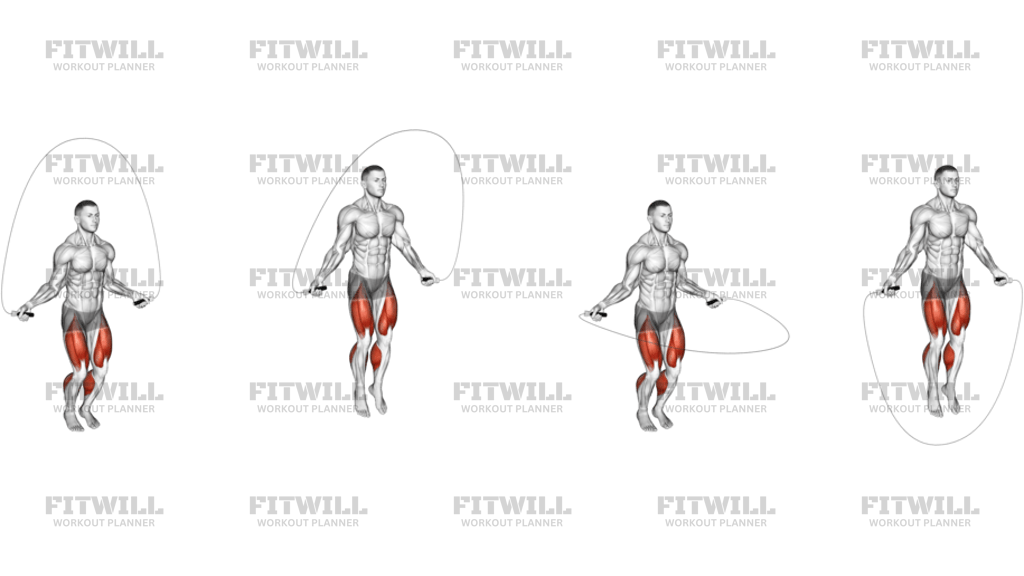
Instructions
- Stand on the middle of the jump rope and hold the handles at your sides so the rope reaches roughly to your lower chest.
- Grip the handles lightly, keep your elbows close to your ribs, and let your wrists hang in a neutral position.
- Set your feet about hip-width apart, stack your torso tall, and keep your shoulders relaxed before you start turning the rope.
- Swing the rope from your wrists, not your shoulders, and make one smooth jump to get the rhythm going.
- As the rope approaches your feet, hop a little higher and rotate the rope fast enough for it to pass under you twice.
- Keep the jump compact, land softly on the balls of your feet, and let your knees absorb the impact without collapsing inward.
- Stay upright through your chest and keep your gaze forward so your timing does not drift as the rope speeds up.
- Exhale in a steady rhythm as you repeat the jumps, especially when you string several double unders together.
- If you trip the rope, reset with a calm single jump and restart instead of chasing the rope with extra body movement.
Tips & Tricks
- Shorten the rope before blaming your timing; handles that rise to the lower chest are usually easier to control for double unders.
- Keep your elbows just in front of your ribs so the rope path stays tight instead of flaring wide around your body.
- Think quick wrists and quiet shoulders. If your arms are doing the work, the rope usually slows down and starts clipping your feet.
- Jump only a few inches off the floor. Bigger jumps waste energy and make it harder to keep the second rope pass on time.
- Land under your hips rather than reaching forward. A forward landing usually means the rope is drifting in front of you.
- Use a soft midfoot landing with a slight knee bend to reduce the impact from repeated contacts.
- If your calves burn before your breathing does, your jumps are probably too high or too heavy on the forefoot.
- Practice in short intervals so the pattern stays sharp; once the rhythm breaks down, the rope turns into conditioning instead of skill work.
Frequently Asked Questions
What muscles does Double Jump Rope work most?
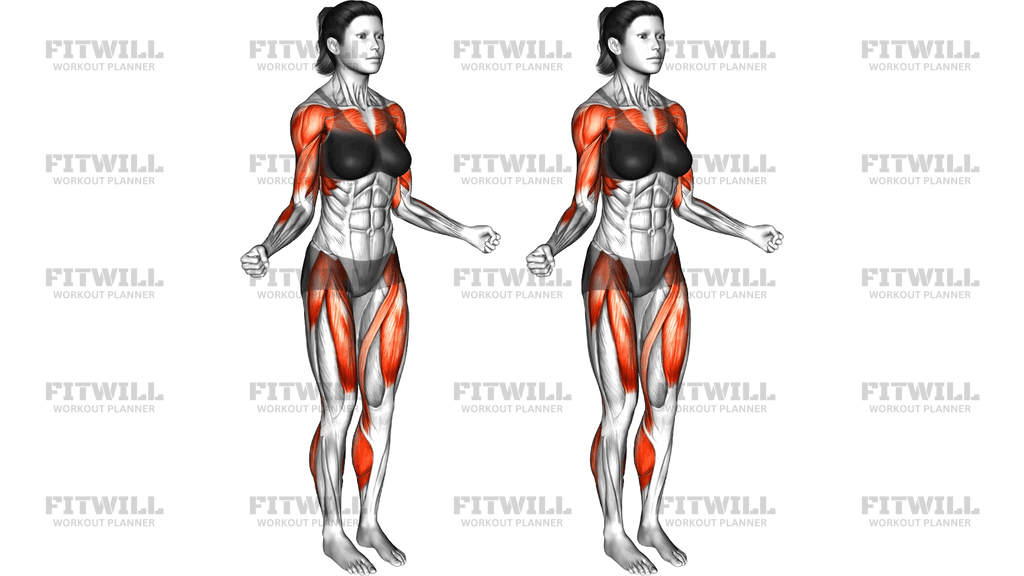
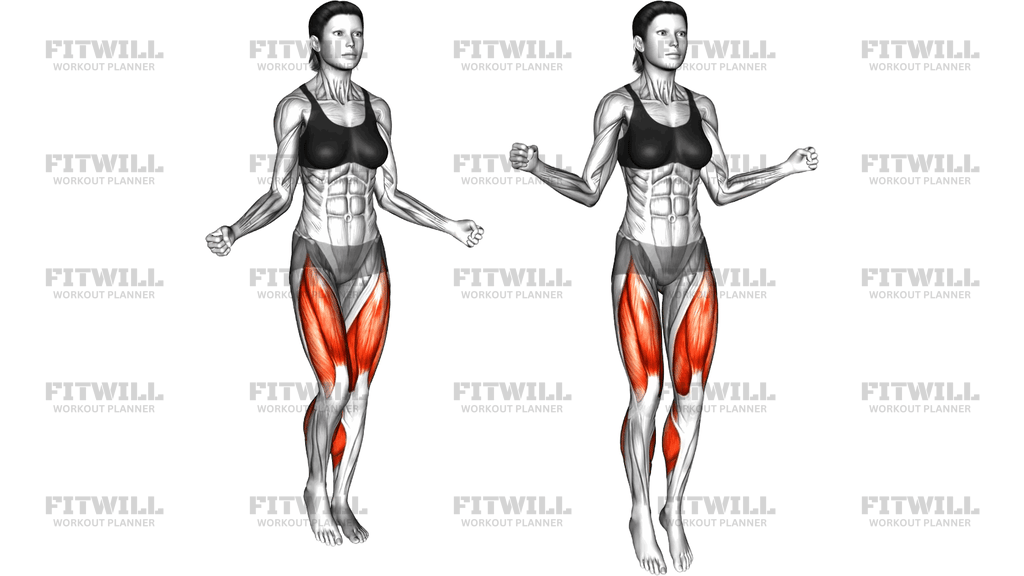
It mainly trains the calves, quads, feet, and lower-body stabilizers, with the shoulders and forearms helping to turn the rope. The fast rhythm also gives your core a steady anti-sway challenge.
Is Double Jump Rope the same as a double under?
Yes, in practice this is the double-under style of jump-rope work, where the rope passes under your feet twice on a single jump. The key is faster wrist rotation and a compact jump, not a bigger leap.
How should the rope handles sit for Double Jump Rope?
Stand on the middle of the rope and adjust it so the handles reach around your lower chest or armpits. That length usually gives enough room for quick turns without forcing your shoulders to overreach.
Why do I keep tripping the rope on Double Jump Rope?
Most misses come from jumping too low, turning too slowly with the wrists, or letting the rope drift away from your sides. Tighten the path and use a slightly higher but still compact hop.
Can beginners learn Double Jump Rope?
Yes, but it is usually easier to learn single jumps first and then add short double-under attempts. Beginners do best with short sets and plenty of resets so the timing stays clean.
Should my shoulders be working hard during Double Jump Rope?
They should not be the main drivers. If your shoulders are tiring quickly, the rope is probably too long or you are swinging from the arms instead of the wrists.
What is the safest way to land during Double Jump Rope?
Land softly on the midfoot with a slight knee bend and keep your torso stacked over your hips. Hard heel strikes or stiff knees make repeated contacts much harsher.
When should I stop a Double Jump Rope set?
Stop when the rope starts clipping repeatedly, your wrists slow down, or your jumps get noticeably higher. Once the timing is gone, the set stops training the skill well.