Crab Pose
Crab Pose is a floor-based reverse tabletop that combines shoulder opening, hip extension, and gentle full-body support work. It is useful when you want a bodyweight movement that wakes up the glutes, hamstrings, core, and triceps while also creating an easy stretch across the chest and front of the shoulders. Because your hands and feet are both fixed to the floor, the quality of the setup matters just as much as the lift itself.
Although Crab Pose looks simple, it asks the body to organize several joints at once. The shoulders have to tolerate extension behind the torso, the hips need to rise without dumping into the lower back, and the feet have to stay planted so the lift feels smooth instead of shaky. That makes it a practical choice for warmups, mobility work, beginner-friendly floor strength, or as a low-load accessory in a bodyweight session.
The best version starts with a seated crab position: knees bent, feet flat, and palms on the floor behind the hips. From there, you press through the hands and heels, lift the hips, and create a firm line from shoulders to knees without shrugging the neck or over-arching the spine. The movement is small enough to stay controlled, but strong enough that you should feel the glutes and hamstrings contributing at the top.
Crab Pose is also a useful teaching drill for learning how to brace while the chest stays open. If the hips rise but the ribs flare, the lower back usually takes over; if the shoulders feel pinched, the hands may be too far behind the body or turned to an uncomfortable angle. A clean rep feels steady through the wrists and shoulders, with the pelvis moving as one piece instead of twisting or drifting side to side.
Use this exercise as a hold, a slow pulse, or a controlled raise-and-lower pattern depending on your goal. For mobility, keep the range comfortable and emphasize breathing; for conditioning, shorten the rest and repeat clean reps rather than chasing height. When performed well, Crab Pose gives you a straightforward mix of shoulder mobility, posterior-chain activation, and trunk control without needing any equipment beyond the floor.
Fitwill
Log Workouts, Track Progress & Build Strength.
Achieve more with Fitwill: explore over 9600 exercises with images and videos, access built-in and custom workouts, perfect for both gym and home sessions, and see real results.
Start your journey. Download today!




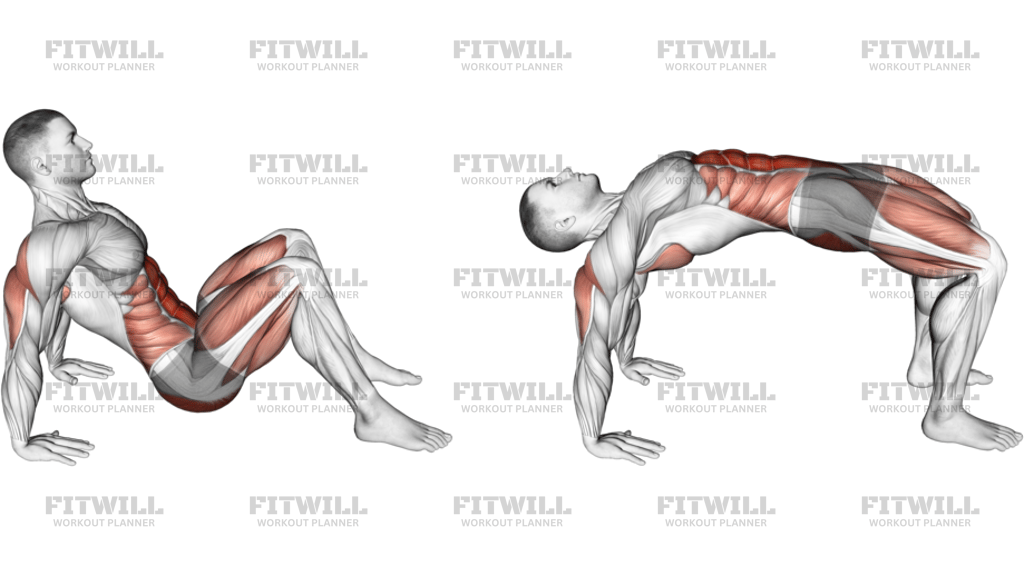
Instructions
- Sit on the floor with your knees bent, feet flat, and your hands planted behind your hips.
- Place your palms shoulder-width apart and angle your fingers toward your feet or slightly outward if that feels better on your wrists.
- Keep your chest lifted and your shoulders set back so your weight is shared between your hands and feet.
- Press through your palms and heels to raise your hips off the floor.
- Squeeze your glutes and lift until your torso forms a strong tabletop line without forcing your lower back.
- Keep your neck relaxed, your chin softly tucked, and your ribs down as you hold the top position.
- Lower your hips slowly until they hover above the floor or lightly touch down, then repeat with control.
- Breathe out as you lift and inhale as you lower, keeping the rhythm steady for the planned reps or hold.
Tips & Tricks
- If your wrists feel crowded, turn the fingers slightly outward and spread your weight across the whole palm instead of dumping into the heel of the hand.
- Keep the hands just far enough behind you that you can press the floor without the shoulders pinching forward.
- Think about driving the floor away rather than swinging the hips up; Crab Pose should feel controlled, not explosive.
- If you feel the lower back more than the glutes, lower the hips a little and keep the ribs tucked as you lift.
- A small bend in the elbows is fine, but do not let them collapse and absorb the work.
- Walking the feet a little farther away increases the stretch through the hamstrings; bringing them closer makes the position easier.
- At the top, the chest should stay open and the neck relaxed instead of looking back or jamming the head upward.
- Use brief holds of 5 to 20 seconds if you are training the position for mobility, or slower reps if you want more glute and shoulder control.
Frequently Asked Questions
What muscles does Crab Pose work?
It mainly trains the glutes, hamstrings, triceps, and core while also opening the chest and front of the shoulders.
Is Crab Pose more of a stretch or a strength exercise?
It can be used as both. The top position creates a useful stretch, but the lift also asks the shoulders, glutes, and trunk to hold the body steady.
Where should my hands go in Crab Pose?
Place your palms behind your hips, about shoulder-width apart, with your fingers angled toward your feet or slightly out if that is more comfortable.
Why do my wrists or shoulders feel uncomfortable?
Your hands may be too far behind you, your elbows may be collapsing, or your hips may be lifting higher than your shoulders can tolerate. Move the hands a little closer and keep the lift smaller.
Can beginners do Crab Pose?
Yes. Beginners usually do best with short holds, a modest hip lift, and a comfortable hand angle instead of trying to force the highest tabletop position.
How do I make Crab Pose harder?
Hold the top position longer, add slow reps, or walk the feet a little farther away so the hamstrings and shoulders work through a larger challenge.
Should my hips be as high as possible?
No. Lift high enough to create a clean line from shoulders to knees without turning it into a low-back arch.
What is the most common mistake in Crab Pose?
The biggest mistake is letting the chest collapse or the lower back take over while the hips rise. Keep the ribs down and the lift smooth.