Kneeling Neck Stretch
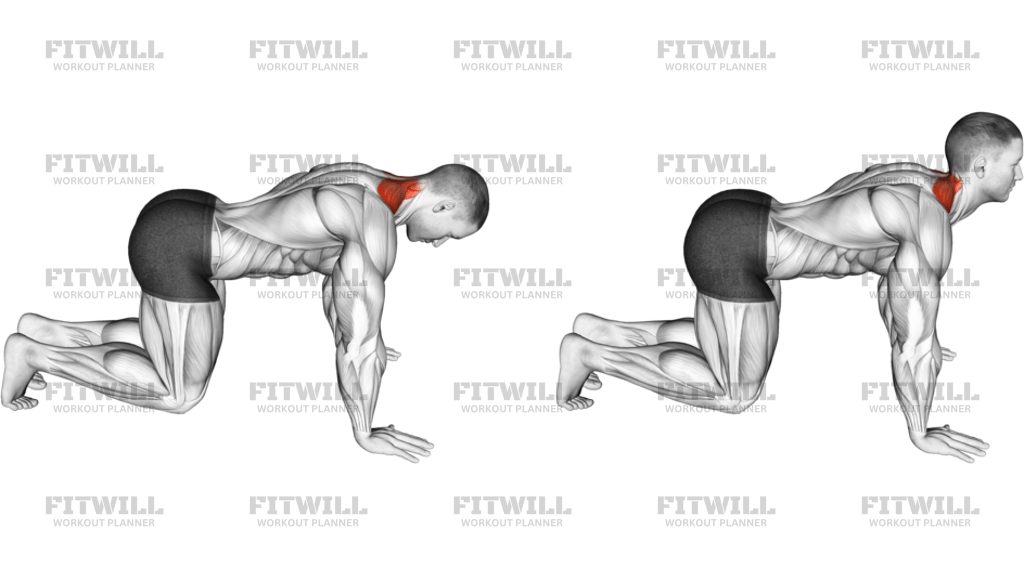
Kneeling Neck Stretch is a bodyweight neck mobility drill performed on an exercise mat in a hands-and-knees position. It is not a loaded strength movement; the goal is to create a controlled stretch through the cervical spine while the shoulders, trunk, and hips stay quiet. The image shows the body braced in tabletop with the head moving through a small, deliberate neck range, which is exactly why the setup matters so much.
Start with your hands under your shoulders and your knees under your hips so the mat can support your base. That position lets you keep the spine long and makes it easier to isolate the neck instead of turning the stretch into a back bend or a shrug. When the base is stable, the neck can move without extra tension from the arms or low back.
Use a slow nodding pattern and keep the range modest. The back of the neck should lengthen as you bring the chin toward the chest, and the front of the neck can open as you gently return toward neutral or a very small upward look. The repetition should feel smooth and controlled, never jerky, and the shoulders should stay away from the ears the whole time.
This exercise is useful in a warm-up, cooldown, or recovery block when you want to reduce stiffness after desk work, driving, pressing work, or any session that leaves the neck and upper back feeling tight. It also works well for beginners because the body is fully supported on the floor, but the small neck joints still deserve careful pacing and calm breathing.
Keep the stretch pain-free and stop if you feel sharp pain, dizziness, tingling, or symptoms traveling into the arm. If the low back starts to arch, shrink the range and keep the ribs stacked over the pelvis. The best version of Kneeling Neck Stretch is controlled, quiet, and easy to repeat, with the neck doing the work while the rest of the body stays organized.
[ Workout Log & Planner ]
Put your next workout in Fitwill
Keep your plan and training log ready when you are.


Instructions
- Kneel on the mat in tabletop with your hands under your shoulders and your knees under your hips.
- Spread your fingers, press your palms down, and keep your elbows straight without locking them hard.
- Brace lightly through your midsection so your ribs stay stacked over your pelvis.
- Slowly tuck your chin toward your chest until you feel a stretch along the back of your neck.
- Pause briefly at the end of the tuck and breathe out without holding tension in your jaw.
- Return to a neutral neck position with the head long and the gaze down.
- If your program calls for it, ease into a very small upward look without letting the low back arch or the shoulders rise.
- Repeat the same smooth nod for the prescribed reps, keeping the motion small and controlled.
- Step out of the position slowly if you feel dizziness, pinching, or any symptoms that do not settle quickly.
Tips & Tricks
- Keep the movement in the neck, not in the shoulders or upper back.
- Make the nod small enough that your torso can stay quiet on the mat.
- Use a slow exhale as you move into the stretch to help the neck relax.
- Do not shrug up toward your ears when you reach the top or bottom of the range.
- If your wrists are sensitive, spread the hands a little wider and keep weight centered over the palms.
- A folded mat under the knees can help you stay relaxed long enough to hold the stretch properly.
- Keep the chin movement smooth; jerking the head forward can irritate the cervical joints.
- Stop immediately if you feel tingling, numbness, dizziness, or a headache.
Frequently Asked Questions
What does Kneeling Neck Stretch actually target?
It mainly works the muscles around the neck, especially the cervical extensors and flexors, while the shoulders and core stabilize your body on the mat.
Is this a static stretch or a moving drill?
It can be used either way, but the image shows a controlled neck nod, so most people will use it as a slow mobility drill with brief pauses at the end range.
Do I need any equipment for this exercise?
Just an exercise mat is enough. The mat gives your knees and hands a stable base so you can focus on the neck motion.
Should my low back move during the stretch?
No. Keep the ribs stacked over the pelvis and let the neck move on its own so the stretch does not turn into a back arch.
How far should I tuck my chin?
Only until you feel a clear but comfortable stretch in the back of the neck. The range should stay small enough that you can breathe and keep the shoulders relaxed.
Can beginners use Kneeling Neck Stretch?
Yes. Beginners usually do well with a tiny range and a slow tempo because the floor support makes it easier to control the position.
When is this stretch most useful?
It works well after desk work, during a warm-up, or in a cooldown when the neck and upper back feel stiff from sitting or pressing exercises.
What warning signs mean I should stop?
Stop if you feel sharp pain, arm symptoms, dizziness, nausea, or a headache that starts or increases as you move.