Flexion And Extension Hip Stretch
Flexion And Extension Hip Stretch is a floor-based hip mobility drill done from a supported split position on an exercise mat. One leg stays forward and long while the other reaches back, and both hands stay on the floor so you can control how far the pelvis travels. The goal is not to force a deep stretch at all costs; it is to move cleanly between a more flexed and a more extended hip line without dumping tension into the lower back.
This exercise is useful when the hips feel tight from sitting, running, squatting, lunging, or repeated lower-body training. Driving the pelvis forward biases the rear hip into extension and opens the front of that hip, while easing back changes the demand on the front leg and the surrounding groin and hamstring line. Because the body is split into two different positions at once, small changes in stance, pelvis angle, and hand support make a big difference in what you feel.
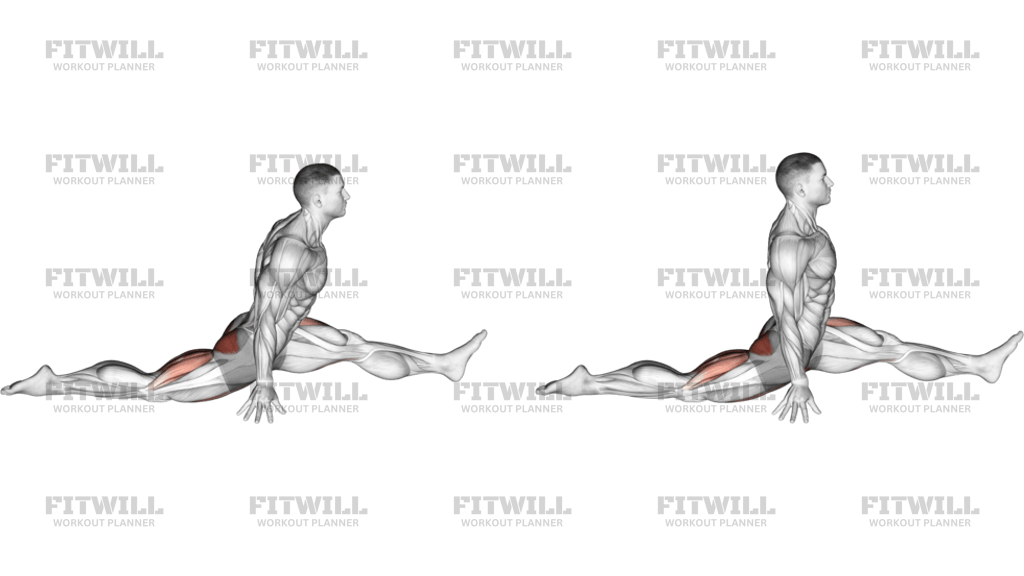
The image shows a supported position, so the hands are doing useful work here. Keep the chest lifted, ribs stacked over the pelvis, and the movement small enough that you can stay organized. If you chase a bigger range by arching the low back, twisting toward the front leg, or collapsing the shoulders, the stretch usually moves away from the hips and becomes less effective. A quiet rep is usually a better rep.
Use this stretch in a warm-up, cooldown, or mobility block when you want to restore hip motion without fatigue. It also works well between lower-body sets if the hips need a reset before the next strength movement. Beginners can keep the range shallow and lean more on the hands, while more advanced lifters can spend longer in the end position and gently rock between flexion and extension as long as the stretch stays smooth and pain-free.
[ Workout Log & Planner ]
Put your next workout in Fitwill
Keep your plan and training log ready when you are.


Instructions
- Set up on a mat in a supported split position with one leg forward, the other leg reaching back, and both hands planted under your shoulders.
- Keep the front foot and rear knee in a comfortable line, then square your hips so neither side rotates open.
- Lift your chest slightly and brace your lower abdomen just enough to keep the ribs from flaring.
- Shift the pelvis forward a few inches until you feel the front of the rear hip lengthen and the stretch settle into the hip line.
- Pause there and take a slow breath without letting the lower back arch or the shoulders collapse.
- To move back toward flexion, ease the hips a little rearward while keeping the hands down and the torso tall.
- Rock forward and back through that same controlled range for the planned repetitions instead of bouncing into a bigger position.
- Finish the set by bringing the hips back under you, then switch sides and repeat with the opposite leg forward.
Tips & Tricks
- Keep both hands grounded like outriggers so the pelvis can move without losing balance.
- Think about moving the hips forward and back, not reaching the chest toward the floor.
- A shorter stance is often better than a dramatic split if the front of the rear hip feels pinchy.
- If the low back takes over, reduce the range and keep the ribs stacked over the pelvis.
- Exhale as you settle into the forward position to help the hip flexors and glutes relax.
- Keep the front leg long only as far as the knee and hamstring stay comfortable.
- A pad under the rear knee can make the setup much easier on hard floors.
- Stop the set if you feel sharp groin pain, numbness, or a catching sensation in the hip.
Frequently Asked Questions
What does Flexion And Extension Hip Stretch work most?
It mainly targets the hip flexors on the rear leg while also stretching the front-leg hip line, groin, and surrounding stabilizers.
Why are the hands on the floor in this position?
The hands help you keep the torso tall and the pelvis controlled so the stretch stays in the hips instead of shifting into the low back.
Should the front leg stay straight?
It can stay long, but a slight bend is fine if it helps you keep the hips square and avoids pulling the knee or hamstring too hard.
Why do I feel this in my lower back sometimes?
That usually means the pelvis is tipping forward and the lumbar spine is taking over. Reduce the range and keep a light abdominal brace.
Can I hold the stretch instead of rocking through reps?
Yes. A short hold works well if you want to breathe into the position before switching sides.
Is this exercise suitable for beginners?
Yes, as long as they keep the stance shallow, use the hands for support, and avoid forcing a deep split-like position.
How do I make the stretch more intense without losing form?
Move the pelvis a little farther forward, keep the chest tall, and keep both knees and hips aligned before you add more range.
What is the most common mistake with the floor setup?
People often twist open or sink into the shoulders instead of keeping the hips square and the movement small and controlled.