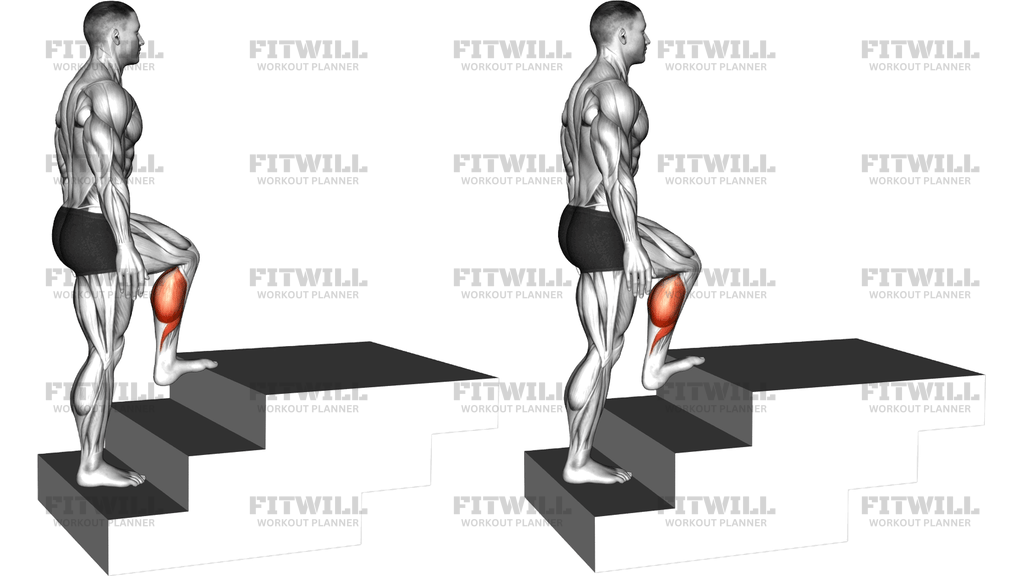
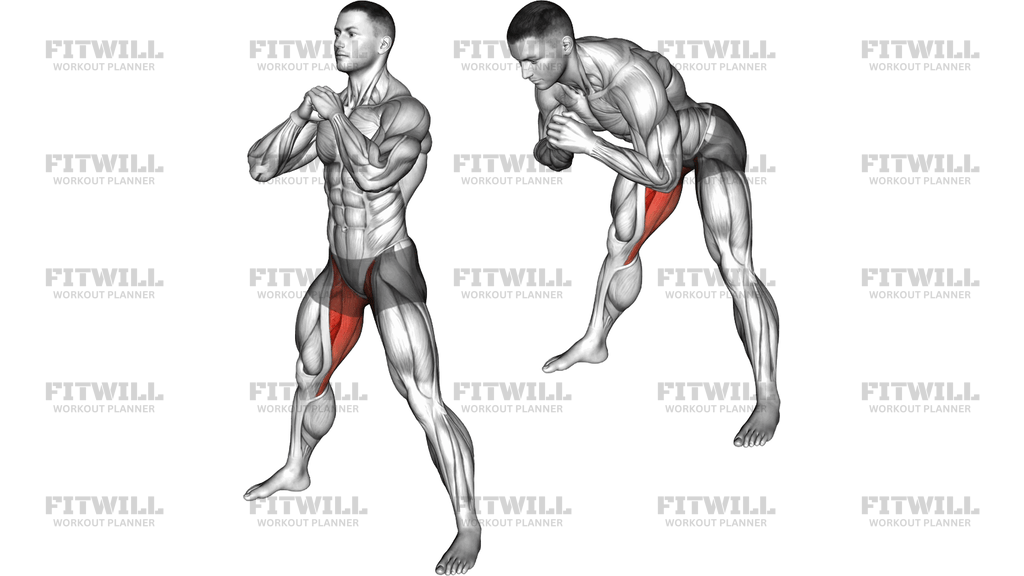
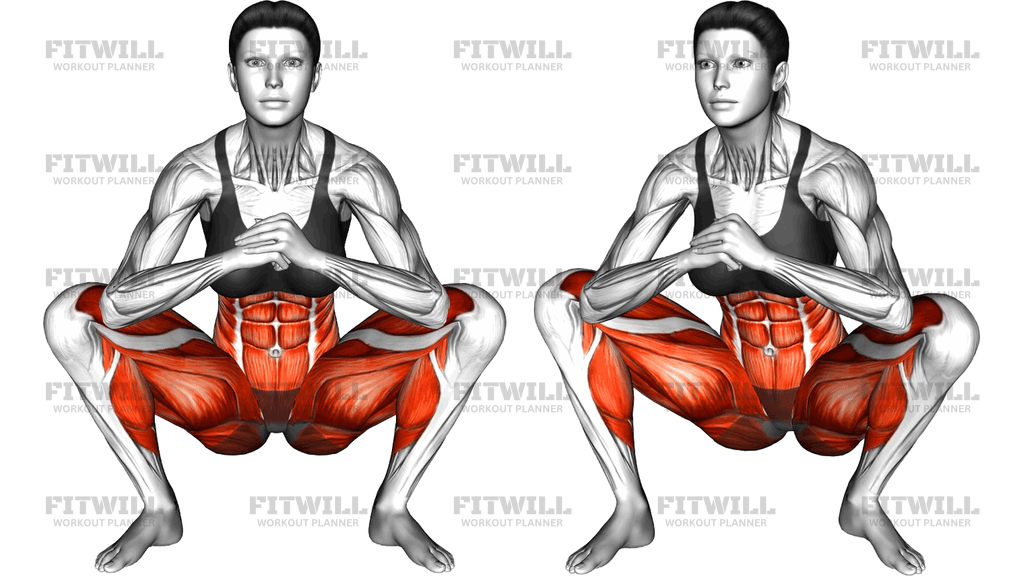
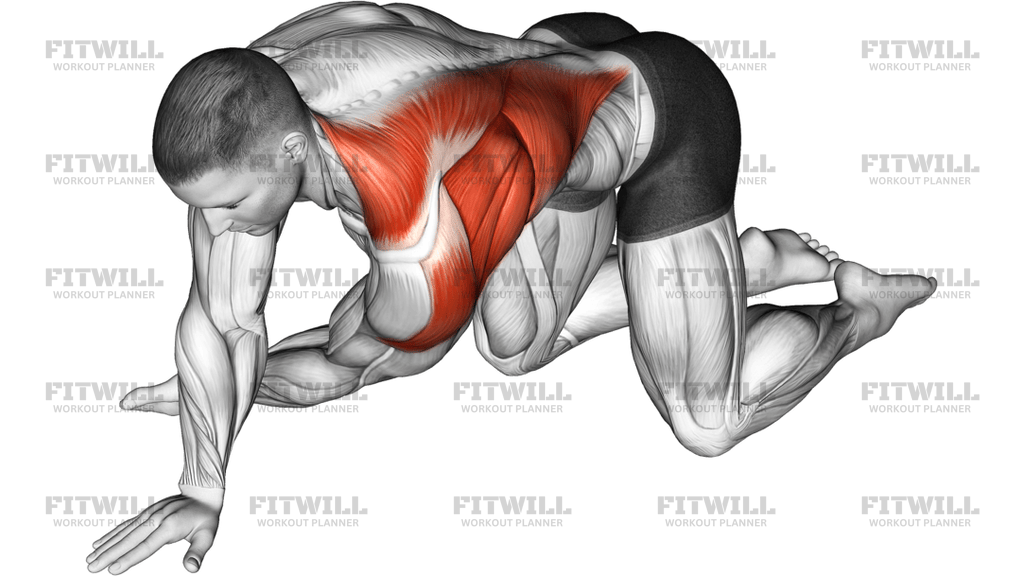
Heel Press
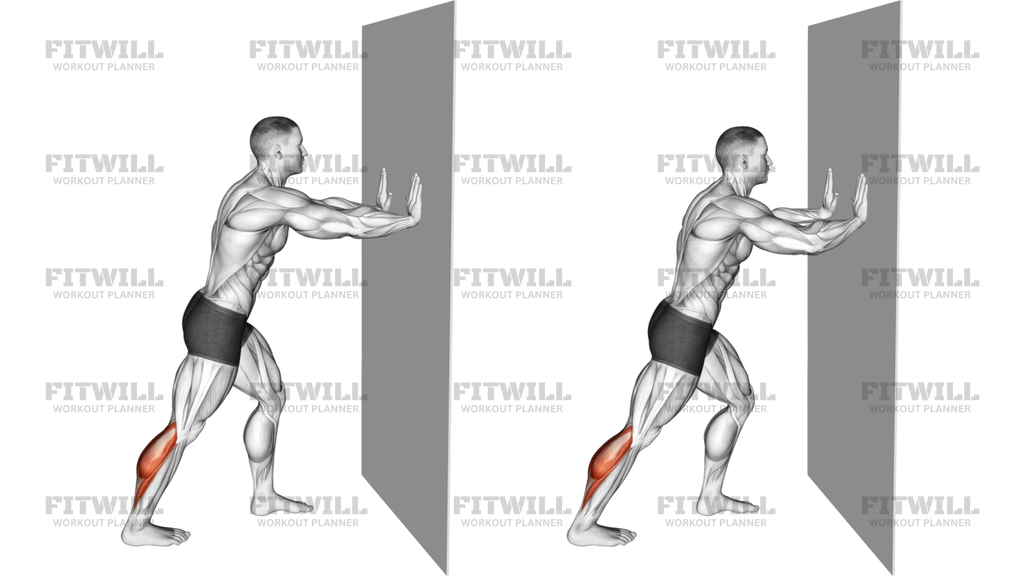
Heel Press is a standing calf stretch performed against a wall, with the rear heel staying heavy on the floor while the body leans forward. The exercise uses body weight and a fixed support point to load the calf and Achilles tendon in a controlled, easy-to-repeat position. It is not a power movement; the goal is to create a clear stretch through the back leg while keeping the foot, ankle, and trunk organized.
The visible setup matters because the stretch changes a lot with foot distance, knee angle, and how far you lean into the wall. With the rear leg extended, the stretch emphasizes the gastrocnemius. With a slight bend in the back knee, the ankle can travel a bit farther and the lower calf and Achilles area usually feel more involved. The wall gives you a stable target so you can press the hands forward and focus on the back leg instead of balancing.
A good Heel Press keeps the back heel planted, the rear foot pointing mostly forward, and the pelvis square to the wall. The front leg can bend to help you lean in while the back leg stays long enough to create tension through the calf. You should feel a strong but manageable stretch, not a sharp pinch in the ankle or a collapse of the arch. If the stretch shifts into the toes, knee, or low back, the stance is too aggressive.
This movement is useful in warm-ups, cooldowns, and mobility work when calves feel tight from running, jumping, squatting, or long periods of standing. It can also be used between lower-body sets when you want to restore ankle length and clean up lower-leg tension without fatigue. Because the exercise is bodyweight and adjustable, it works well for beginners, provided they keep the heel down and move in and out of the stretch gradually.
Use the heel press as a precise lower-leg mobility drill rather than a passive lean. Small changes in foot position, knee bend, and torso angle can completely change the stretch, so a patient setup usually gives the best result. The most useful repetitions are the ones where the back heel stays rooted, the ankle lines up cleanly, and the breathing stays calm while the calf lengthens.
[ Workout Log & Planner ]
Put your next workout in Fitwill
Keep your plan and training log ready when you are.


Instructions
- Stand facing a wall and place both hands on it at about chest height.
- Step one leg back far enough that the rear leg is straight and the heel can stay flat on the floor.
- Keep the back foot pointed mostly forward and square your hips toward the wall.
- Bend the front knee slightly and press your hands into the wall to shift your body weight forward.
- Keep the rear knee extended and let the back calf lengthen as the heel stays heavy.
- If you want more lower-calf emphasis, soften the back knee a little while keeping the heel down.
- Hold the end position for the planned time or repeat small controlled presses into the stretch.
- Breathe steadily, then ease back a few inches before repeating or switching sides.
Tips & Tricks
- Step the rear foot back far enough to feel the calf, but not so far that the heel wants to pop up.
- Keep pressure through the whole back foot, especially the inside of the heel and big-toe side.
- A straighter back knee shifts the stretch higher into the gastrocnemius; a softer knee shifts more toward the soleus and Achilles.
- Do not let the back arch and hips drift toward the wall, or the stretch turns into a low-back lean.
- Keep the front foot far enough forward that the front knee can bend without collapsing your stance.
- Move into the wall slowly; bouncing makes the calf tighten instead of lengthen.
- If the ankle pinches, shorten the stance and reduce the lean before you chase more range.
- Use calm exhales to relax the calf instead of forcing the body forward with momentum.
Frequently Asked Questions
What does Heel Press stretch most?
It mainly stretches the calf on the back leg, especially the gastrocnemius, with the Achilles area also taking tension.
How do I know I am doing the wall setup correctly?
Your hands should be stable on the wall, the rear heel should stay flat, and your hips should stay square instead of twisting open.
Why does the back knee angle change the stretch?
A straighter back knee puts more tension into the upper calf, while a slightly bent knee tends to shift the stretch lower into the soleus.
Should my rear heel ever lift off the floor?
No. If the heel lifts, the stance is too long or you are leaning too hard. Shorten the step and keep the heel rooted.
Can I use Heel Press before running or leg training?
Yes. It is a useful warm-up or between-set mobility drill when your calves or ankles feel stiff.
What is the most common mistake with this stretch?
Rushing forward and letting the heel rise. The stretch should come from a controlled lean, not a bounce.
Is this only for tight calves?
No. It can also help restore ankle motion after jumping, squatting, hiking, or long periods of standing.
What should I do if I feel the stretch in my arch or toes instead of my calf?
Bring the rear foot a little closer to the wall, keep the toes pointing forward, and reduce how far you drive the knee toward the wall.