Seated Chest Clam
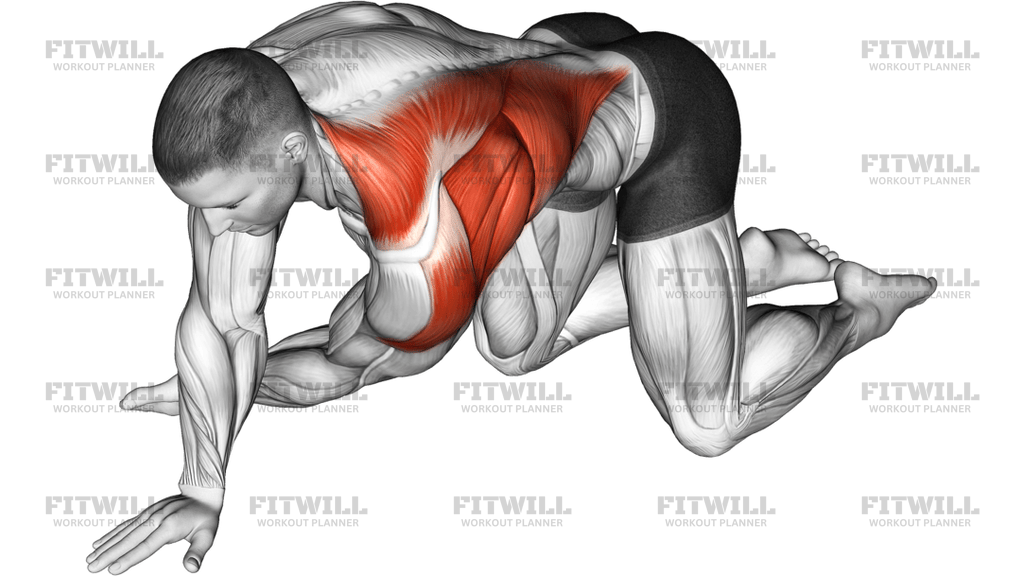
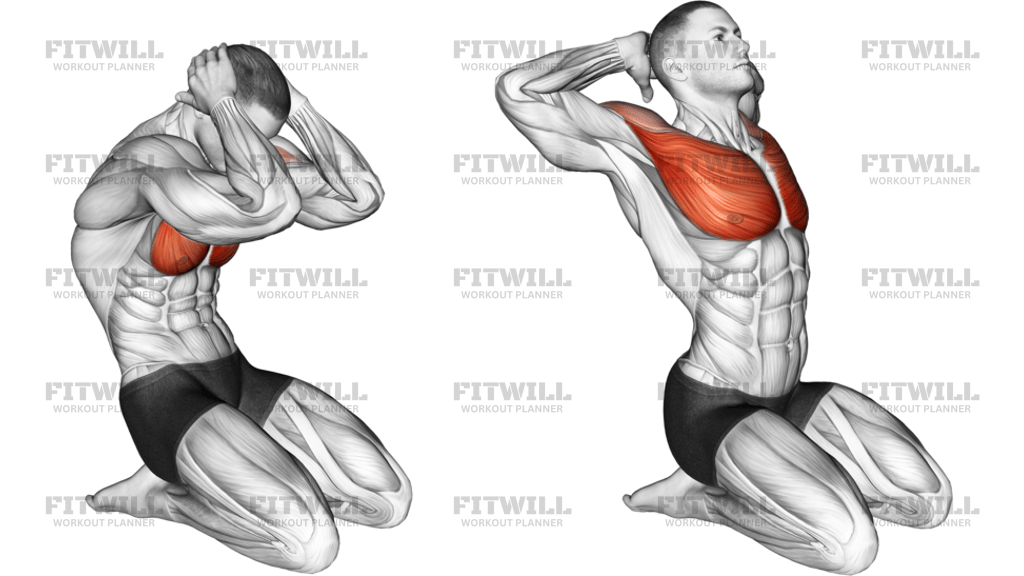
Seated Chest Clam is a chest-opening mobility drill that, in the reference image, is performed from a tall kneeling position with the hands behind the head and the elbows held wide. The goal is not to move a heavy load or chase a big arch; it is to open the front of the torso, create room through the chest and shoulders, and keep the ribcage stacked over the hips while the upper back extends.
This movement is useful when the shoulders feel rounded forward, the upper back feels stiff, or you want to prepare for pressing, overhead work, or any session where a cleaner chest position matters. The front of the shoulders, upper chest, and upper back all contribute, but the exercise only works well when the torso stays organized. If the lower back takes over, the stretch becomes less useful and less controlled.
Set the knees under the hips, lightly engage the glutes, and keep the chin neutral so the neck does not crank back. From the closed position, let the elbows drift back and slightly out while the sternum lifts. Think about spreading the chest broad rather than forcing the ribs forward. The rep should feel like an upper-torso opener with control through the whole path.
Breathing helps the position: inhale to prepare, then exhale as you open the chest and settle into the stretch. Move slowly enough that you can feel where the tension shifts across the pecs, front delts, and upper back. If the shoulders pinch, shorten the range. If the lower back starts to arch, reduce how far you open and re-stack the ribs before the next rep.
Use Seated Chest Clam as a warm-up drill, mobility reset, or light accessory movement between harder upper-body sets. It works best for smooth, repeated reps rather than fast, aggressive motions. Beginners can usually handle it well because the exercise is bodyweight only, but the quality standard is high: clean posture, controlled opening, and a return that stays smooth instead of collapsing.
[ Workout Log & Planner ]
Put your next workout in Fitwill
Keep your plan and training log ready when you are.


Instructions
- Start in a tall kneeling position with your knees about hip-width apart, torso upright, and hips stacked over the knees.
- Place both hands behind your head and keep your elbows wide without flaring them so far back that your shoulders shrug.
- Lightly brace your midsection, tuck your chin to a neutral position, and keep your ribs from popping forward.
- From the closed position, let your elbows travel back and slightly out while you lift your sternum.
- Open the chest by extending through the upper back, not by cranking the lower spine into a bigger arch.
- Pause briefly when you feel a strong stretch across the chest and front shoulders without any pinching.
- Return slowly by bringing the elbows forward and softening the chest under control.
- Breathe in to prepare and exhale as you open, then repeat for the planned number of controlled reps.
Tips & Tricks
- Keep your glutes lightly engaged so the stretch stays in the chest and upper back instead of dumping into the low back.
- Think sternum up and ribs down at the same time; that combination keeps the opener clean.
- Do not yank your head forward with your hands. The hands should support the head, not pull on the neck.
- If your shoulders feel pinchy, reduce the elbow travel and work a smaller, smoother range.
- A slow exhale often helps the ribcage settle and makes the opening feel more controlled.
- Keep your weight centered over both knees so you do not drift backward while opening.
- This should feel like a mobility drill, so there is no need to rush the tempo or chase speed.
- Stop the set if the lower back takes over or the front of the shoulder feels sharp.
Frequently Asked Questions
What does Seated Chest Clam stretch the most?
It mainly opens the chest, front shoulders, and upper torso while the core and glutes keep the position organized.
Why is the image shown in a tall kneeling position?
The reference image uses tall kneeling to keep the ribs and pelvis stacked while the chest opens. That setup makes it easier to control the stretch.
Should I feel this in my lower back?
No. A little upper-back extension is fine, but if the low back is doing most of the work, shorten the range and keep the ribs down.
Is this a strength exercise or a mobility drill?
It is primarily a mobility and chest-opening drill, not a heavy strength movement.
How wide should my elbows be?
Keep them comfortably wide so the chest can open, but do not force them back so far that your shoulders shrug or pinch.
Can I use this before pressing workouts?
Yes. It is a good warm-up choice when you want better chest and shoulder position before benching, push-ups, or overhead work.
What should I do if my shoulders feel tight?
Use a smaller range, keep the hands lighter behind the head, and focus on a smooth chest lift instead of forcing the elbows farther back.
Do I need any equipment for this exercise?
No equipment is required. Bodyweight and a clean kneeling setup are enough.