Standing Ab Twist
Standing Ab Twist is a standing bodyweight rotation drill that trains the obliques, deep core, and hip stabilizers through controlled torso twisting. With the arms held straight out in front, the movement asks the trunk to rotate while the pelvis stays mostly quiet, so the abs have to manage both motion and stability at the same time.
The image shows a tall stance with the feet set about hip width, the chest lifted, and both arms extended at shoulder height as a counterbalance. That arm position matters because it makes the twist easier to see and harder to fake with sloppy posture. If the ribs flare or the hips swing, the work shifts away from the waist and into momentum.
This exercise is useful when you want rotational core work without lying on the floor or loading the spine. It fits well in warmups, accessory blocks, athletic prep, or home routines. Because the resistance comes mostly from body position and control, quality matters more than speed or range.
Each rep should rotate the torso smoothly to one side, pause briefly, then return through center before twisting to the other side. Keep the knees soft, the pelvis stacked, and the neck long so the movement comes from the midsection rather than the shoulders or lower back. A smaller, cleaner twist is usually better than a big swing.
Use Standing Ab Twist when you want to build better trunk control, waistline engagement, and rotational awareness. Beginners can perform it safely with body weight alone, and advanced users can slow the tempo, add a pause, or increase range only as long as the torso stays organized and the hips stay under control.
Fitwill
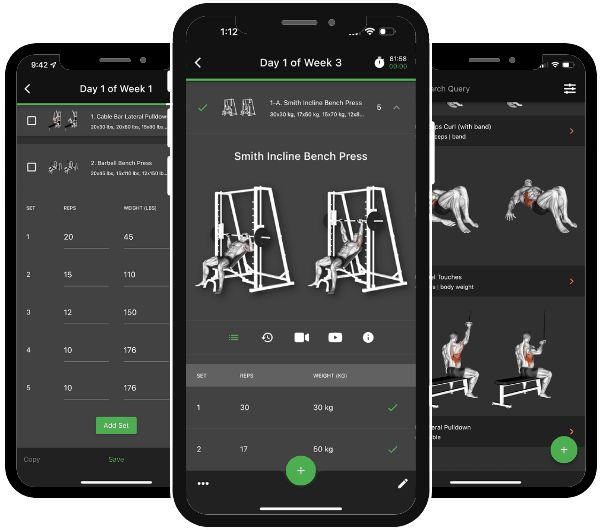
Log Workouts, Track Progress & Build Strength.
Achieve more with Fitwill: explore over 5000 exercises with images and videos, access built-in and custom workouts, perfect for both gym and home sessions, and see real results.
Start your journey. Download today!


Instructions
- Stand tall with your feet about hip width apart and extend both arms straight out in front of your shoulders.
- Keep your knees soft, your chest lifted, and your pelvis stacked so your ribs stay over your hips.
- Brace your midsection before you start the first twist and keep your chin level.
- Rotate your torso to one side without letting your hips swing with the arms.
- Twist only as far as you can keep the movement smooth and controlled.
- Pause briefly at the end of the twist, then return through center under control.
- Repeat the same twist to the opposite side, keeping both arms at shoulder height.
- Breathe out as you rotate and inhale as you come back to center.
Tips & Tricks
- Keep the arms long but relaxed so the shoulders do not take over the twist.
- Think about rotating the rib cage, not yanking the arms across your body.
- If your hips are drifting, shorten the range and make the torso do the work first.
- A slow turn-and-return exposes the obliques better than fast, bouncing reps.
- Keep the feet planted and let the heels stay quiet instead of pivoting through every rep.
- Do not chase a huge range if the lower back starts to arch or pinch.
- Use the same tempo on both sides so one direction does not become the sloppy side.
- Stop the set when the twist turns into a swing or your shoulders start shrugging forward.
Frequently Asked Questions
What muscles does Standing Ab Twist work most?
It mainly targets the obliques and deep abdominal muscles, with the hips and trunk stabilizers helping keep the torso organized.
Do I need any equipment for Standing Ab Twist?
No. The image shows a pure bodyweight version with the arms extended as a counterbalance.
How far should I rotate my torso?
Rotate only as far as you can keep your pelvis mostly still and your ribs stacked over your hips.
What is the biggest form mistake in this exercise?
Letting the hips sway or the lower back arch so the twist turns into a whole-body swing.
Should my arms move during the twist?
Keep them extended at shoulder height and let them follow the torso instead of pulling the movement with the shoulders.
Is Standing Ab Twist good for beginners?
Yes, because it can be done with body weight and a small, controlled range before progressing the tempo or range.
What should I feel working during the rep?
You should feel the sides of the waist engaging as the torso rotates, not strain in the neck or low back.
How can I make Standing Ab Twist harder?
Slow the lowering phase, add a brief pause at each end of the twist, or increase the range only if the hips stay controlled.