Downward Facing Dog
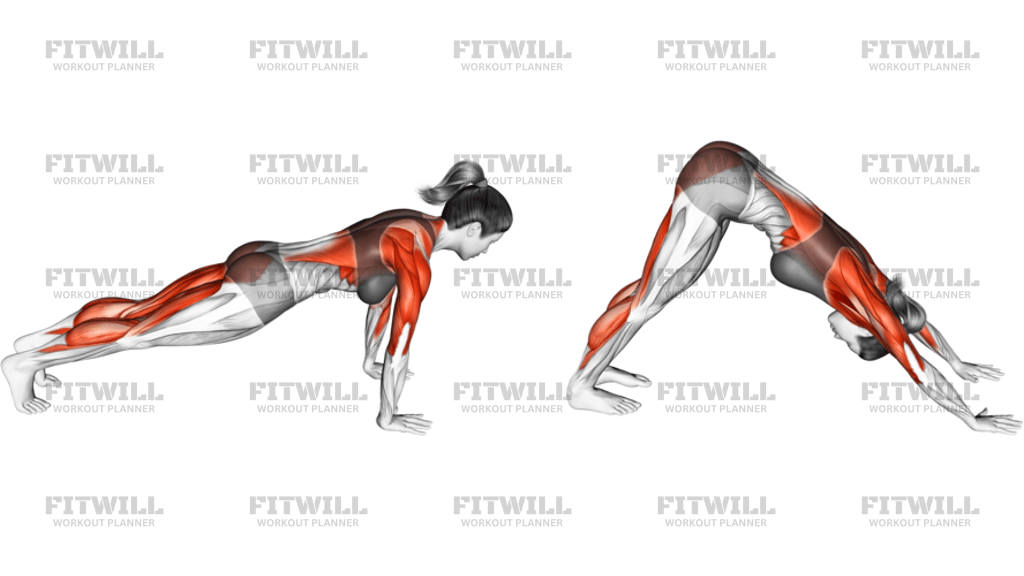
Downward Facing Dog is a bodyweight stretching position that opens the back of the body while teaching you to stack the shoulders, arms, and hips in a long line. It is most often used as a warm-up, recovery drill, or between-strength-set reset because it creates a full-body lengthening effect without needing equipment.
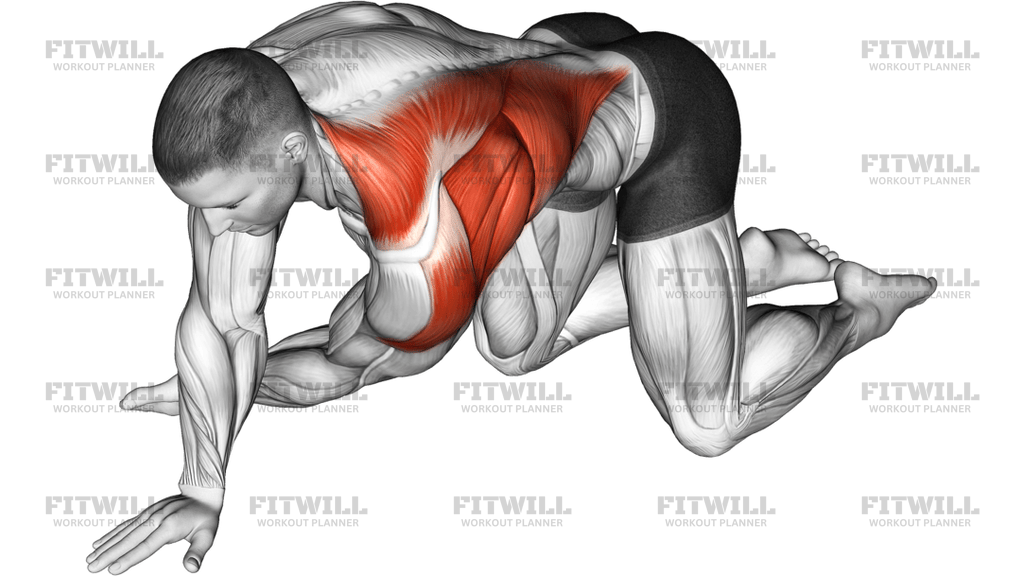
The pose usually emphasizes the hamstrings, calves, lats, shoulders, and upper back, while the hands, arms, and core work to keep the shape steady. Done well, Downward Facing Dog feels like an active stretch rather than a passive hang: the spine stays long, the shoulders stay away from the ears, and the hips keep lifting to form a clean inverted V.
Setup matters because a small change in hand width, foot position, or knee bend can completely change how the stretch feels. Press through the whole hand, especially the base of the index finger and thumb, and keep the feet about hip-width apart so the hips can travel up and back instead of collapsing inward. If the hamstrings are tight, a soft bend in the knees helps you keep the back long instead of rounding the spine.
The best version of Downward Facing Dog is smooth and controlled, not forced. Reach the chest toward the thighs, let the heels drift toward the floor, and breathe into the back and sides of the ribcage while the pose settles. If you are moving through it dynamically, shift from a plank into the inverted V with control, then return to the start without dumping weight into the wrists.
This exercise is useful for people who sit a lot, lift heavy, or want a low-cost way to restore length in the shoulders and posterior chain between harder sets. It is also a good entry point for beginners because the intensity can be adjusted immediately with foot distance, knee bend, and hand placement. Keep the shape honest and pain-free, and let the stretch build gradually instead of chasing a forced heel-down position.
[ Workout Log & Planner ]
Put your next workout in Fitwill
Keep your plan and training log ready when you are.


Instructions
- Start on your hands and feet with your hands under your shoulders, fingers spread wide, and feet about hip-width apart.
- Press the floor away and lift your hips up and back so your body forms an inverted V shape.
- Keep a soft bend in your knees if needed so your lower back stays long instead of rounding.
- Reach your chest toward your thighs while keeping your arms straight and your shoulders active.
- Press through the base of your index finger and thumb so your weight stays evenly distributed across the hands.
- Let your heels move toward the floor without forcing them down or locking the knees.
- Breathe in to lengthen the spine and breathe out as you settle deeper into the stretch.
- If you are using it dynamically, return to plank or tabletop with control and repeat for the planned number of reps or holds.
Tips & Tricks
- Keep your hands slightly turned out only if it helps your wrists; otherwise keep the middle fingers pointing straight ahead.
- A small knee bend is better than a rounded back when your hamstrings or calves are tight.
- Think about lifting your sit bones higher before you try to drive the heels down.
- If your shoulders shrug toward your ears, push the floor away harder and widen the upper back.
- Move the feet a little farther back if the pose feels cramped through the hips or lower back.
- Do not lock the elbows; a tiny softness keeps the arms and shoulders active.
- Keep the ribs tucked enough to avoid hanging in the lower back, but do not crunch the torso short.
- Use shorter holds if the wrists start to ache, especially when the body weight shifts too far forward.
- The stretch should spread through the back of the legs and shoulders, not pinch in the wrists or low back.
Frequently Asked Questions
What does Downward Facing Dog stretch the most?
It usually stretches the hamstrings, calves, shoulders, lats, and upper back at the same time.
Should my heels touch the floor in Downward Facing Dog?
Not necessarily. Let the heels travel down only as far as your calves and hamstrings allow while keeping the spine long.
Can beginners do Downward Facing Dog?
Yes. Beginners often do best with a slight knee bend and a shorter hold so the stretch stays in the shoulders and legs instead of the wrists or lower back.
Why do my wrists feel loaded in Downward Facing Dog?
Usually the body is drifting too far forward or the hands are too narrow. Spread the fingers, press through the whole palm, and shift the hips farther back.
Is Downward Facing Dog a stretch or a strength exercise?
It is primarily a stretch, but the shoulders, arms, and core still work isometrically to hold the position and keep the shape stable.
How long should I hold Downward Facing Dog?
A 20 to 60 second hold is a common choice, but shorter holds work well if you are using it between sets or as a quick mobility reset.
What is the most common mistake in Downward Facing Dog?
Forcing the heels down while rounding the back is the biggest one. Keep the spine long and bend the knees if that helps you keep the pose clean.
Can I use Downward Facing Dog after lifting?
Yes. It works well after pressing, pulling, or lower-body work because it can ease shoulder compression and lengthen the posterior chain without much setup.