Old School Reverse Extensions
Old School Reverse Extensions is a lying barbell triceps extension performed on a flat bench. The image shows the lifter lying face up with the upper arms anchored while the elbows bend and straighten to move the bar in a controlled arc. It is a focused upper-arm strength movement, with the triceps doing most of the work and the forearms, shoulders, and trunk helping keep the bar path clean.
This exercise is useful when you want direct elbow-extension work without turning the set into a full pressing movement. Because the body is supported on the bench, the limiting factor should be the triceps and elbow position rather than balance. That makes the setup important: a steady bench position, planted feet, neutral wrists, and a grip that lets the forearms stay aligned with the bar through the rep.
At the bottom of each rep, the bar should travel back under control until the triceps are lengthened and the elbows are bent without the shoulders lifting off the bench. From there, extend the elbows to bring the bar back over the chest or shoulder line. Keep the upper arms mostly fixed so the movement stays in the elbows instead of drifting into a pullover or chest press.
This pattern is commonly used for accessory triceps work, arm-focused sessions, or as a controlled finishing exercise after heavier pressing. It also works well for lifters who want to practice strict elbow extension and tension management. A lighter load and a careful tempo are usually better than chasing momentum, because the exercise rewards clean positioning far more than brute force.
Use a range that feels strong in the elbows and shoulders without forcing the bar too low or letting the wrists fold back. If the straight bar feels awkward, reduce the load, shorten the range slightly, or switch to an EZ-bar variation when available. The goal is a smooth extension with steady control from the first rep to the last.
[ Workout Log & Planner ]
Put your next workout in Fitwill
Keep your plan and training log ready when you are.


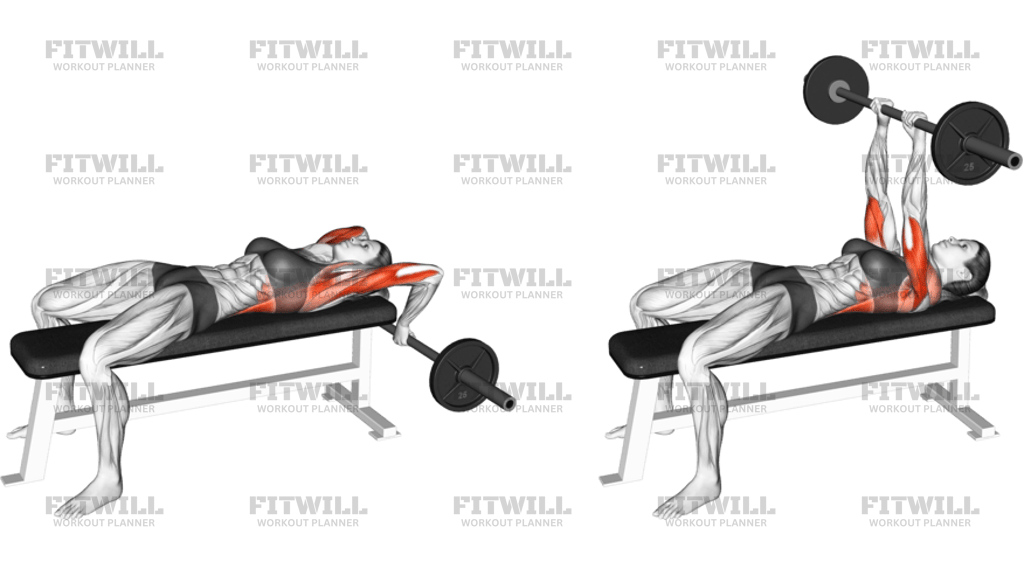
Instructions
- Lie face up on a flat bench and plant both feet on the floor.
- Grip the barbell with a firm overhand grip and stack your wrists over your elbows.
- Start with the bar above your chest or slightly back over the face, with the elbows bent and pointed mostly upward.
- Brace your ribs down against the bench and keep your upper arms steady.
- Lower the bar in a smooth arc toward the area just behind your forehead until you feel the triceps lengthen.
- Keep the elbows from flaring wide or drifting forward as the bar descends.
- Press the bar back up by straightening the elbows until your arms are nearly locked out over the chest line.
- Pause briefly at the top, then repeat with the same bar path and tempo for each rep.
Tips & Tricks
- Keep your elbows pointing mostly at the ceiling so the rep stays in elbow extension instead of turning into a chest press.
- A grip that is too wide usually makes the wrists and elbows drift; use a narrower overhand grip that keeps the forearms vertical at the bottom.
- Lower the bar under control toward the forehead or just behind it, but stop before the shoulders roll off the bench.
- If the bar touches too low behind your head, the shoulders take over and the triceps lose tension.
- Keep your feet planted and ribs down so the low back does not arch to help drive the bar upward.
- Straight bars can feel harsh on the elbows, so reduce load or use an EZ-bar variation if the joint angle feels pinchy.
- Do not slam the elbows into lockout; finish the rep with a strong squeeze and a brief pause.
- Use collars on the barbell because the movement arcs over the face and the load should stay secure.
Frequently Asked Questions
What does Old School Reverse Extensions work most?
It primarily targets the triceps, especially through elbow extension from a lying bench position.
Why do I need to lie on a bench for this movement?
The bench supports your torso so the triceps can do the work without balance or standing posture becoming a limiter.
Where should the bar travel during the rep?
Lower it in a controlled arc toward the forehead or just behind it, then press it back to a stacked position over the chest.
Should my elbows move a lot during the set?
No. The elbows should bend and extend, but the upper arms should stay fairly steady so the triceps stay loaded.
Can beginners do this exercise safely?
Yes, as long as they start light, keep the wrists stacked, and control the bar path around the face.
What is the most common mistake with the bench setup?
Letting the lower back arch and the ribs flare usually makes the rep unstable and shifts work away from the triceps.
Is a straight bar the best option for everyone?
A straight bar matches the image, but an EZ-bar can be easier on the wrists and elbows for some lifters.
How should I breathe during the rep?
Inhale as you lower the bar, then exhale as you extend the elbows and return to the top.
What should I do if the bar feels unstable over my face?
Use a lighter load, shorten the range slightly, and start each set with a secure grip and tight upper back on the bench.