Barbell Preacher Curl
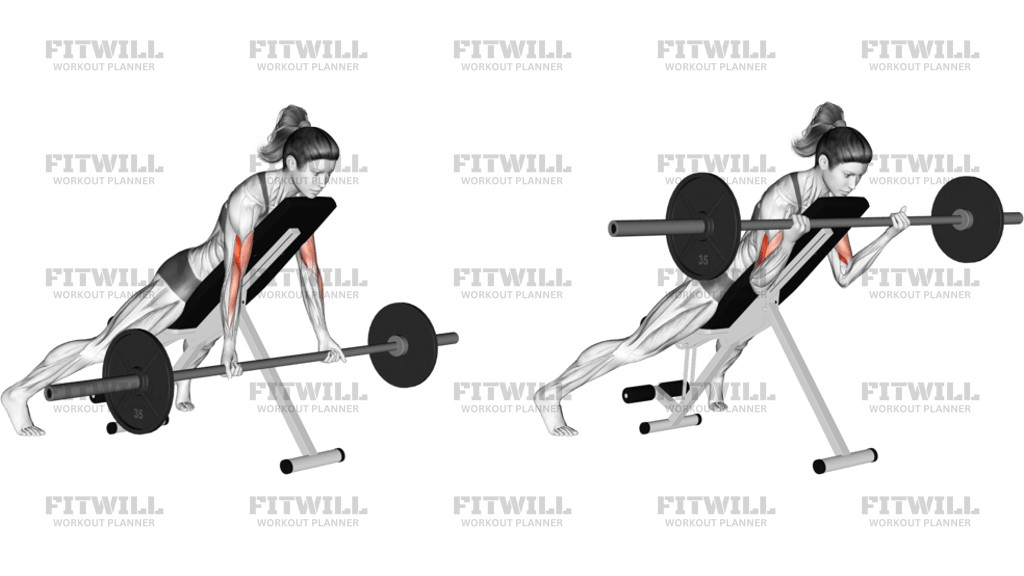
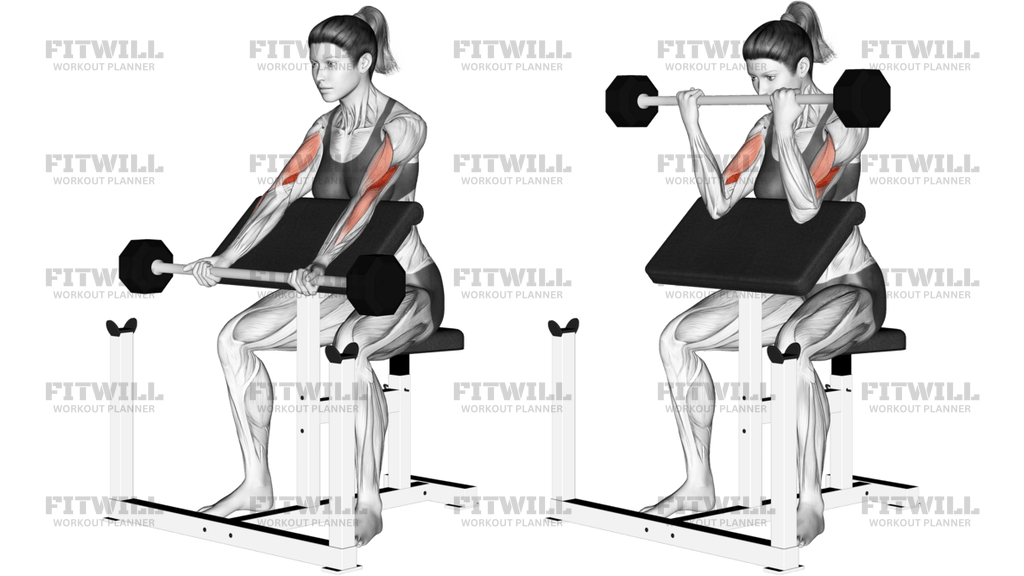
Barbell Preacher Curl is a strict elbow-flexion exercise done with the upper arms braced on a preacher bench and a bar held in an underhand grip. The sloped pad removes most of the body swing you can use in a standing curl, so the biceps have to do the work through a very controlled range. That setup is the point of the movement: it turns a simple curl into a focused strength and hypertrophy drill that rewards patience, clean positioning, and steady tempo.
Because the upper arms stay fixed on the pad, the exercise shifts the workload toward the biceps while the forearms, grip, and upper-back stabilizers help keep the bar aligned. It is especially useful when you want to train elbow flexion without turning the rep into a hip-driven cheat curl. The preacher angle also makes the bottom half of the rep feel more stretched, so loading needs to be conservative enough to keep the shoulders relaxed and the wrists stacked.
Set the seat height so your upper arms rest comfortably on the pad and your chest can stay in contact with the bench without reaching forward. If the bench is too high, your shoulders will creep up; if it is too low, you will lose leverage and drift out of position. A good setup lets the elbows open and close while the upper arms stay pinned to the pad, with the bar moving in a smooth arc instead of bouncing off the bottom.
On each rep, lower the bar under control until the elbows are nearly straight and you feel a strong biceps stretch, then curl the bar back up by bending only at the elbows. Keep your wrists neutral, avoid rolling the shoulders forward, and stop the set if you have to heave the bar or lift the upper arms off the pad. The best repetitions look almost identical from start to finish: no torso swing, no shrugging, no half reps, just clean tension from the bottom position to the top.
Use Barbell Preacher Curl when you want direct arm work in a hypertrophy block, an accessory phase, or an arm-focused session. It works well for beginners if the load is light and the tempo is slow enough to control the descent. It also pairs well with heavier back or pressing work because the bench support limits cheating and keeps the biceps under the kind of load that is easy to feel and easy to monitor.
[ Workout Log & Planner ]
Put your next workout in Fitwill
Keep your plan and training log ready when you are.


Instructions
- Set the preacher bench so your upper arms rest fully on the sloped pad and your chest can stay against the support without reaching.
- Sit with both feet flat, then take a shoulder-width underhand grip on the bar with your wrists straight and your shoulders relaxed.
- Let your elbows open until the bar is near the lower end of the curl and your arms are almost straight, but keep the upper arms pinned to the pad.
- Brace your torso lightly and keep your chest in contact with the bench before you start the first rep.
- Curl the bar upward by bending only at the elbows, keeping the bar path smooth and your upper arms fixed in place.
- Bring the bar toward the upper chest or the top edge of the pad until the biceps are fully shortened without letting the shoulders roll forward.
- Pause briefly at the top while keeping the wrists stacked over the forearms.
- Lower the bar slowly back to the starting position, controlling the descent and maintaining tension instead of dropping into the bottom.
- Exhale as you curl up, inhale as you lower, and stop the set when you can no longer keep the arms pinned to the pad.
Tips & Tricks
- Choose a load that lets you keep the upper arms glued to the pad on every rep; if the elbows drift, the set is too heavy.
- Keep your wrists straight instead of letting the bar bend them backward, especially near the top of the curl.
- Do not slam into a hard elbow lockout at the bottom; leave a tiny bend so the biceps stay loaded and the joints stay comfortable.
- Use a slower lowering phase than lifting phase so the preacher bench actually does the isolation work for you.
- If your shoulders roll forward when the bar reaches the bottom, raise or lower the seat until the armpits sit comfortably above the pad edge.
- Keep the bar centered and even in both hands so one wrist does not take over and twist the rep.
- If a straight bar bothers your wrists, reduce the grip width or switch to an EZ bar for a more neutral hand angle.
- Stop one or two reps before you have to rock your torso, since the preacher setup loses its advantage as soon as you start cheating.
Frequently Asked Questions
What does the Barbell Preacher Curl train most?
It mainly trains the biceps through elbow flexion, with the brachialis, brachioradialis, and forearms helping to stabilize the bar.
Why use a preacher bench instead of standing to curl?
The preacher pad supports the upper arms and reduces body swing, so the curl stays strict and the biceps do more of the work.
How should the bar move during the rep?
It should travel in a smooth arc from near the bottom of the pad to the upper chest area without bouncing or drifting away from the body.
How low should I lower the bar?
Lower it until your arms are almost straight and the biceps feel stretched, but do not let the shoulders roll forward or the elbows lose contact with the pad.
Can beginners do Barbell Preacher Curl safely?
Yes, as long as the load is light and the lifting tempo is controlled. Beginners should focus on keeping the upper arms fixed to the pad.
Why do my wrists hurt on this exercise?
The bar may be too wide, the load may be too heavy, or the wrists may be bent back too far. A narrower grip or an EZ bar usually feels better.
What is a common mistake on the preacher curl?
Letting the upper arms lift off the pad or swinging the torso to finish the curl are the biggest form breaks.
Where does this fit in a workout?
It works well as accessory arm work after compound lifts or in an arm-focused session where strict tension matters more than load.