Svend Bench Press
Svend Bench Press is a plate squeeze press performed while lying on a flat bench. The movement combines a horizontal press with an isometric squeeze between the palms, so it creates steady tension across the chest, triceps, and front shoulders without needing heavy loading. It is a useful accessory exercise when you want pressing volume with a strong contraction and a simple setup.
The plate position matters because the squeeze is part of the exercise, not just a way to hold the weight. Keeping the palms hard against the plate encourages the chest to stay active through the whole rep while the elbows extend. That makes Svend Bench Press feel different from a standard dumbbell or barbell press, where the hands do not actively press into each other.
A clean setup starts with your upper back flat on the bench, feet planted firmly, and the plate centered between your palms over the mid-chest. Keep the wrists stacked, the elbows slightly tucked, and the shoulder blades gently set so the shoulders do not roll forward as you press. The goal is a stable bench position that lets you drive the plate straight up while continuing to squeeze it inward.
As you press, move the plate in a short, smooth path from the chest to full elbow extension, then lower it under control until it returns to the starting point above the sternum. Keep breathing steady and avoid bouncing the plate off the chest or letting the hands drift apart. The squeeze should stay constant from the first inch of the rep to the last.
Svend Bench Press is often used as an accessory after heavier pressing, during chest-focused sessions, or in higher-rep work where you want tension without maximal joint stress. It can also work well as a finisher because the isometric squeeze quickly makes the set feel demanding with moderate loads. If your shoulders feel pinched, shorten the range slightly, reduce the load, and keep the elbows from flaring wide. For most lifters, it works best as a controlled 8 to 15 rep movement, with each rep finished by actively pressing the plate together instead of trying to chase speed or load. That makes it a practical choice when you want a chest-focused press that still feels joint-friendly and easy to coach.
Fitwill
Log Workouts, Track Progress & Build Strength.
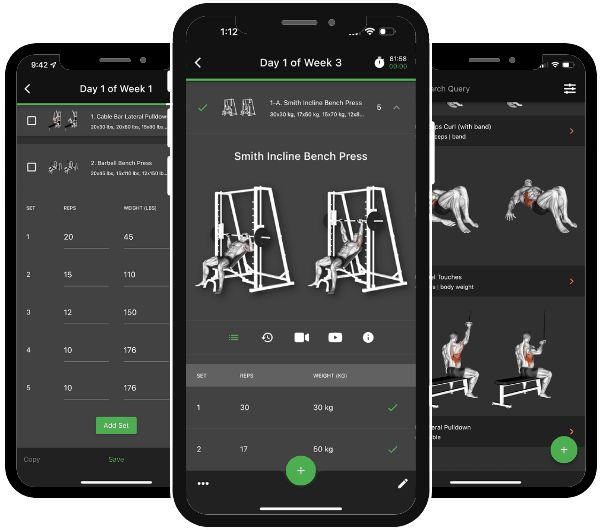
Achieve more with Fitwill: explore over 5000 exercises with images and videos, access built-in and custom workouts, perfect for both gym and home sessions, and see real results.
Start your journey. Download today!


Instructions
- Lie flat on a bench with your feet planted, a weight plate centered between your palms over the middle of your chest.
- Press your palms firmly into the plate, stack your wrists over your forearms, and set your shoulder blades lightly back and down on the bench.
- Keep your elbows slightly tucked below shoulder height so the upper arms track at a comfortable angle from the torso.
- Take a breath, brace your torso, and keep the plate squeezed tightly before the first rep begins.
- Press the plate upward in a smooth line until your elbows are nearly straight without losing the inward squeeze.
- Pause briefly at the top while keeping the plate pressed hard between your hands and your chest lifted.
- Lower the plate slowly back toward the center of your chest, keeping the same squeeze and elbow angle.
- Repeat for the planned reps, then bring the plate fully to your chest and set it down safely before sitting up.
Tips & Tricks
- Use a plate you can squeeze hard enough to keep it from slipping between your palms during the whole set.
- If your wrists bend back, move your hands slightly higher on the plate and keep the knuckles stacked over the forearms.
- Keep the elbows from drifting wide; a moderate tuck usually feels better on the shoulders than a flared press.
- The squeeze should stay constant even on the lowering phase, not just at the top of the rep.
- Stop the descent when the plate reaches the middle of the chest instead of letting it drop to the sternum and lose tension.
- A brief pause at lockout makes lighter loads challenging without turning the exercise into a speed press.
- If the shoulders take over, reduce the load and think about pushing the upper arms together while you press.
- Keep your feet driven into the floor so your torso stays stable and the bench press does not turn into a chest bridge.
- Higher reps usually suit this movement better than very heavy loading because the squeeze is the main challenge.
Frequently Asked Questions
What does Svend Bench Press work most?
It mainly trains the chest, with help from the triceps and front shoulders. The constant plate squeeze also makes the inner chest feel highly engaged.
Is Svend Bench Press good for beginners?
Yes, if you start with a light plate and focus on the squeeze and bench position. The movement is simple, but losing control of the plate or wrists is the main beginner mistake.
How heavy should the plate be for Svend Bench Press?
Use a plate that lets you keep a firm inward squeeze for every rep. If your hands start drifting apart or the plate feels shaky at lockout, the load is too heavy.
Why do I have to squeeze the plate so hard?
The squeeze is what makes this exercise different from a normal bench press. It keeps tension on the chest throughout the rep and reduces the chance that the shoulders take over.
Should my elbows flare out on Svend Bench Press?
No, a moderate tuck is usually better. Keeping the elbows slightly in front of the torso helps the shoulders stay comfortable and keeps the plate path more controlled.
Can I use a dumbbell instead of a plate?
A dumbbell squeeze press is a similar variation, but the plate version forces a different hand position and a tighter inward squeeze. Use whichever lets you keep the chest working without wrist discomfort.
Where should the plate touch on my chest?
Lower it toward the middle of the chest, not the neck or upper ribs. That keeps the press path consistent and avoids turning it into an awkward shoulder-dominant movement.
Why do my wrists get tired during Svend Bench Press?
Usually the plate is too low in the hands or the wrists are bent back. Keep the plate centered in the palms and the wrists stacked so the forearms support the squeeze.