Roll Peroneal Single Leg Side Lying On Floor
Roll Peroneal Single Leg Side Lying On Floor is a side-lying foam-roller release for the outer lower leg, with the roller working along the peroneal line just in front of the calf and above the ankle. It is not a strength lift. The purpose is to create controlled pressure, locate tight or sensitive tissue, and keep the movement slow enough that you can breathe and relax instead of bracing against the roller.
The setup matters because the pressure changes a lot depending on where you place the roller and how much weight you rest on it. In the image, the body is supported on the forearm while the top leg is bent in front for balance and the working lower leg stays on the roller. That arrangement lets you fine-tune pressure with the arms, ribs, and support leg instead of collapsing onto the roller and losing control.
This exercise is useful when the outer lower leg feels stiff, crowded, or overworked from running, cutting, jumping, or long periods of ankle loading. Rolling the peroneals does not replace ankle mobility or strength work, but it can make those drills feel smoother by reducing the sense of tugging along the outside of the shin and lower calf. The goal is to find tender spots, pause there, and let the tissue settle.
Good reps are short, deliberate passes from just above the ankle toward the lower calf, stopping before you press directly into the bony ankle or behind the fibular head near the knee. Keep the hips light enough to control pressure, use the top hand and forearm to guide the body, and breathe steadily while the roller moves. If the pressure becomes sharp, numb, or too intense to relax into, back off and shorten the range.
Use this drill as part of a warm-up, recovery block, or between hard lower-leg sessions when you want the outer shin and peroneal area to feel less guarded. It is appropriate for beginners if the pressure stays light and the passes stay slow. The most useful version is the one you can repeat calmly on both sides without tensing up or sliding across the floor.
[ Workout Log & Planner ]
Put your next workout in Fitwill
Keep your plan and training log ready when you are.


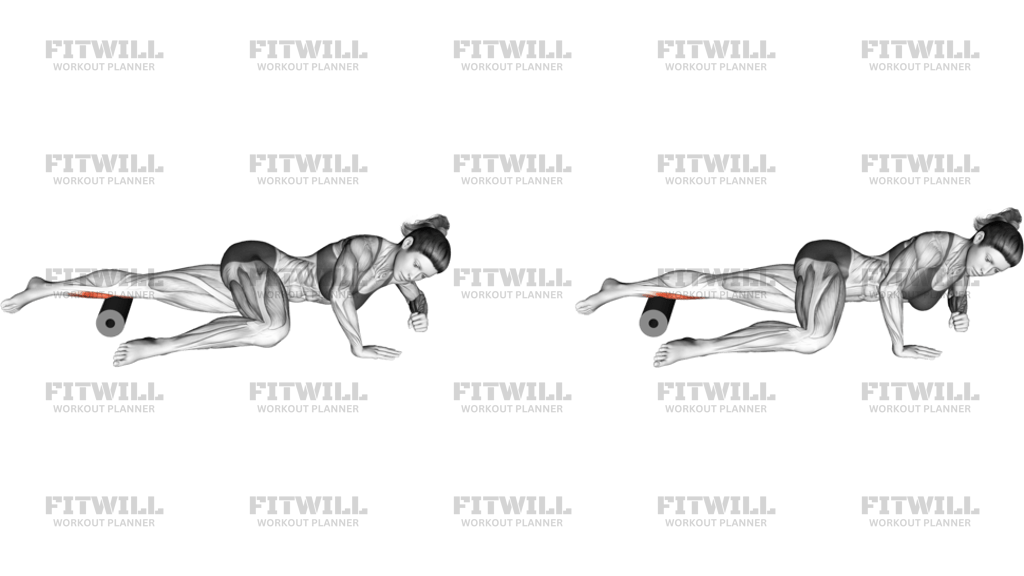
Instructions
- Lie on one side with a foam roller under the outer lower leg, just above the ankle and in front of the calf; support your torso on the forearm and bend the top leg in front for balance.
- Keep the working leg relaxed on the roller and use the top hand and forearm to control how much bodyweight you place on the tissue.
- Brace lightly through the ribs and lift the hips just enough to keep steady pressure on the roller without collapsing into the floor.
- Roll slowly from a few inches above the ankle toward the lower calf, staying on the fleshy outer-lower-leg line rather than the bony ankle or knee.
- When you find a tender or tight spot, pause for a few breaths and let the muscle soften instead of grinding across it.
- Use small passes and adjust the pressure by shifting more or less weight through the support arm and top leg.
- Keep the foot and ankle relaxed unless a slight toe turn helps you find a tighter strip of tissue.
- After finishing the working range, return to the start position under control and repeat for the planned number of passes before switching sides.
Tips & Tricks
- Keep the roller on the outer soft tissue of the lower leg; do not park it directly on the ankle bone or the bony knob below the knee.
- If the pressure feels excessive, support more of your bodyweight with the top leg and forearm before you shorten the range of motion.
- A slower roll usually works better here than a longer pass, because the peroneals often respond to brief holds more than to fast movement.
- Breathe out on the tender spot and let the side of the lower leg widen against the roller instead of stiffening up.
- Slightly turning the toes in or out can change which part of the outer shin gets pressure, so use that adjustment to find the most useful line.
- Do not chase pain for its own sake; the goal is tolerable pressure that you can stay relaxed under for several breaths.
- If you feel numbness, tingling, or sharp nerve-like pain, stop and reduce pressure immediately.
- Keep the top shoulder stacked enough that you are not dumping all of your weight through the ribcage onto the roller.
Frequently Asked Questions
What does Roll Peroneal Single Leg Side Lying On Floor target?
It targets the peroneal line on the outside of the lower leg, with the outer calf and ankle stabilizers assisting.
Is this a stretching exercise or a self-massage drill?
It is a self-massage and soft-tissue release drill. The goal is controlled pressure, not a forceful stretch or a strength effort.
Where should the roller sit on the working leg?
Place it on the fleshy outer lower leg, just above the ankle and in front of the calf, not on the ankle bone or behind the knee.
What should I use for support in the side-lying position?
Use the forearm under the torso and the top leg bent in front of you to control pressure and keep balance.
How long should I stay on one tender spot?
Hold it for a few slow breaths until the tissue eases, then continue with a short pass.
What are the most common mistakes with this roller release?
The biggest mistakes are rolling too fast, using too much bodyweight, and pressing directly on the bony edge of the ankle or knee.
Can beginners do this exercise?
Yes. Start with light pressure, short passes, and plenty of support from the arms and top leg.
When is this drill most useful?
It works well before ankle-focused training, after running or jumping, or any time the outside of the lower leg feels tight and guarded.