Standing Abdominal Vacuum
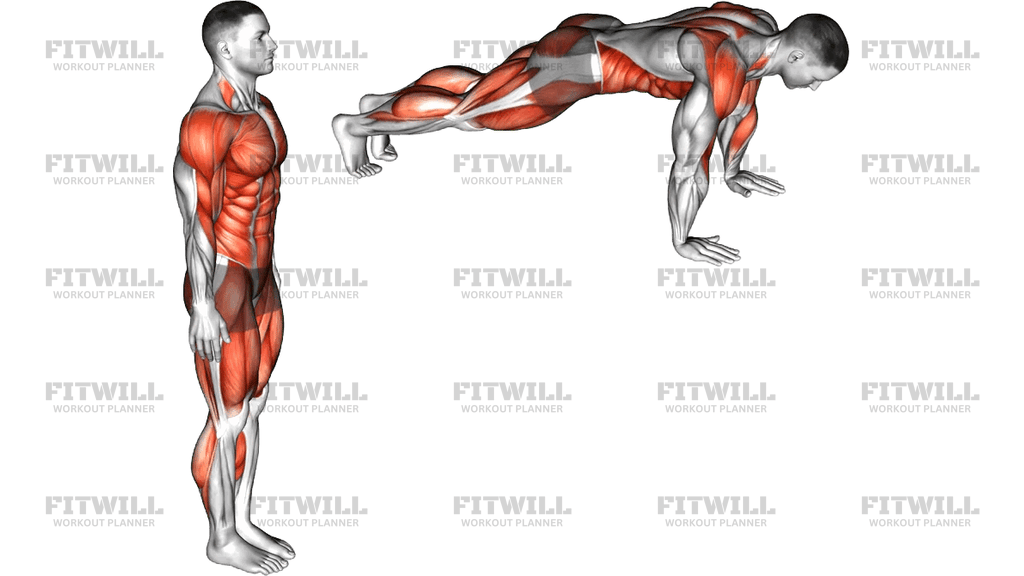
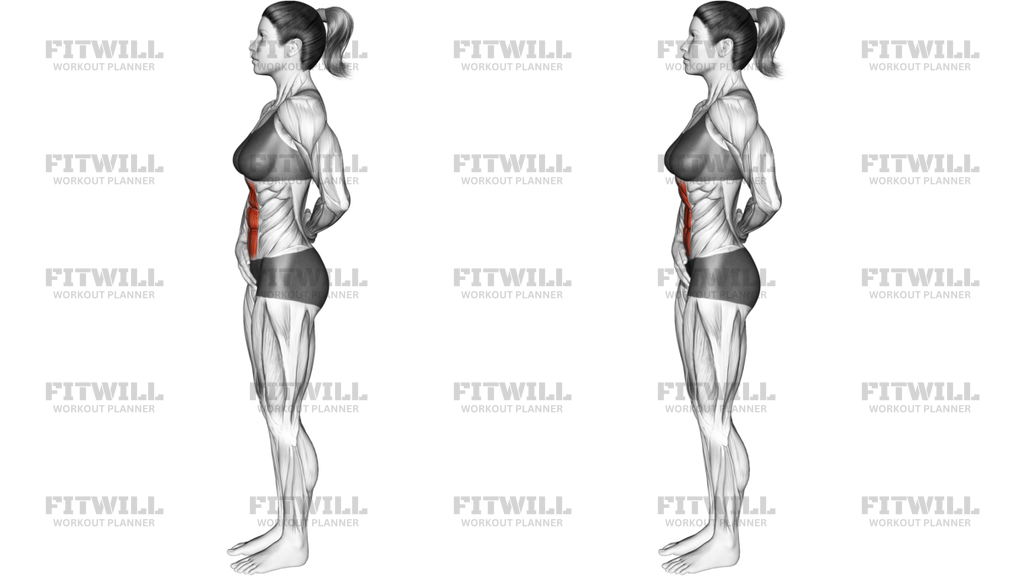
Standing Abdominal Vacuum is a standing core-control drill that teaches you to pull the abdomen inward while the rib cage stays stacked over the pelvis. In the image, the body stays tall and still, with the chest lifted but not flared and the waist drawing in from the front and sides. The exercise does not rely on momentum or load; it depends on breath control, posture, and how well you can maintain a quiet torso while the deep abdominal wall contracts.
This movement is useful for training the muscles that organize the midsection around the waistline, especially when you want better control after a full exhale. It is often used for core activation, posing practice, posture awareness, and as a low-fatigue accessory between heavier lifts. Because the work is isometric and internal, the quality of the rep matters more than the size of the visible movement.
A good standing vacuum starts from a balanced stance with soft knees, relaxed shoulders, and the pelvis in a neutral position. The first exhale should be complete enough that the ribs drop down instead of staying open. From there, the abdomen draws inward and slightly upward without bending forward, crunching, or turning the exercise into a hip hinge. The torso should look organized and steady from the outside even though the deep core is working hard inside.
Use short holds and clean resets before trying to extend the time under tension. If the neck tightens, the lower back arches, or the chest starts to rise to fake a bigger contraction, the set has drifted away from the target pattern. Keep the effort crisp, repeatable, and controlled so each repetition reinforces the same stacked standing position rather than teaching compensation.
[ Workout Log & Planner ]
Put your next workout in Fitwill
Keep your plan and training log ready when you are.


Instructions
- Stand tall with your feet about hip-width apart, knees softly unlocked, shoulders relaxed, and hands resting on your hips or just below your ribs.
- Stack your rib cage over your pelvis so your lower back stays neutral instead of arched or tucked hard.
- Inhale quietly through your nose and let the lower ribs expand without lifting the shoulders.
- Exhale slowly through your mouth until your lungs feel mostly empty and the ribs drop down.
- At the end of the exhale, draw your navel inward and slightly upward toward your spine to create the vacuum.
- Keep your chest tall, your neck long, and your hips still while you hold the contraction for the planned time.
- Release the vacuum slowly, then take a relaxed breath in before the next repetition.
- Repeat for the target number of holds, stopping if you lose the stacked standing posture.
Tips & Tricks
- Think about narrowing the waist from all sides, not just pulling the belly button straight back.
- A complete exhale makes the vacuum easier to feel; partial breaths usually leave the ribs too open.
- Keep the sternum from lifting as you draw the abdomen in, or the contraction will shift into the upper chest.
- Soft knees help you avoid locking the hips and leaning back to fake a stronger hold.
- If the lower back starts to arch, shorten the hold and reset your rib position before the next rep.
- Use a mirror or side view to check that your torso stays stacked instead of folding forward.
- Keep the face, jaw, and shoulders relaxed; tension there usually means the abdomen is no longer doing the work.
- Treat longer holds as a progression, not the default. Clean 5 to 10 second holds are better than sloppy 20 second holds.
Frequently Asked Questions
What does a standing abdominal vacuum train most?
It mainly trains deep abdominal control around the waist, especially the muscles that pull the rib cage and pelvis into a stacked position.
Is this the same as doing a crunch?
No. A crunch bends the spine, while a vacuum is an inward hold that keeps the torso tall and focuses on abdominal contraction and breath control.
Should I hold my breath during the hold?
After a full exhale, hold the vacuum briefly without forcing extra air in, then release and breathe normally before the next repetition.
Where should I feel the contraction in the standing position?
You should feel it around the waist and lower abdomen, with the rib cage staying down rather than the shoulders or lower back doing the work.
Can beginners use the standing version?
Yes. Beginners usually do better with short holds, a clear exhale, and a mirror so they can keep the torso stacked.
Why do my neck and shoulders tense up?
That usually means you are lifting the chest or bracing too hard upstairs. Relax the shoulders, soften the knees, and make the abdomen do the inward work.
How long should each vacuum hold be?
Start with about 5 to 10 seconds per hold. Increase time only if you can keep the ribs down and the pelvis steady.
What is the biggest form mistake in this exercise?
The most common mistake is turning it into a posture drill by arching the back or crunching forward instead of drawing the abdomen inward.