Bench Dip On Stability Ball
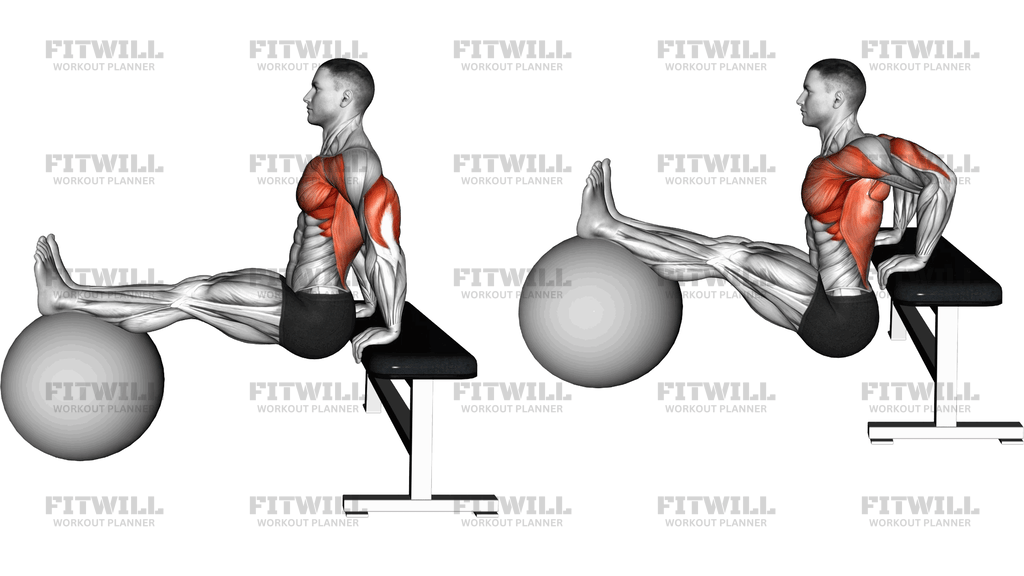
Bench Dip On Stability Ball is a bodyweight triceps exercise performed with the hands behind the body on a bench and the heels supported on a stability ball. The setup changes the usual bench dip by adding an unstable foot position, so the pressing work still comes from the triceps but the legs and trunk must stay organized to keep the ball from drifting.
The main training effect is elbow extension strength and muscular endurance through the triceps brachii. The front of the shoulders and the muscles of the trunk help stabilize the torso, while the hamstrings and glutes stay engaged to keep the legs long and the ball steady. The exercise is useful when you want a bodyweight dip variation that challenges balance without turning into a swinging or shrugging pattern.
The bench position matters because it fixes the hands and gives you a clear reference for shoulder position. Keep the chest lifted, shoulders set down away from the ears, and the elbows tracking back rather than flaring wide. As you lower, bend the elbows in a controlled arc until the upper arms are close to parallel with the floor or until shoulder comfort or bench height limits the range.
At the bottom, reverse direction by pressing the bench away and extending the elbows until the arms are straight but not locked hard. The legs should stay long and quiet on the ball so the body moves as one piece instead of bouncing between the hands and feet. Exhale on the press, inhale on the descent, and keep the neck neutral so the upper traps do not take over.
This variation is best used as accessory triceps work, a bodyweight strength drill, or a stability-focused upper-body finisher. It rewards precise control more than heavy loading, and it becomes less useful if the shoulders feel crowded or the ball position makes the hips twist. If that happens, shorten the range, reduce speed, or switch to a more stable dip setup before forcing more reps.
[ Workout Log & Planner ]
Put your next workout in Fitwill
Keep your plan and training log ready when you are.


Instructions
- Sit on the edge of a flat bench and place your hands beside your hips, fingers pointing forward, with your heels resting on top of the stability ball.
- Walk your hips off the bench and support your weight on straight arms while keeping the ball still and your legs long.
- Set your shoulders down and back slightly, lift your chest, and brace your midsection before the first rep.
- Bend your elbows to lower your hips in a smooth arc, keeping them pointed mostly behind you instead of flaring out.
- Lower only until your upper arms are near parallel to the floor or until your shoulders begin to lose position.
- Press through the palms to straighten your elbows and bring your hips back up without bouncing off the bottom.
- Keep the heels lightly dug into the ball so the legs stay quiet and the ball does not roll toward you or away from you.
- Exhale as you press up, inhale as you lower, and repeat for the planned number of controlled repetitions.
Tips & Tricks
- Keep your hands close enough to the bench edge that your shoulders stay stacked over the wrists instead of drifting far behind them.
- A slight forward gaze helps keep the chest lifted and prevents the chin from jutting toward the knees.
- If the ball starts sliding, shorten the lever by bending the knees slightly or place the heels higher on the ball.
- Do not let the elbows flare wide; a back-and-down path usually feels better on the shoulders and keeps more tension on the triceps.
- Stop the descent before the front of the shoulder rolls forward or the bench contact starts to feel pinchy.
- Use a slower lowering phase than pressing phase so the triceps have to control the full range.
- Keep the pelvis from sagging by squeezing the glutes and holding the legs in line with the torso.
- If your wrists feel compressed on the bench edge, shift the hand position a little wider or use a bench surface with a flatter edge.
- This is not a max-load dip; quality reps with a steady ball position matter more than chasing fatigue.
- Once the shoulders start to shrug or the hips start twisting, end the set and reset the ball position before continuing.
Frequently Asked Questions
What muscles does Bench Dip On Stability Ball work most?
It mainly targets the triceps brachii, with the front delts, chest, core, and hamstrings helping stabilize the body and the ball.
Why are the heels on a stability ball instead of the floor?
The ball adds instability, so your legs and trunk have to stay tighter while the triceps handle the pressing portion of the rep.
How deep should I lower on the bench dip?
Lower until the upper arms are close to parallel with the floor or until your shoulders start to feel crowded. Going deeper is only worthwhile if the shoulder stays comfortable and the torso position stays controlled.
Should my elbows flare out during the dip?
No. Let the elbows travel mostly back so the shoulders stay organized and the triceps can do more of the work.
Is this exercise appropriate for beginners?
Yes, if the person can control a stable bench dip first. Beginners may need a smaller range of motion or a more stable foot position before using the ball.
What should I do if the stability ball keeps moving?
Shorten the range, slow the lowering phase, and press the heels into the ball more firmly. If it still shifts, move to a more stable setup.
Does this replace a weighted dip machine or parallel-bar dip?
No. It is a bodyweight triceps accessory with a stability challenge, not a direct substitute for heavier dip variations.
What is the most common form mistake here?
Letting the hips sag or the shoulders shrug. Both reduce triceps tension and make the movement feel unstable instead of controlled.