Cable Incline Biceps Curl
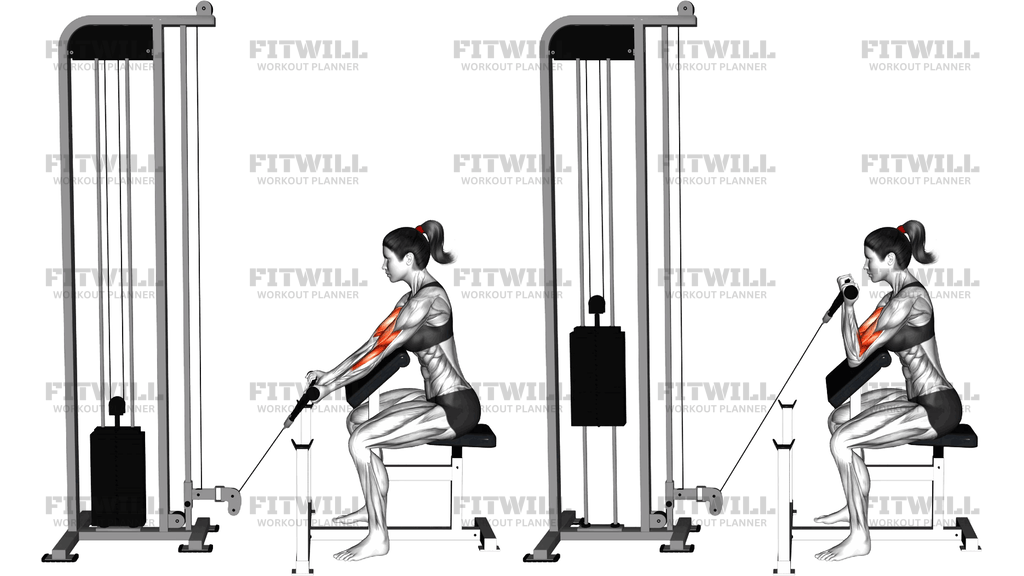
Cable Incline Biceps Curl is a cable-based arm exercise performed on an incline bench with the pulley set low and behind you. Sitting back on the bench changes the shoulder angle and keeps the upper arm slightly behind the torso, which increases tension through the curl and makes it harder to cheat with hip drive or shoulder swing. That setup is the point of the movement: it turns a simple elbow-flexion exercise into a stricter biceps isolation drill with a long range of motion.
This exercise primarily trains the biceps, especially the long head, while the forearms and shoulder stabilizers help control the handle and keep the upper arm fixed. Because the arm starts in a lengthened position, the first part of the rep should feel smooth and deliberate rather than explosive. A clean cable incline curl is less about moving the stack and more about keeping constant tension on the biceps as the elbow bends and extends.
The bench position matters. Sit far enough back that the cable stays behind your body, plant your feet, and let the arms hang without letting the shoulders roll forward. From there, curl the handle or handles toward the front of the shoulders while keeping the elbows quiet. The upper arms should stay mostly in place, the wrists should stay stacked over the forearms, and the chest should stay open against the bench pad instead of collapsing toward the load.
Lowering the weight under control is just as important as the curl itself. The return phase should lengthen the biceps without yanking the shoulder forward or letting the elbows drift. That controlled stretch is one reason the movement is useful for hypertrophy work and for lifters who want a strict arm accessory after pulling sessions, back training, or arm days. Light to moderate loads usually work best because the bench and cable already make the exercise challenging.
Use this variation when you want clean biceps tension, a strict setup, and less momentum than standing curls allow. It is appropriate for beginners who can hold the bench position and control the handle, but the load should stay modest until the shoulder position and elbow path feel natural. If the front of the shoulder takes over or the lower back starts helping the rep, the weight is too heavy or the bench setup is off.
[ Workout Log & Planner ]
Put your next workout in Fitwill
Keep your plan and training log ready when you are.


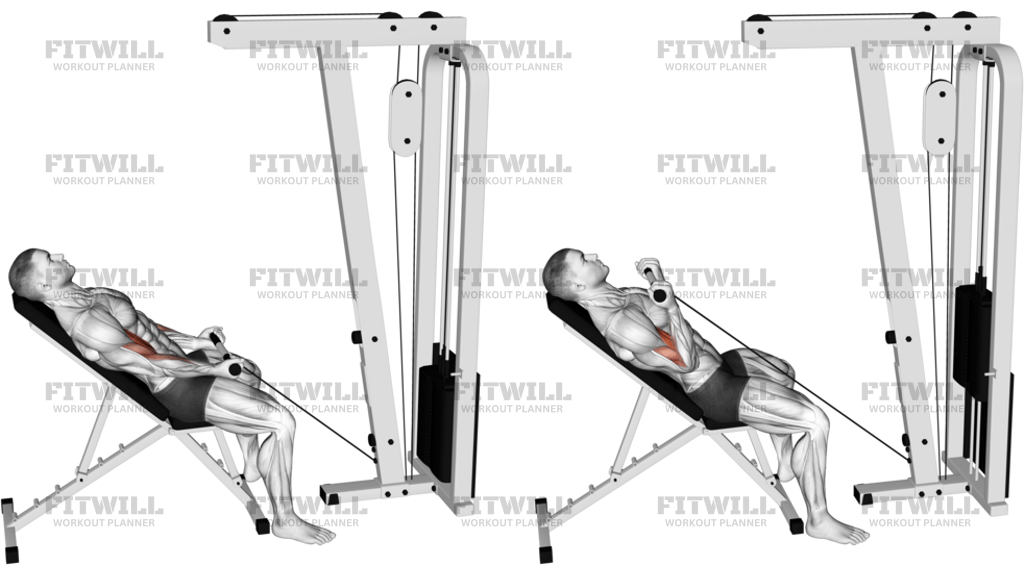
Instructions
- Set an incline bench in front of a low cable pulley so the cable runs from behind the bench, then sit back with your upper back supported and your feet flat.
- Grip the handle attachment with your palms facing up and let your arms hang down and slightly behind your torso without shrugging your shoulders.
- Brace your torso against the bench, keep your chest open, and lock in the upper-arm position before you start the first rep.
- Curl the handle toward your shoulders by bending only at the elbows, keeping your upper arms steady and your wrists stacked over your forearms.
- Squeeze the biceps briefly at the top without letting the elbows drift forward or the shoulders roll in.
- Lower the handle slowly until your elbows are almost straight and the biceps are fully lengthened, keeping tension in the cable the whole way down.
- Exhale as you curl and inhale as you lower, using a smooth rhythm instead of jerking through the rep.
- Reset your shoulder position if you lose the bench contact or start swinging, then continue for the planned reps.
Tips & Tricks
- Set the bench far enough from the stack that the cable stays taut even when your arms are almost straight at the bottom.
- Keep your elbows slightly behind your torso; if they drift forward, the movement turns into a looser front-of-shoulder curl.
- Use a lighter load than you would for standing curls, because the stretched start position makes cheating much easier to notice.
- Keep your wrists neutral and avoid bending them back as you pull the handle toward your shoulders.
- Do not let your rib cage flare to finish the rep; the bench should stabilize your upper body, not just your feet.
- Think about bringing your pinkies slightly higher than your thumbs at the top to keep the biceps doing the work instead of the forearms.
- Lower under control for 2 to 4 seconds so the cable does not yank the arms back into the bottom position.
- If the front of the shoulder feels pinchy, move the bench slightly farther from the pulley or reduce the range a little at the bottom.
- Stop the set when the upper arms start drifting or when you have to rock against the bench to keep the handle moving.
Frequently Asked Questions
What does Cable Incline Biceps Curl train most?
It mainly targets the biceps, with extra work from the forearms and shoulder stabilizers.
Why use an incline bench for a cable curl?
The incline puts the upper arm slightly behind the torso, which increases biceps tension and makes the curl stricter.
Should my elbows stay fixed during the rep?
Yes. Let them move only a little if needed, but keep them mostly pinned so the curl stays on the biceps instead of the front delts.
How heavy should I go on this exercise?
Use a load you can lower slowly and curl without shoulder swing. This movement usually works best with light to moderate resistance.
Can I do this with one handle or two?
Either setup can work if the cable machine and attachment match the image and you can keep both arms symmetrical through the curl.
What is the most common mistake?
Letting the chest lift, elbows travel forward, or the lower back help finish the rep. The bench should keep the body still.
Is this better for the long head or short head of the biceps?
The shoulder angle biases the long head a bit more because the arm starts in a lengthened position behind the torso.
Can beginners use Cable Incline Biceps Curl?
Yes, if they start with light weight and learn to keep the upper arm still against the bench.
Where should I feel the stretch at the bottom?
You should feel a strong biceps stretch with the shoulder stable, not a pinch in the front of the shoulder.