Barbell Clean High Pull
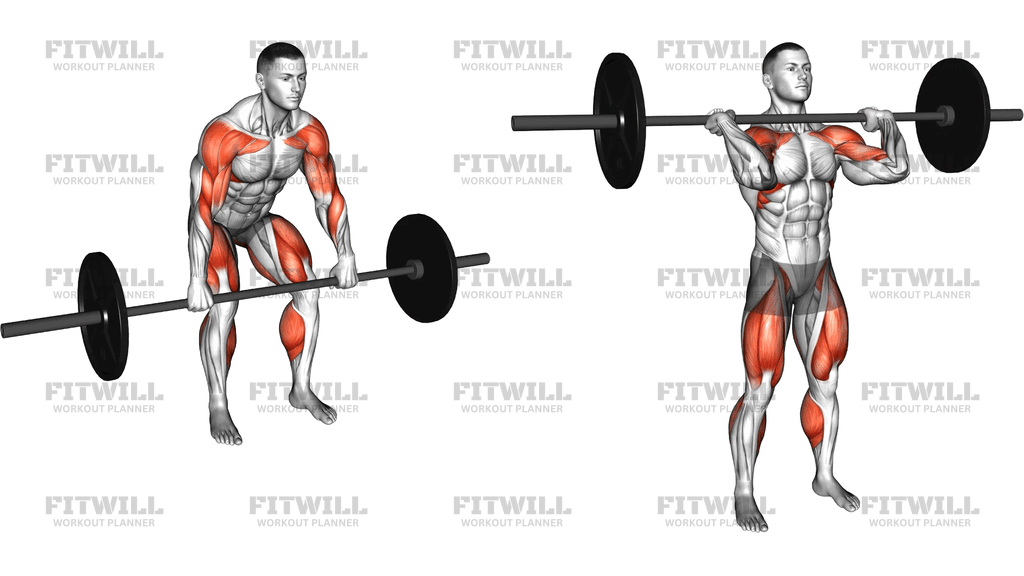
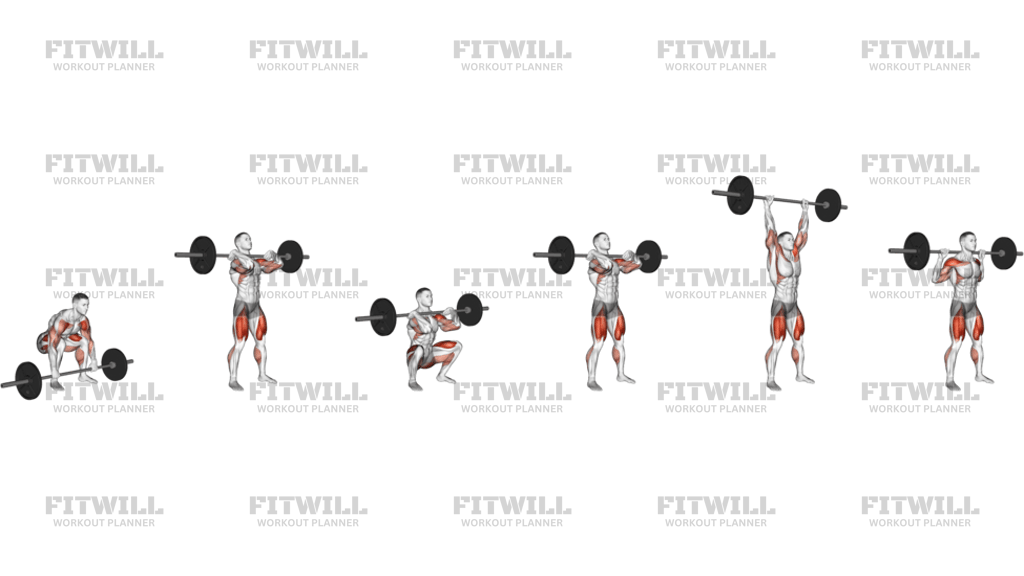
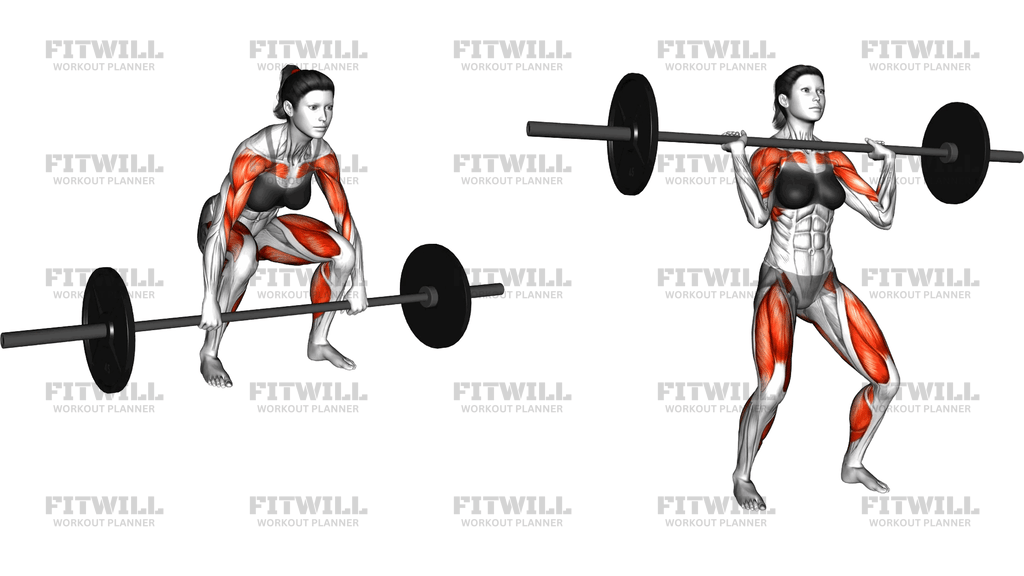
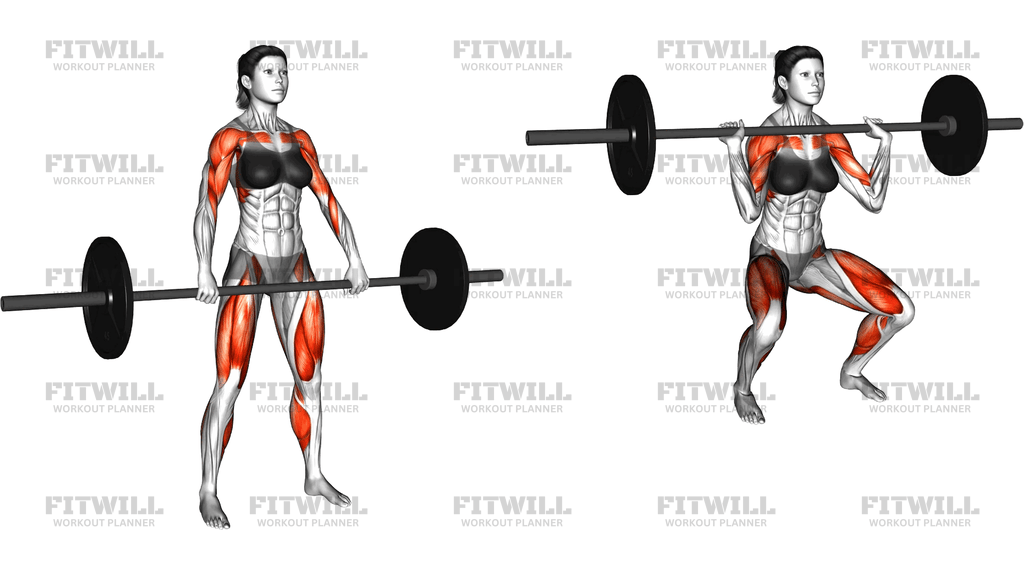
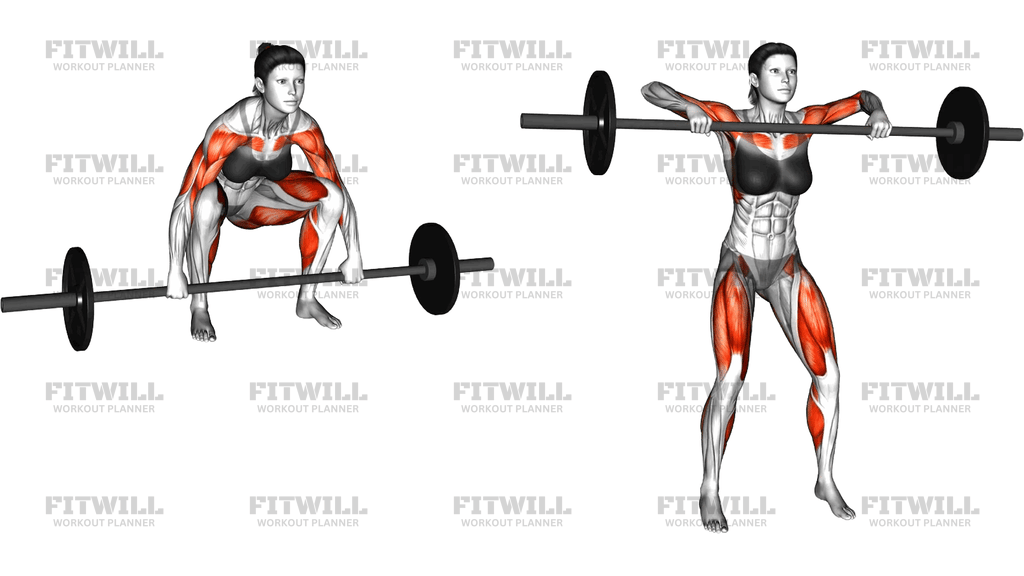
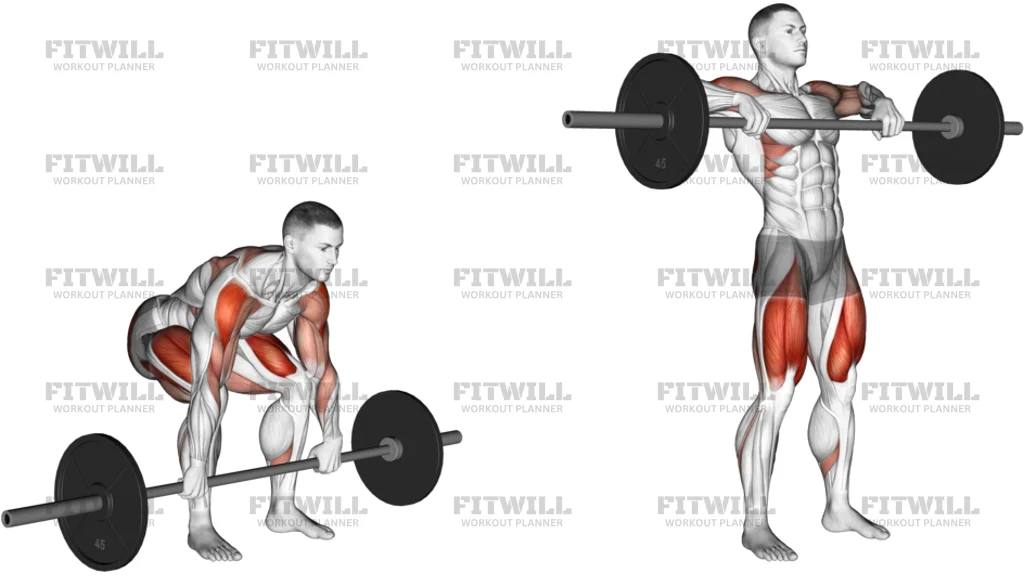
Barbell Clean High Pull is a dynamic weightlifting movement that turns the clean into a pure pull, with no catch in the front rack. The goal is to drive the bar hard from the floor, finish with speed and elevation through the elbows, and lower it with control. It is a useful choice for athletes and lifters who want more explosive pull power without receiving the bar in a squat.
This exercise places the main emphasis on the delts, traps, and upper back, while the legs and hips supply the force that starts each rep. In practice, the bar should move as one connected system: the feet stay planted, the torso stays organized, and the bar travels close to the body instead of arcing forward. That close bar path is what keeps the lift powerful and keeps the shoulders in a better position to finish the pull.
The setup matters as much as the finish. A stable stance with the bar over the midfoot, a firm overhand grip just outside the knees, and a flat back with the shoulders slightly over the bar make it easier to generate force without leaking tension. Once the bar leaves the floor, the pull should build from leg drive into violent hip extension, then a shrug and high elbow finish. The arms guide the bar upward; they do not start the lift by curling it.
Barbell Clean High Pull is often used in Olympic lifting prep, power blocks, or accessory work for athletes who need more speed from the floor and more finish through the upper back and shoulders. It can also fit as a technique drill for lifters learning how to keep the bar close during explosive pulls. Because the movement is fast and unforgiving when the load gets too heavy, it works best with crisp reps, moderate loading, and a clear stop point before posture or timing breaks down.
For safety, keep the rep clean rather than forcing a bigger pull with the arms, the lower back, or a hard lean backward. If the bar drifts away from the thighs or the shoulders start to round forward, the load is too heavy or the setup is off. Treat each rep like a single powerful effort: brace, drive, finish, and reset before the next pull.
[ Workout Log & Planner ]
Put your next workout in Fitwill
Keep your plan and training log ready when you are.


Instructions
- Stand with your feet about hip-width apart and place the barbell over your midfoot with your shins close to the bar.
- Grip the bar with an overhand grip just outside your knees, then hinge down with a flat back and your shoulders slightly in front of the bar.
- Set your chest, brace your midsection, and keep your arms straight so the lift starts from the legs and hips, not the hands.
- Push the floor away and let the bar rise close to your shins and thighs as your knees and hips extend together.
- When the bar passes your knees, drive your hips forward hard, stand tall, and shrug explosively without letting the bar swing forward.
- Pull your elbows up and out as the bar reaches your upper abdomen or lower chest, keeping the bar path tight to your torso.
- Finish the rep with a tall posture, high elbows, and the shoulders working hard, but do not try to catch the bar in a front rack.
- Lower the bar in reverse by guiding it back down the torso, hinging at the hips, and setting it back on the floor with control before the next rep.
Tips & Tricks
- If the bar leaves your body and loops forward, reset the start position so the bar begins over the midfoot and stays close to the thighs.
- Keep the elbows high and outside; if they stay low, you are likely curling the bar instead of finishing the pull.
- Use a load that lets you explode every rep without turning the movement into a grind.
- Think legs, hips, then shrug; if the arms start pulling early, the bar usually loses speed.
- A hook grip can help if your grip opens before your upper back finishes the rep.
- Do not lean back at the top; a tall finish is enough, and excessive layback usually shifts the stress to the lower back.
- If your shoulders round forward off the floor, bring your chest up more and set your lats before each rep.
- Lower the bar under control instead of dropping straight from the top, so the next rep starts from the same clean position.
Frequently Asked Questions
What muscles does Barbell Clean High Pull work most?
Barbell Clean High Pull primarily hits the shoulders, traps, and upper back, with the legs and hips providing the explosive drive off the floor.
Is Barbell Clean High Pull the same as a clean?
No. Barbell Clean High Pull finishes with a high pull and no catch in the front rack, so the focus stays on speed and extension rather than receiving the bar.
How wide should my grip be for Barbell Clean High Pull?
Use an overhand grip just outside your knees so the bar can travel close to your body and your elbows have room to rise.
Should I bend my arms early in Barbell Clean High Pull?
No. Keep the arms straight off the floor and let the hips and legs create the speed first, then finish with the elbows high.
Can beginners do Barbell Clean High Pull?
Yes, if they keep the load light and learn the hinge, bar path, and tall finish before adding speed.
What is the most common mistake in Barbell Clean High Pull?
Letting the bar drift away from the thighs is a common error, because it kills power and usually leads to a sloppy shrug or arm pull.
Should I catch the bar on my shoulders?
No. Barbell Clean High Pull ends at the high pull, so you lower the bar instead of racking it on the shoulders.
What is a good use for Barbell Clean High Pull in training?
It works well in power-focused sessions, Olympic lifting prep, or accessory work when you want explosive pulling without the catch phase.