Dumbbell Upright Row
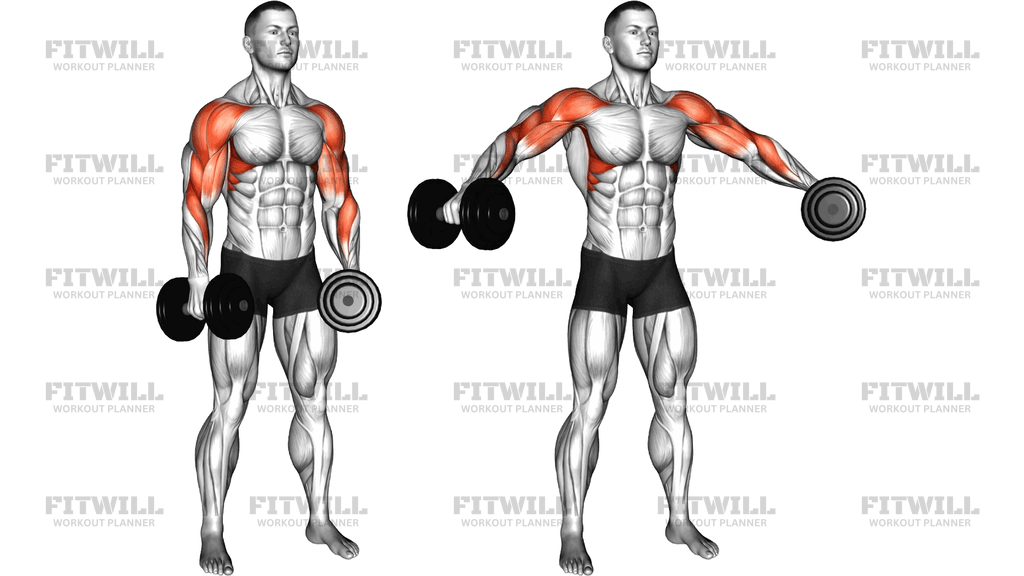
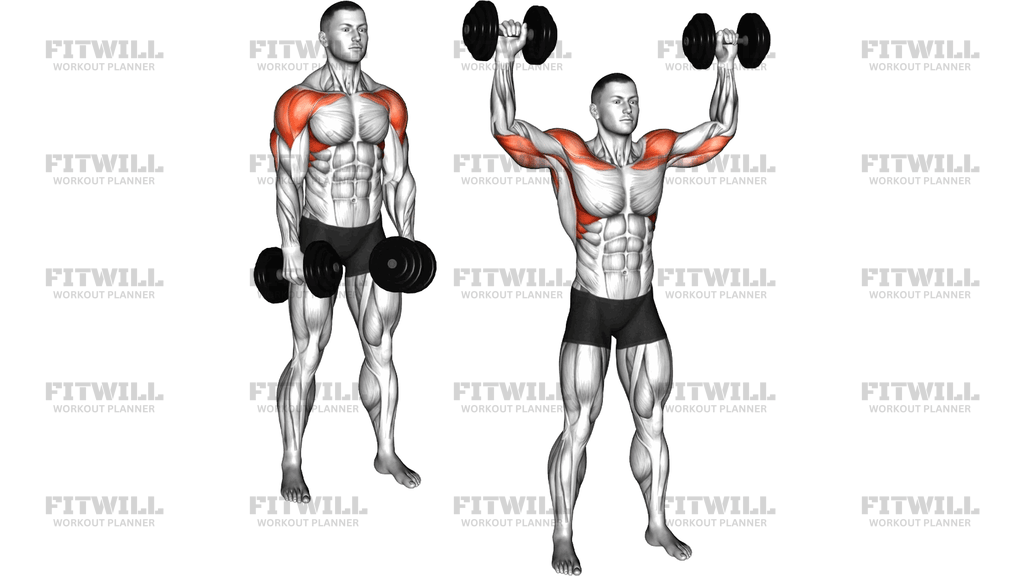
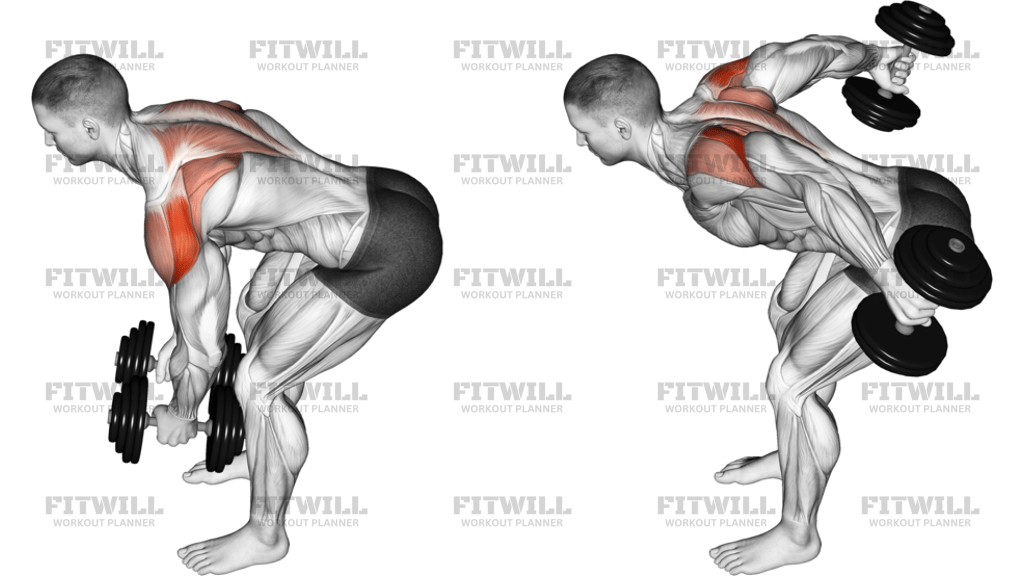
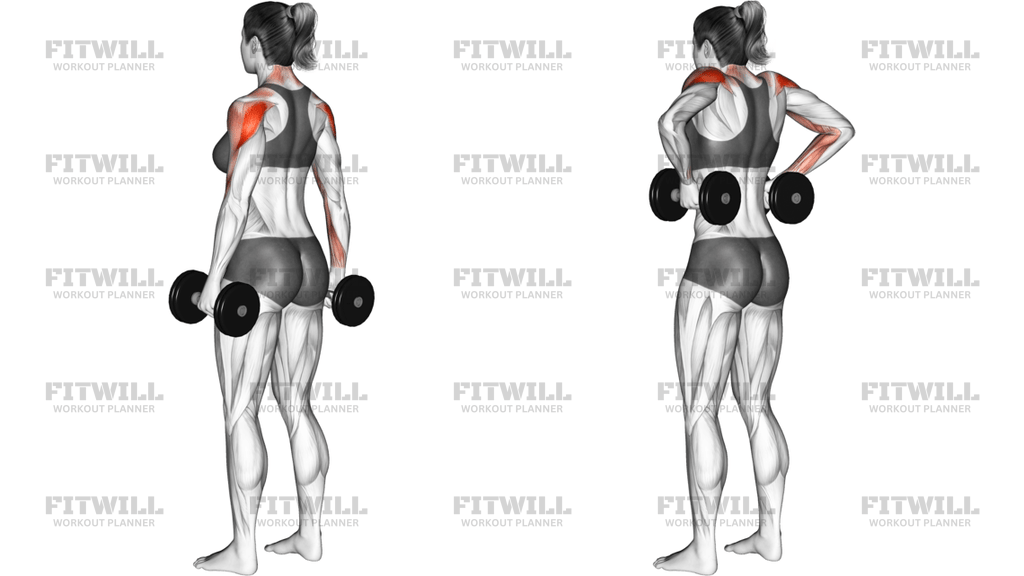
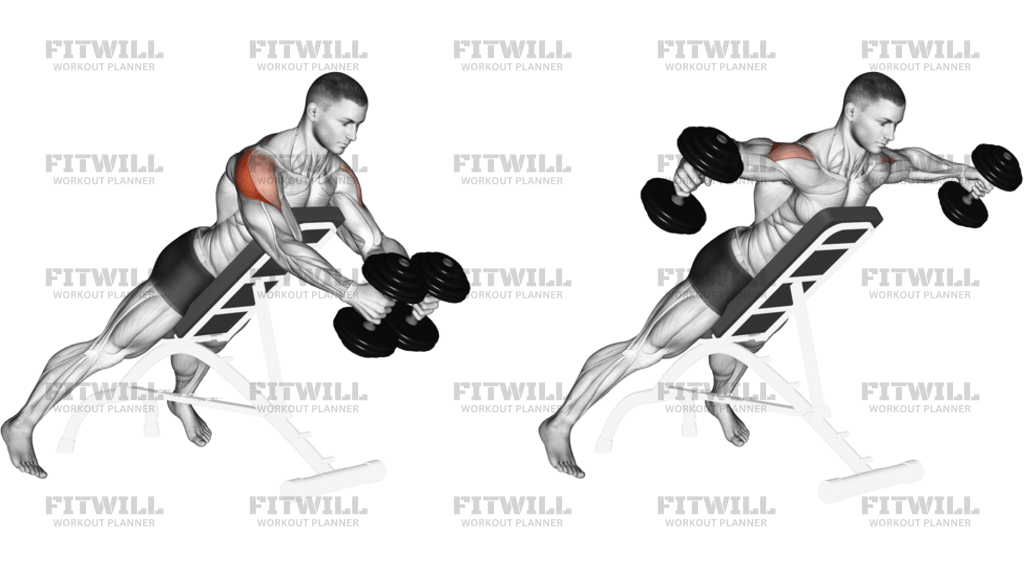
Dumbbell Upright Row is a standing shoulder-and-trap exercise that uses a pair of dumbbells to drive the elbows upward while the weights travel close to the body. The movement is meant to load the side delts, upper traps, rear upper back, and upper arms without turning into a loose heave. The picture shows a classic standing version, so the setup should stay tall, balanced, and deliberate from the first rep.
This exercise is usually used as a shoulder accessory after your main pressing work or as a lighter pulling pattern when you want more trap and delt emphasis. Because the elbows rise above the wrists and the upper arm externally rotates, the range of motion matters more than the load. A clean Dumbbell Upright Row should feel strong through the shoulders and upper back, not jammed in the front of the shoulder.
Start standing with your feet about hip-width apart, dumbbells resting in front of your thighs, palms facing your body, and ribs stacked over your pelvis. Keep the neck long and the shoulders down before you pull. That stable start position helps the dumbbells travel in a straight, controlled line close to the torso instead of swinging away from it.
As you row, let the elbows lead and lift them out and up until the dumbbells reach lower-chest to upper-chest height. The hands should stay below or just around elbow level, with wrists staying neutral instead of bending back. The bar-like vertical path common in many upright rows is replaced here by two dumbbells moving independently, so each side should rise at the same speed and finish at the same height.
The lowering phase is where most of the control lives. Bring the dumbbells back to the starting point under control, keep the torso quiet, and stop the set if the shoulders start to pinch or the shrug takes over. For most lifters, Dumbbell Upright Row works best with moderate loads, a smooth tempo, and a comfortable top position that respects shoulder anatomy rather than forcing an exaggerated pull.
[ Workout Log & Planner ]
Put your next workout in Fitwill
Keep your plan and training log ready when you are.


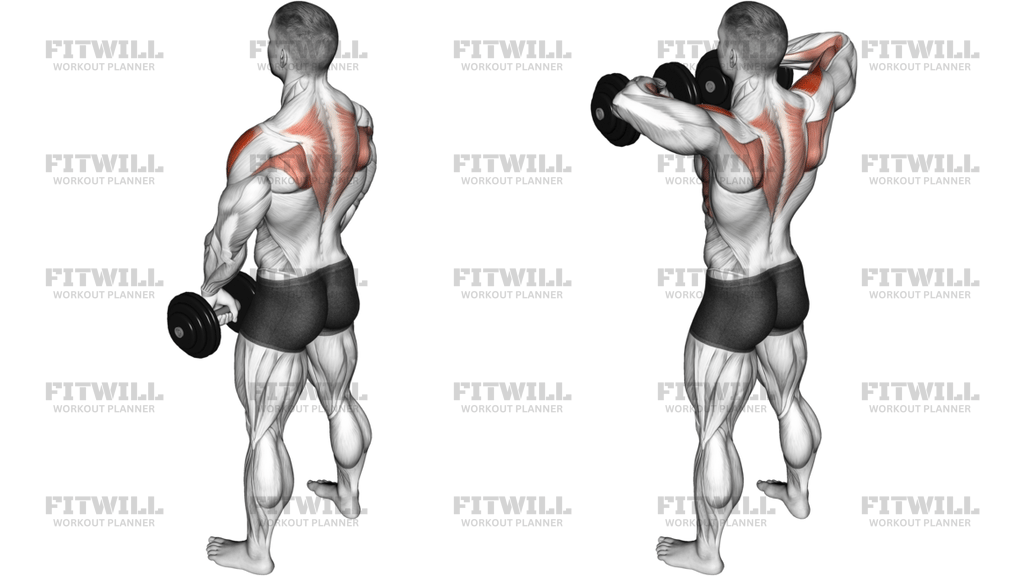
Instructions
- Stand tall with your feet about hip-width apart and hold a dumbbell in each hand in front of your thighs, palms facing your body.
- Set your ribs over your pelvis, keep your neck long, and let the dumbbells hang close to the front of your legs.
- Squeeze your upper back lightly before the first rep so the shoulders do not roll forward.
- Pull both elbows up and out, keeping the dumbbells close to your body as they travel toward your lower chest.
- Stop the pull when the elbows are high and the shoulders still feel comfortable; do not force the hands above the elbows.
- Pause briefly at the top without leaning back or shrugging aggressively.
- Lower the dumbbells slowly until they return to the front of your thighs.
- Keep both sides even, with the same height, tempo, and path on every rep.
- Exhale as you pull up and inhale as you lower back down.
- End the set if the front of the shoulder starts to pinch or the weights begin to swing.
Tips & Tricks
- Keep the dumbbells close to your torso so the upper traps and side delts do the work instead of momentum.
- Let the elbows lead the motion; if the hands are trying to rise first, the weight is probably too heavy.
- Stop at a lower chest or upper-chest height if anything in the front of the shoulder feels cramped.
- A slightly wider grip is not an option here, but a neutral wrist and relaxed forearm help keep the pull smooth.
- Use lighter dumbbells than you would for curls or presses; upright rows usually expose poor control quickly.
- Do not yank the weights upward from a dead hang; start the pull with tension already in the shoulders and upper back.
- Keep your chest tall without leaning back to finish the rep, because that turns the set into a hip thrust.
- If one side rises higher than the other, slow the rep down and match the top position before adding load.
Frequently Asked Questions
What muscles does Dumbbell Upright Row work?
Dumbbell Upright Row emphasizes the side delts and upper traps, with the rhomboids, rear upper back, and upper arms assisting.
Is Dumbbell Upright Row beginner-friendly?
Yes, if you start with light dumbbells and stop the pull before the shoulders feel crowded. Beginners should prioritize a smooth elbow path over a high finish.
How high should the dumbbells come up in Dumbbell Upright Row?
Most lifters should stop around lower-chest or upper-chest height. If the dumbbells need to climb much higher to feel effective, the load is probably too light or the rep is becoming sloppy.
Should my elbows stay above my wrists in Dumbbell Upright Row?
Yes. Let the elbows lead and keep the wrists neutral so the shoulder and upper-back muscles, not the forearms, set the pace.
Why does Dumbbell Upright Row bother my shoulders?
The top position can feel cramped if you pull too high, shrug hard, or use a weight that forces the shoulders forward. Shorten the range and slow the lowering phase if pinching starts.
Can I do Dumbbell Upright Row without swinging?
Yes. Keep the dumbbells close to the thighs on the way down, start each rep under control, and avoid leaning back to finish the lift.
What is the biggest mistake in Dumbbell Upright Row?
The most common mistake is trying to force a higher pull by shrugging and jerking the dumbbells upward. That shifts stress away from the delts and traps and makes the movement less predictable.
What can I use instead of Dumbbell Upright Row?
If the shoulder position feels uncomfortable, use a cable upright row, a high pull with a lighter load, or a dumbbell lateral raise for a more shoulder-friendly option.