Corpse Pose
Corpse Pose is a floor-based recovery and breathing position built around lying still, relaxing the major muscle groups, and letting the body settle into the ground. The pose is simple on paper, but the details matter: the way you place the heels, shoulders, pelvis, and head determines whether you can actually soften the effort instead of holding hidden tension in the neck, low back, or jaw.
This movement is usually used as the closing pose after a yoga sequence or as a brief reset between harder efforts. Because the body is supported by the floor, the goal is not to create force or chase range. It is to make the whole body quiet enough that the breath can become slow, even, and unforced. That makes Corpse Pose useful for cooldowns, mobility sessions, and any workout that needs a calmer finish.
The image shows the body lying flat on the back with the arms resting by the sides and the legs long and relaxed. From that position, the lower back should feel heavy without being pinched, the shoulders should drop away from the ears, and the chest should stay open enough for easy nasal breathing. If the position feels strained, a small adjustment such as bending the knees slightly or widening the feet can reduce tension and make the hold more restorative.
Good execution is mostly about restraint. Once you are in position, stop fidgeting, soften the hands and feet, and let the exhale lengthen naturally. If the mind wanders, return to the breath instead of trying to force the body into a perfect shape. The best version of Corpse Pose is the one where your posture is organized, your face is relaxed, and the whole back line can contact the floor without effort.
Use this pose when you want recovery without movement, when you need to bring the heart rate down, or when you want to finish a session with a few minutes of quiet breathing. It is beginner-friendly, but it still rewards precision: the more carefully you position the body, the easier it becomes to relax, recover, and leave the session without carrying extra tension into the rest of the day.
Fitwill
Log Workouts, Track Progress & Build Strength.
Achieve more with Fitwill: explore over 9600 exercises with images and videos, access built-in and custom workouts, perfect for both gym and home sessions, and see real results.
Start your journey. Download today!




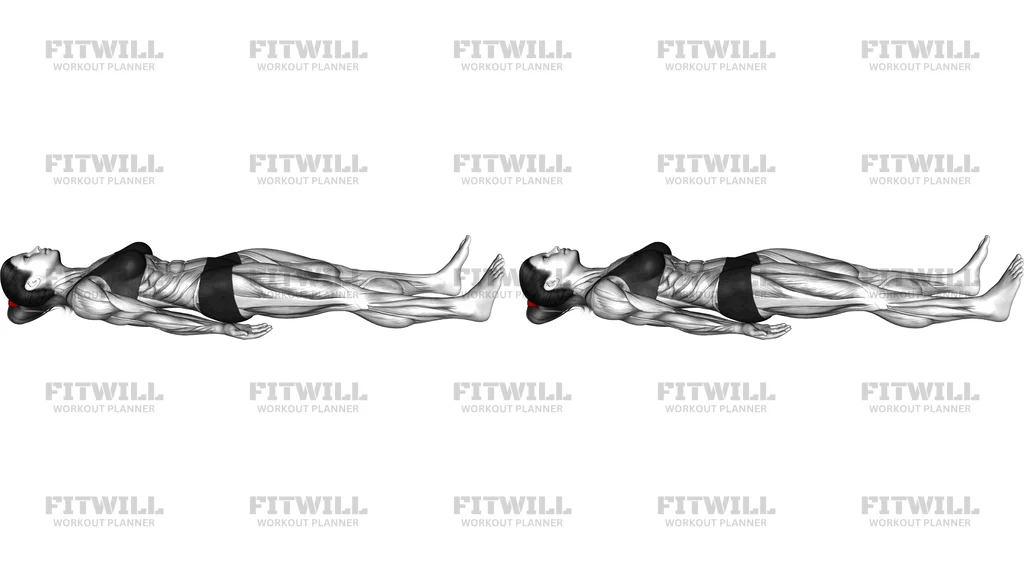
Instructions
- Lie on your back on a mat or flat floor with your legs extended and your arms resting by your sides, palms up or relaxed.
- Let the back of your head rest heavy on the floor and keep your neck long instead of tucking your chin.
- Allow your shoulders to drop away from your ears and keep your chest soft rather than lifted.
- Set your feet comfortably apart with the toes pointed upward or slightly out if that feels more natural.
- Unclench your hands, jaw, and face so the whole body can settle into the support of the floor.
- Breathe slowly through the nose and let each exhale feel longer than the inhale.
- Stay still and scan for unnecessary tension in the ribs, low back, hips, and thighs.
- If the lower back feels tight, bend the knees slightly or place a rolled towel under them.
- Hold the position for the planned time, then roll to one side before sitting up slowly.
Tips & Tricks
- Let the heels fall naturally instead of pressing the legs straight with effort.
- If your low back arches, widen the feet or bend the knees a little so the pelvis can rest.
- Keep the palms turned up if you want more shoulder opening and less upper-body tension.
- Do not flatten the neck hard into the floor; the back of the skull should feel supported, not jammed.
- A small towel under the head can help if your chin drops too far toward the chest.
- If the shoulders creep upward, gently slide the shoulder blades down before resuming stillness.
- Use this pose as a true cooldown: the point is to stop doing, not to stretch harder.
- Keep the breath quiet and smooth; noisy or forced breathing usually means the body is still bracing.
- Come out of the pose slowly, especially after a long hold, to avoid feeling lightheaded.
Frequently Asked Questions
What is Corpse Pose actually for?
It is a resting floor pose used to relax the body, slow the breath, and settle down after yoga or training.
Can beginners perform this exercise?
Yes. It is one of the most beginner-friendly positions because there is no load to manage and the floor supports the body.
How should my arms and legs be placed in Corpse Pose?
The usual setup is arms resting alongside the body and legs extended comfortably, with the feet relaxed and the shoulders soft.
What should I do if my lower back feels uncomfortable on the floor?
Bend the knees slightly, move the feet farther apart, or place support under the knees so the pelvis can rest more naturally.
Should I keep my palms facing up or down?
Palms up is common because it helps the shoulders relax, but palms down is fine if that feels better for your joints.
Is Corpse Pose a stretch or a relaxation exercise?
It can feel like both, but the main purpose is relaxation and breathing rather than forcing a deep stretch.
What is the most common mistake in this pose?
People often keep hidden tension in the jaw, shoulders, or abdomen instead of letting the whole body rest.
How long should I stay in Corpse Pose?
A short hold can help after a workout, while longer holds are useful in yoga or recovery sessions if you can stay comfortable and still.