Double Pigeon Pose
Double Pigeon Pose is a seated hip-opening stretch that places one shin across the body and stacks the opposite shin underneath it. It is also commonly called Fire Log Pose or Agnistambhasana. The position is designed to load the outer hip of the top leg, the glute of the bottom leg, and the deep muscles that control hip rotation without turning the movement into a forceful push.
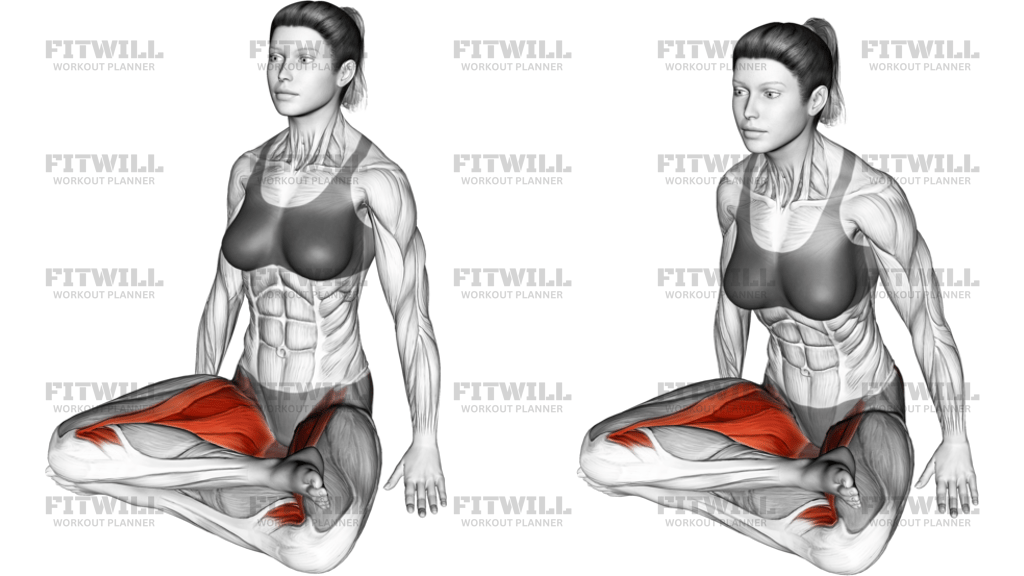
The image shows a tall, upright seated posture with both knees bent and the legs stacked so the ankles and shins create a compact crossed shape. That setup matters because the pose changes a lot based on where the hips, knees, and feet land. If the pelvis cannot settle comfortably on the floor, the stretch usually becomes too aggressive at the knee or lower back before it reaches the hip.
The main training effect is improved hip external rotation and a deeper stretch through the glutes, piriformis, and surrounding rotators. This makes the pose useful after lower-body training, during mobility work, or as part of a recovery session when the goal is to reduce stiffness around the hips rather than to build strength or speed.
Execution should stay calm and deliberate. Keep the spine long, hinge forward only as far as you can maintain that length, and let the hips open gradually instead of forcing the top knee down. A controlled breath is part of the exercise: inhale to create space, exhale to soften the hips, and stop short of sharp pain, pinching, or numbness.
Use props when needed. A folded blanket, yoga block, or cushion under the hips can take pressure off the knees and help the pelvis tip forward. Double Pigeon Pose works best when the stretch feels even and manageable on both sides, with the pose held long enough to create release but never so aggressively that the knees or sacrum feel strained.
[ Workout Log & Planner ]
Put your next workout in Fitwill
Keep your plan and training log ready when you are.


Instructions
- Sit on the floor with both legs bent, then stack one shin in front of the other so the ankles and knees form the double-pigeon shape.
- Plant your sit bones evenly and lift through the crown of your head; if your hips are high or the pose feels tilted, place a folded blanket or block under them.
- Keep both shins active and let the top ankle rest on the opposite thigh without forcing the knee or foot into position.
- Inhale to lengthen the spine, then exhale and hinge forward from the hips only as far as you can keep the back long.
- Let the stretch build across the outer hip and glute of the stacked leg rather than collapsing into the low back.
- Hold the deepest comfortable position for several breaths, keeping the shoulders soft and the neck relaxed.
- On each inhale, create a little more length; on each exhale, soften the hips without pressing the knees down.
- Come back up slowly, uncross the legs carefully, and repeat on the other side before finishing.
Tips & Tricks
- If the top knee floats far above the floor, support it with a block or folded towel instead of forcing it down.
- A blanket under the sit bones often makes the hinge forward feel like a hip stretch instead of a knee stretch.
- Keep the front of the pelvis facing forward; twisting through the torso reduces the stretch on the hips.
- Do not jam the top ankle toward the opposite knee if the ankle or knee feels compressed.
- Small forward folds are usually more effective than rounding hard toward the floor.
- Breathe into the back and side ribs so the pose stays steady instead of tense.
- Move each side independently; one hip may need a higher support or a shorter hold than the other.
- Stop immediately if you feel sharp pain in the knee, and reduce the stack height or use a simpler seated stretch.
Frequently Asked Questions
What does Double Pigeon Pose stretch most?
It mainly stretches the outer hip and glute of the stacked leg, especially the deep rotators around the hip joint.
Why does this pose sometimes feel like it hits the knee?
If the hips are tight or the legs are stacked too aggressively, the load can shift toward the knee. Use a higher seat and back off the fold until the stretch stays in the hip.
Should my top knee touch the floor?
No. The knee does not need to reach the floor, and forcing it down usually just increases joint stress without improving the stretch.
What is the best way to lean forward in this pose?
Hinge from the hips with a long spine and stop when the back starts to round or the stretch stops feeling even.
Is Double Pigeon Pose good for beginners?
Yes, as long as it is scaled with props and a shallow forward fold. Beginners often need more support under the hips and less time in the deepest position.
Can I do this after leg day?
Yes. It is commonly used after squats, lunges, running, or cycling to help restore hip rotation and reduce stiffness.
What prop helps the most?
A folded blanket or yoga block under the sit bones usually makes the biggest difference because it lets the pelvis tilt forward more easily.
How do I know I am overdoing the stretch?
Sharp knee pain, pinching in the hip, numbness, or a feeling that the low back is taking over are signs to back out and reset.