Pyramid Pose
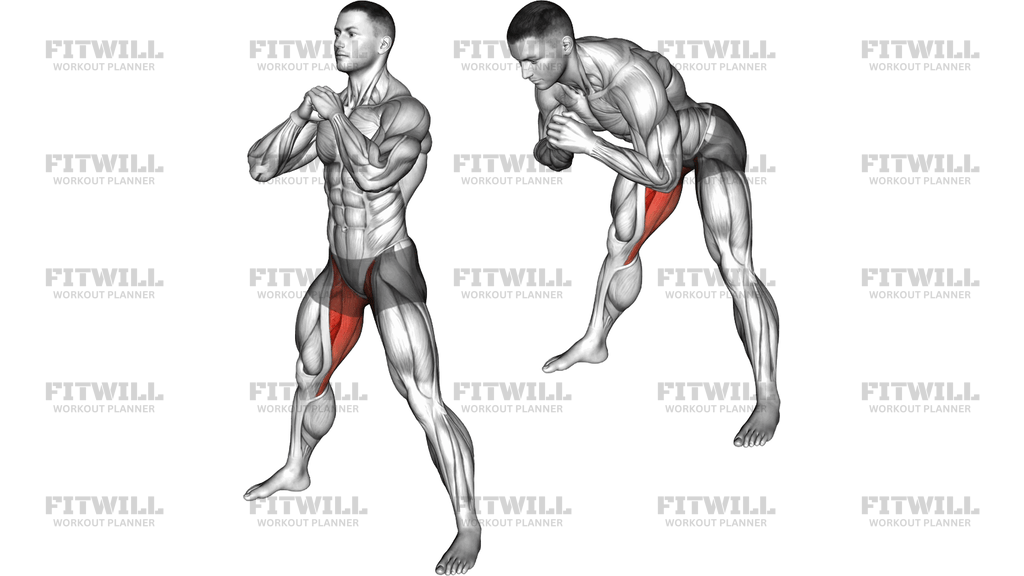
Pyramid Pose is a standing yoga stretch that loads the back of the front leg while asking you to keep your hips organized and your spine long. In this position, one leg stays forward and slightly bent at first, the back leg reaches long behind you, and the torso folds over the front thigh as the pose settles into a hamstring and calf stretch. The image shows the sequence from a prayer-like setup into a long lunge and then into the forward fold, which is the key pattern to reproduce with control.
The exercise is most useful when you want a deliberate stretch for the hamstrings, calves, glutes, and the line of the hips without collapsing into the lower back. The challenge is not just flexibility; it is keeping the pelvis square, the front knee aligned, and the torso long as you hinge forward. If the stance is too short, the fold gets cramped. If the stance is too long, the pelvis twists and the stretch becomes uneven.
A good pyramid setup starts with a split stance, front foot facing forward, back foot angled slightly in, and both feet rooted firmly into the floor. From there, lengthen through the crown of the head, lift the chest, and hinge from the hips before you fold deeper. You can hold the hands in prayer, rest them on the shin or blocks, or reach toward the floor if your hamstrings allow it. The goal is a stable shape that lets you breathe evenly instead of forcing a deeper fold.
Use the pose as part of a warmup, cooldown, mobility flow, or recovery session when you want to open the back line of the body and reinforce cleaner hip mechanics. Smooth breathing matters because it keeps the stretch from becoming a strain. If the front leg is locked hard or the low back rounds aggressively, back out slightly and re-establish length first. Pyramid Pose should feel like a controlled, honest stretch through the hamstrings and calves, not a collapse onto the front thigh.
Fitwill
Log Workouts, Track Progress & Build Strength.
Achieve more with Fitwill: explore over 9600 exercises with images and videos, access built-in and custom workouts, perfect for both gym and home sessions, and see real results.
Start your journey. Download today!




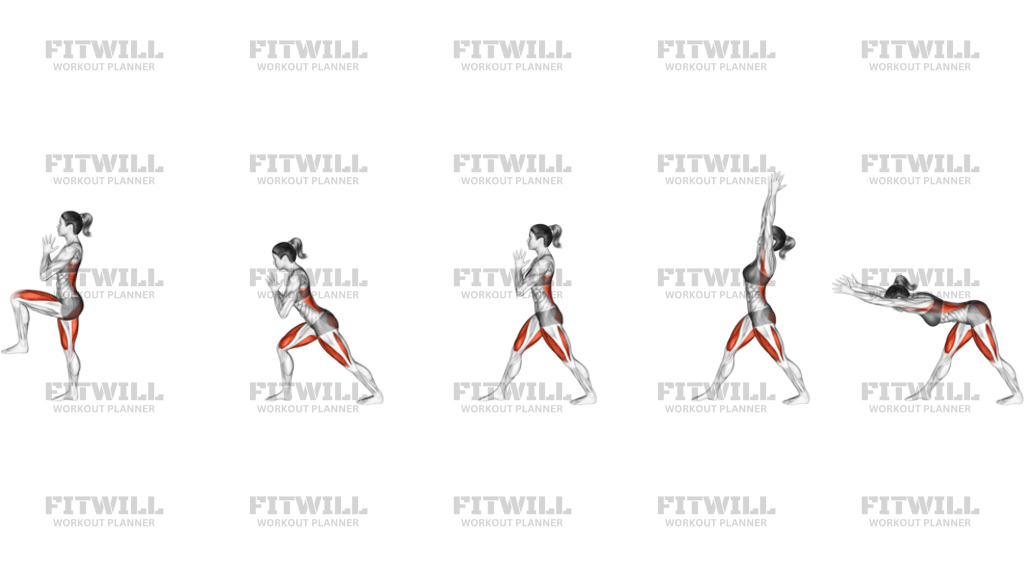
Instructions
- Step into a split stance with one foot forward and the other foot back, then root both feet into the floor.
- Turn the back toes in slightly and keep the front toes pointed straight ahead.
- Square your hips toward the front leg before you begin the fold.
- Lift your chest and lengthen through the spine so the torso starts tall.
- Hinge forward from the hips over the front thigh instead of rounding the low back.
- Slide your hands to prayer, your shin, blocks, or the floor depending on your range.
- Keep the front leg engaged and the back leg long as you settle into the stretch.
- Breathe slowly and soften a little deeper on each exhale without losing the long spine.
- Hold for the planned time or reps, then press through the feet and return to standing with control.
Tips & Tricks
- If your hips keep opening to the side, shorten the stance a little and square the pelvis before folding again.
- A tiny bend in the front knee is better than locking the joint and yanking on the hamstring.
- Keep the fold long from hip to crown; reaching the chest forward first usually protects the low back.
- Blocks under the hands make the pose more honest if the floor forces you to round and collapse.
- Press the outer edge of the back foot into the mat to keep the back leg active and stable.
- Do not force the chest onto the thigh if that makes the pelvis tuck under and the spine shorten.
- Breathe into the back of the front leg and the outer hip instead of holding your breath at the deepest point.
- If the stretch feels more in the lower back than the hamstrings, come up slightly and re-hinge from the hips.
Frequently Asked Questions
What does Pyramid Pose stretch most?
It mainly stretches the front leg hamstrings, calf, and glute area while also challenging hip alignment.
Can beginners do Pyramid Pose with tight hamstrings?
Yes. Beginners usually benefit from a shorter stance, a soft front knee, and hands on blocks or the shin.
Should my front leg be straight in Pyramid Pose?
It can be nearly straight, but a small bend is fine if it helps you keep the hips square and the spine long.
Why does my torso twist when I fold forward?
Usually the stance is too narrow or too long. Re-square the hips and shorten the step until the fold stays even.
Can I put my hands on the floor in this pose?
Yes, if you can do it without rounding hard through the low back. Blocks are a better option if the floor is too low.
Why is the back foot turned in slightly?
That angle helps the pelvis stay square and keeps the back leg from pulling the hips open.
What if I feel this in my lower back instead of my hamstrings?
Come out of the fold a little, lift the chest, and hinge again from the hips with a shorter stance.
Where should Pyramid Pose fit in a workout?
It works well in a warmup, cooldown, or mobility sequence when you want a controlled standing hamstring stretch.