Twisted Leg Lunge Pose
Twisted Leg Lunge Pose is a body-weight mobility drill that combines a half-kneeling lunge with a torso rotation. It is useful when you want to open the front of the hip on the down knee side while also training the trunk to stay tall and rotate without collapsing through the lower back. The pose works best when the stance is set correctly, because the hip stretch, balance, and twist all depend on how well you stack the pelvis and ribcage.
This movement is not just a passive stretch. The back leg, front leg, glutes, hip flexors, and trunk all have to organize the position so you can hold the lunge without wobbling. When the front foot is placed too close, the knee crowds the ankle and the torso cannot rotate cleanly. When the stance is too long, the stretch can disappear and the pelvis may tip forward, so the setup matters more here than in many other stretches.
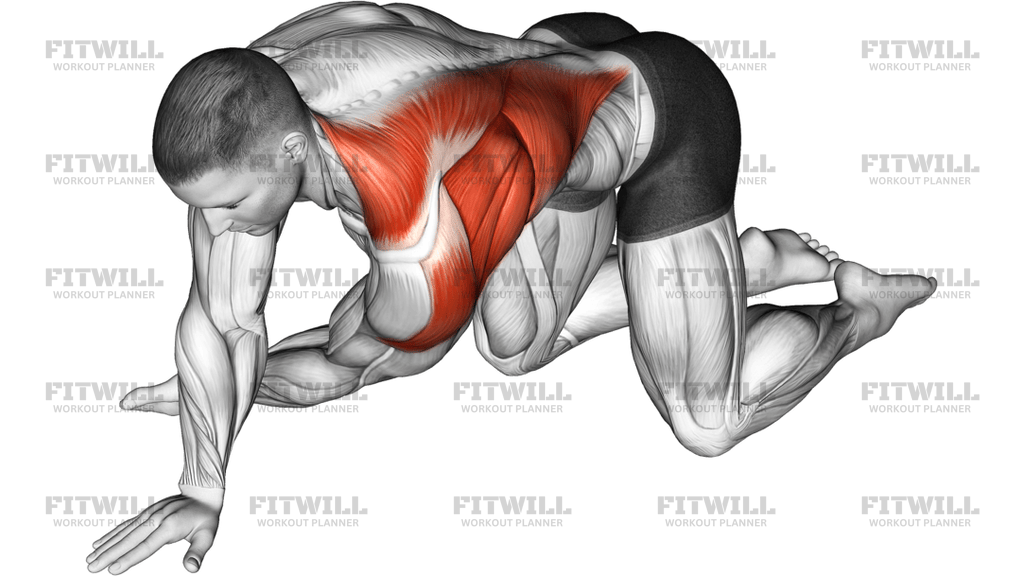
In a good Twisted Leg Lunge Pose, you start in a stable half-kneeling lunge, square the hips, and then rotate the ribcage over the front leg while keeping the spine long. The twist should come from the upper back, not from yanking the shoulder line around or forcing the lower back to crank. Pressing the palms together at the chest helps you stay organized through the rotation and makes the position easier to control from side to side.
This pose is commonly used in warm-ups, recovery sessions, and lower-body mobility work before squats, lunges, running, or field sports. It can also help after long periods of sitting, when the front of the hip on the kneeling side feels tight and the torso needs a little rotation. The best version feels purposeful and steady, with a clear stretch through the front hip and a controlled turn through the ribs rather than a loose, sagging lunge.
Keep the movement smooth and unforced. If the front knee pinches, shorten the stance or reduce the depth of the lunge. If the twist turns into a side bend or a low-back arch, reset and make the ribcage stack over the pelvis before rotating again. Twisted Leg Lunge Pose should leave you feeling open, balanced, and ready to move, not strained through the knee or compressed in the lower back.
[ Workout Log & Planner ]
Put your next workout in Fitwill
Keep your plan and training log ready when you are.


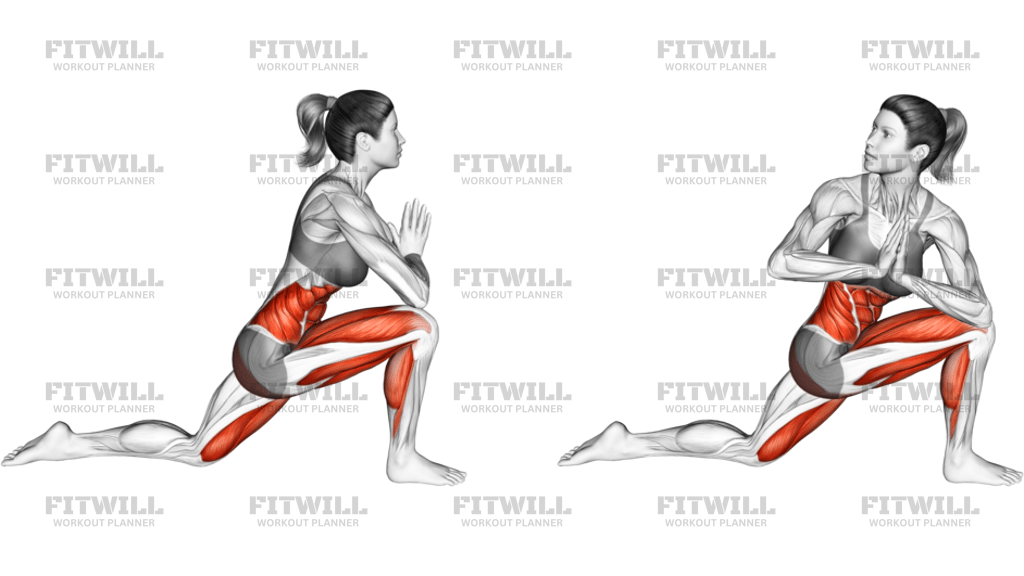
Instructions
- Kneel on a mat with your back knee and shin on the floor, your front foot flat, and your front knee stacked over the ankle.
- Step the front foot far enough forward that you can keep the torso upright and the heel planted.
- Point the back toes and relax the top of the back foot on the floor if that feels comfortable on the ankle.
- Bring your hands together at chest height and square both hip bones toward the front of the room.
- Shift your hips forward until you feel a stretch through the front of the kneeling-side hip and thigh.
- Keep your chest lifted and your spine long so the lower back does not collapse into the stretch.
- Exhale and rotate your ribcage toward the front leg, turning from the upper back rather than the pelvis.
- Hold the twist for the planned breaths, then return to center with control and switch sides when finished.
Tips & Tricks
- If the front knee creeps too far forward, lengthen the stance before you try to twist deeper.
- Pad the back knee well; this pose should not feel sharp or bony under the kneecap.
- Keep the twist high through the ribs so the pelvis stays mostly square to the front.
- Press the palms together lightly instead of forcing the hands apart, which helps keep the chest organized.
- Use the front glute to stop the hips from dumping forward as you move into the lunge.
- Breathe out into the rotation; the exhale usually gives you a cleaner turn without straining.
- If the lower back arches, reduce the lunge depth before you ask for more twist.
- Hold the position for a few slow breaths instead of bouncing in and out of the stretch.
Frequently Asked Questions
What does Twisted Leg Lunge Pose stretch the most?
It mainly stretches the front of the kneeling-side hip, including the hip flexors, while also opening the torso through rotation.
Can beginners perform this exercise?
Yes. Beginners should shorten the stance, keep the back knee padded, and hold a smaller twist until the lunge feels stable.
Should my back knee stay on the floor in Twisted Leg Lunge Pose?
Yes, the back knee is the main support point in this version. If the floor bothers your knee, use a thicker pad or folded mat.
Why do I feel the twist in my lower back instead of my upper back?
That usually means the ribs are not stacked over the pelvis. Reset the lunge, lift the chest, and rotate a little less so the turn comes from the thoracic spine.
How long should I hold Twisted Leg Lunge Pose?
A few slow breaths per side is usually enough for warm-ups, while longer holds can work well in a cool-down or mobility block.
Can I use Twisted Leg Lunge Pose before squats or lunges?
Yes. It is a useful pre-training drill because it opens the hip on the down-knee side and prepares the torso for loaded leg work.
What should I do if my front knee feels crowded?
Bring the front foot farther forward and keep the knee tracking over the middle toes instead of pushing the shin too far ahead.
Do I need to force a big twist in Twisted Leg Lunge Pose?
No. A smaller, controlled rotation with a stable pelvis is better than forcing range and letting the lower back or front knee compensate.