Warrior III Pose
Warrior III Pose is a bodyweight yoga balance exercise built around a long, controlled hinge on one leg. From the outside it looks simple, but the position asks a lot from the standing foot, ankle, hip, glute, hamstring, and trunk at the same time. The goal is to create one clean line from the fingertips through the torso to the lifted heel while the pelvis stays level and the standing leg stays organized.
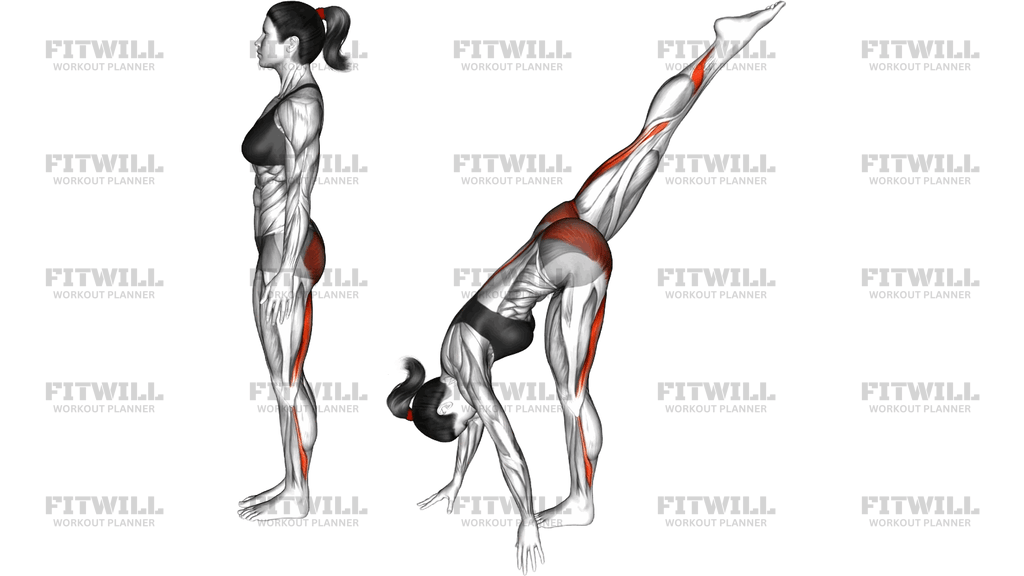
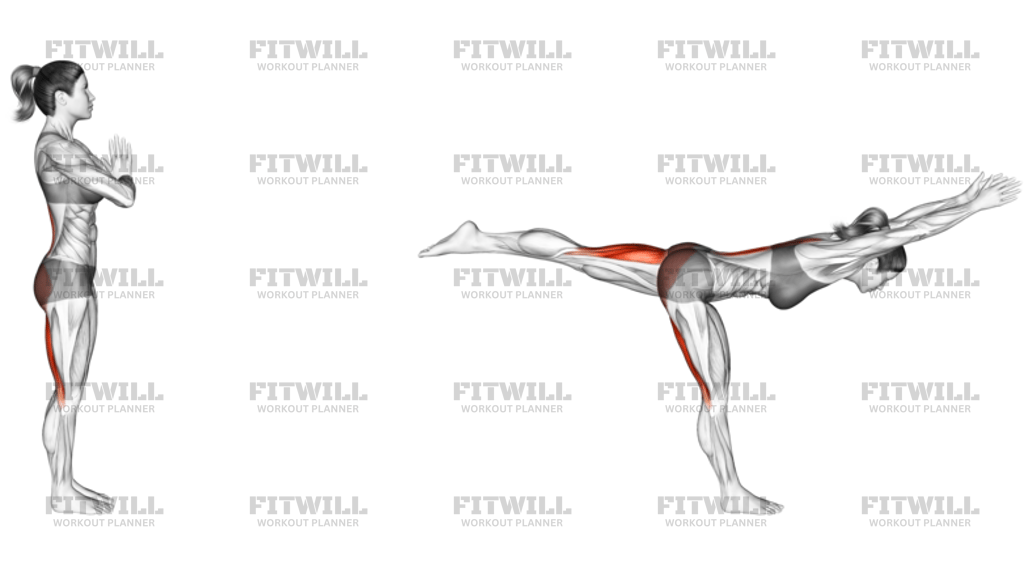
The image shows the classic Warrior III shape: the torso reaches forward until it is nearly parallel to the floor, the back leg extends straight behind, and the arms reach forward to counterbalance the lifted leg. That reaching shape matters because it shifts the center of mass over the standing foot instead of letting the body collapse into the low back or swing open at the hip. A small bend in the standing knee is normal if it helps you keep the pelvis square and the ribs stacked.
Treat this as a precision balance drill, not a race for height. The working side should feel the foot gripping the floor, the hip stabilizing the pelvis, and the back line of the body staying long from heel to crown. If the lifted leg rises too high or the chest drops too quickly, the pose usually turns into a backbend or a hip twist instead of a controlled hinge. The best rep is the one where you can stop at any point and still look aligned.
Warrior III Pose is useful in yoga practice, warmups, coordination work, and lower-body stability sessions because it reinforces single-leg control without external load. It can also expose side-to-side differences in ankle stability or glute strength very quickly. Use the pose on a floor surface with enough grip, move deliberately into the balance, and come out of it under control so the standing leg and hip stay ready for the next rep.
The exercise is also a good reminder that balance is produced by the whole system, not just the leg. When the breath stays steady, the standing foot stays active, and the pelvis stays level, the pose becomes more repeatable and easier to hold. That makes it a practical choice for beginners learning single-leg control and for advanced trainees who want a stricter test of posture, symmetry, and stability.
Fitwill
Log Workouts, Track Progress & Build Strength.
Achieve more with Fitwill: explore over 9600 exercises with images and videos, access built-in and custom workouts, perfect for both gym and home sessions, and see real results.
Start your journey. Download today!




Instructions
- Stand tall with your feet together or hip-width apart and shift your weight onto one leg.
- Soften the standing knee slightly and set the pelvis square to the floor.
- Bring your hands to prayer at your chest or reach both arms forward in front of your shoulders.
- Hinge at the hips and send your torso forward as the free leg reaches straight back.
- Keep the chest, hips, and lifted heel traveling in one long line instead of arching the low back.
- Stop when your torso is nearly parallel to the floor and your body still feels stacked over the standing foot.
- Hold the balance briefly while breathing steadily through the nose or a calm exhale.
- Lower the back foot under control to return to standing, then reset before the next rep.
- Repeat for the planned reps or hold time, switching sides when the set is complete.
Tips & Tricks
- Fix your eyes on one spot a few feet in front of you to reduce wobble.
- Keep the standing foot tripod engaged: big toe, little toe, and heel all stay rooted.
- Let the lifted hip stay level with the standing hip instead of opening toward the ceiling.
- Reach through the back heel as if someone were pulling it straight behind you.
- If balance is shaky, keep the free toes lightly brushing the floor until the hinge pattern is stable.
- A soft bend in the standing knee is better than locking out and tipping forward.
- Keep the ribs from flaring; the torso should lengthen from the hips, not from the low back.
- Lower out of the pose the same way you entered it, without dropping the rear foot.
Frequently Asked Questions
What does Warrior III Pose train most?
It trains single-leg balance, glute and hamstring control, ankle stability, and trunk tension.
Should my torso stay level with the floor in Warrior III Pose?
Yes, the torso usually reaches close to parallel while the rear leg extends long behind you.
Do my hips need to stay square in Warrior III Pose?
They should stay as square as possible so the pose stays centered over the standing leg.
Why do I lose balance when I reach forward?
Usually the standing foot, hip, or gaze is not set yet, or the torso is reaching past the point where you can stay organized.
Can I bend my standing knee in Warrior III Pose?
A slight bend is fine and often helps keep the pelvis level and the balance more stable.
How do I make the pose easier as a beginner?
Keep the free toes lightly touching the floor or place your hands at your chest instead of reaching them forward.
Where should I feel the working side most?
You should feel the standing glute, hamstring, foot, and deep core working to keep the body steady.
Is Warrior III Pose a stretch or a strength exercise?
It is mainly a balance and control exercise, with a strong stability and posterior-chain demand.