Reverse Warrior Pose
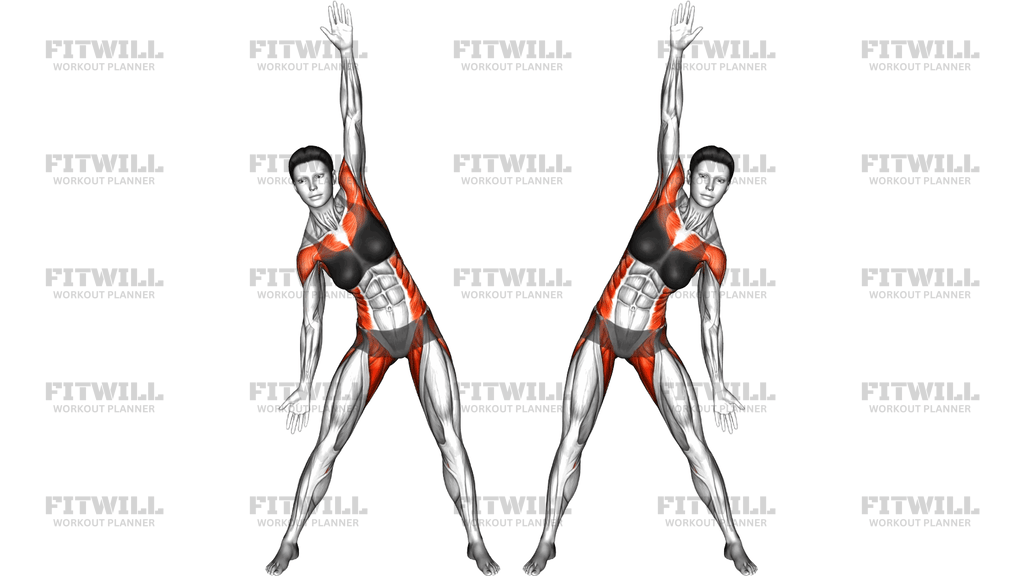
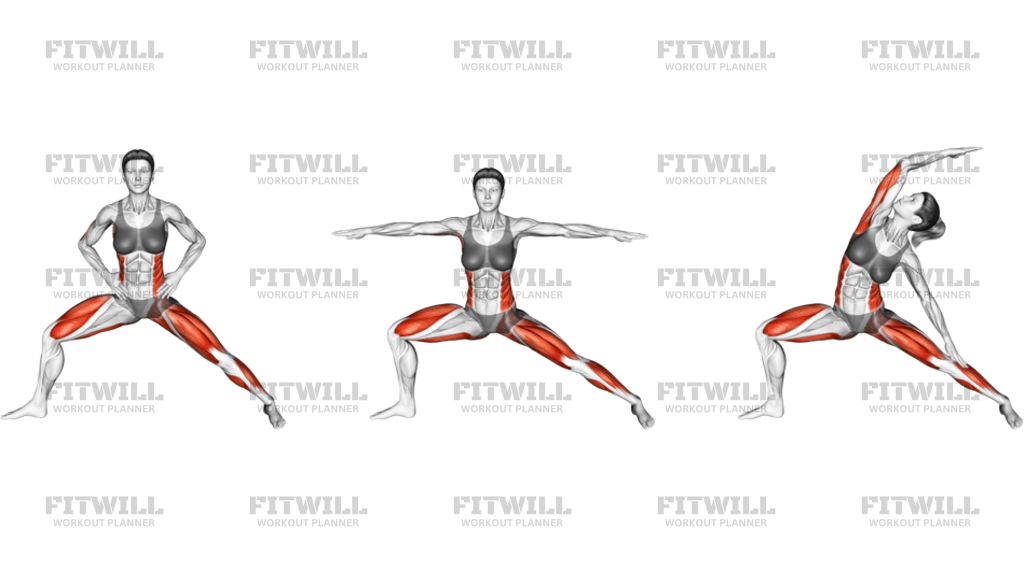
Reverse Warrior Pose is a standing yoga stretch that opens the side body while keeping the lower body grounded and organized. The image shows a wide lunge with the front knee bent, the back leg long, one hand resting on the back leg for support, and the other arm reaching overhead in a long arc. That shape creates a strong stretch through the obliques, lats, intercostals, hip flexors, and inner thigh of the straight leg side while asking the front leg and foot to stay steady.
Because this is a pose rather than a loaded strength movement, the main quality you are training is control through position. The torso should stay lifted, the chest open, and the shoulders stacked so the reach comes from the rib cage and spine instead of a collapse into the low back. The front knee still tracks over the toes, but the pelvis stays heavy and the standing feet keep contact with the floor. That balance between opening and grounding is what makes Reverse Warrior Pose feel clean instead of strained.
A good setup starts from a Warrior II base. Step the feet wide, turn the front toes forward, angle the back foot slightly in, and bend the front knee until the shin is roughly vertical. Keep the back leg straight and active, then slide the rear hand down the back thigh as the front arm lifts overhead. The goal is to create one continuous line from the back heel through the fingertips without dumping weight into the front knee or leaning so far back that the spine loses length.
Breathing matters as much as shape here. Inhale to grow taller through the side body, then exhale while settling deeper into the stance without forcing extra range. The top arm should lengthen away from the shoulder rather than cranking the neck; the gaze can stay forward, up, or slightly under the arm depending on how your cervical spine feels. If the lower back pinches, shorten the arc and keep more weight over the hips.
Reverse Warrior Pose is useful in a warm-up, mobility sequence, yoga flow, or recovery session when you want to restore lateral line mobility after squats, running, or lots of forward flexion. It can also be used as a posture drill for people who need to learn how to keep the torso open while the legs stay strong. The best reps are calm, deliberate holds with smooth transitions in and out of the shape, not a bigger backbend or a deeper lunge for its own sake.
[ Workout Log & Planner ]
Put your next workout in Fitwill
Keep your plan and training log ready when you are.


Instructions
- Stand in a wide Warrior II stance with the front knee bent, the back leg straight, and the back foot angled slightly in.
- Keep both feet rooted, with the front knee tracking over the middle toes and the back heel pressing firmly into the floor.
- Rest the back hand lightly on the back thigh or shin for support while the chest stays open to the side.
- Sweep the front arm overhead in a long arc and lengthen from the front fingertips through the ribs to the back heel.
- Lift the torso as you inhale, making space through the side waist instead of collapsing into the low back.
- Keep the front shoulder stacked and the neck relaxed while the gaze follows the upper hand or stays forward.
- Hold the shape for the planned breath count, then use the exhale to soften a little deeper without losing alignment.
- Return slowly to Warrior II or the starting stance, then repeat on the other side if the program calls for it.
Tips & Tricks
- Keep the front knee bent enough that you can still press evenly through the whole front foot.
- Think about reaching the top hand up and back, not cranking it behind you into a twist.
- If your low back compresses, shorten the stance a little and keep the ribs stacked over the pelvis.
- Use the back hand as a light support, not a place to dump your body weight.
- The back leg should stay active and straight so the stretch lands in the side body and inner thigh, not in the knee.
- Breathe into the lower ribs on the side that is opening; that usually creates a better stretch than forcing the pose deeper.
- Keep the front foot flat and stable so the knee does not cave inward as you reach overhead.
- Choose a head position that does not strain the neck; looking forward is better than forcing the eyes upward.
- Move in and out of the pose slowly so the transition does not wobble the pelvis or collapse the stance.
Frequently Asked Questions
What does Reverse Warrior Pose stretch most?
It mainly stretches the side body, including the obliques, lats, intercostals, hip flexors, and the inner thigh of the straight-leg side.
Should the front knee stay bent in Reverse Warrior Pose?
Yes. The front knee usually stays bent like Warrior II while the torso arcs overhead, which keeps the pose grounded and stable.
Where should my back hand go?
Place it lightly on the back thigh or shin for support. Avoid hanging all of your weight on the hand or collapsing the torso.
Can I do this if my low back feels tight?
Yes, but keep the reach smaller and the rib cage stacked over the pelvis. A big backbend is usually what causes the pinch.
Do I need to look up at my top hand?
No. Looking forward is perfectly fine and often better if your neck or upper back feels compressed.
What is the most common mistake in this pose?
People often dump into the lower back or let the front knee drift inward instead of keeping the legs organized and the torso lifted.
Is Reverse Warrior Pose good before leg training?
Yes, it works well as a warm-up mobility drill before squats, lunges, or running because it opens the hips and side body without heavy fatigue.
How long should I hold each side?
A few calm breaths per side is usually enough for mobility work; longer holds are fine if you can keep the shape clean.