Four Limbed Staff
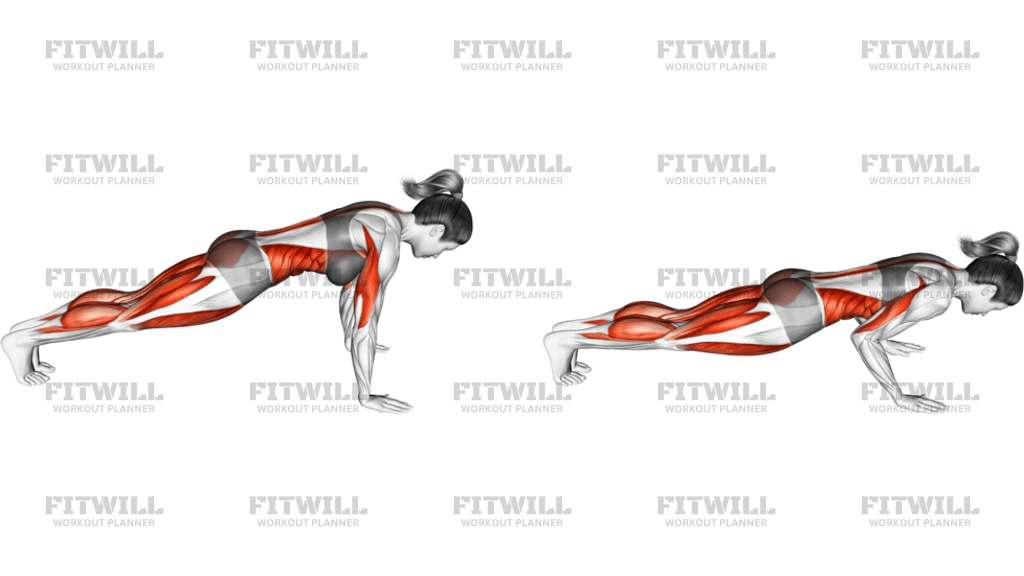
Four Limbed Staff is the low-plank yoga position often called chaturanga dandasana. The body lowers as one straight unit with the hands on the floor, elbows tucked close to the ribs, and the torso hovering just above the ground. It is less of a stretch than a strength-and-control hold, and the main training effect comes from keeping the chest, shoulders, triceps, and core organized while the whole body stays rigid.
The setup matters because small position changes dramatically change the load on the shoulders and wrists. Start in a strong high plank with the shoulders stacked over or slightly in front of the wrists, fingers spread wide, legs active, and heels reaching back. Before lowering, shift the body forward a little so the shoulders do not drift behind the wrists, then bend the elbows straight back instead of letting them flare out to the sides.
On the lowering phase, keep the torso, thighs, and head moving together as one line. Stop when the upper arms are roughly parallel to the floor or when the shoulders begin to sink below elbow height. If the hips pike, the low back sags, or the chest collapses, shorten the range or use an easier variation such as knees-down chaturanga or hands elevated on blocks. The goal is control and alignment, not touching the floor.
Four Limbed Staff fits well in yoga flows, push-up progressions, and upper-body accessory work because it teaches bracing under load while the shoulders and elbows stay on a precise path. It can be used for short holds, smooth transitions, or slow tempo reps. Keep pressure through the full hand, breathe steadily, and stop the set before the elbows flare, the wrists cave in, or the shoulders lose their line.
[ Workout Log & Planner ]
Put your next workout in Fitwill
Keep your plan and training log ready when you are.


Instructions
- Start in a high plank with your hands under your shoulders or slightly wider, fingers spread, legs straight, and heels reaching back.
- Press the floor away, tighten your legs, and draw the ribs in so your body stays in one straight line.
- Shift your weight slightly forward until your shoulders move just ahead of your wrists.
- Bend both elbows straight back along your sides, keeping the upper arms close to your ribcage.
- Lower your body as one unit until your chest hovers just above the floor and your upper arms are close to parallel with the ground.
- Keep your neck neutral and stop before your shoulders drop below elbow height or your low back starts to sag.
- Pause briefly with steady tension through the palms, then press firmly through your hands to return to the high-plank position.
- Inhale as you lower and exhale as you press back up, then reset your alignment before the next repetition.
Tips & Tricks
- Keep the elbows brushing the ribs; flaring them turns the movement into a rough shoulder press and usually overloads the front of the shoulder.
- Shift forward before bending the elbows so the shoulders stay loaded instead of drifting behind the wrists.
- Spread the fingers and root through the base of the index finger and thumb to reduce wrist collapse.
- Think "long body, short lowering path" rather than chasing depth; a clean half-rep is better than a sagging full drop.
- If the shoulders shake or the chest collapses, use knees-down chaturanga or elevate the hands on blocks rather than forcing the full version.
- Keep the thighs active and the heels pressing back so the hips do not pike up.
- Stop the set when you can no longer keep the upper arms close to parallel with the floor on the way down.
- Use the same elbow path every rep so the movement stays smooth and repeatable in a yoga flow or push-up progression.
Frequently Asked Questions
What muscles does Four Limbed Staff work most?
It mainly trains the chest, triceps, front shoulders, serratus, and core while the legs and glutes help keep the body rigid.
Is Four Limbed Staff the same as chaturanga?
Yes. This is the low-plank yoga position commonly called chaturanga dandasana.
Should my elbows flare out during the lowering phase?
No. Keep them tucked back along the ribs so the shoulders and elbows track more safely.
How low should I go in Four Limbed Staff?
Only lower as far as you can keep the torso rigid and the shoulders from dropping below elbow height.
Can beginners do this exercise?
Yes, but most beginners should start with knees-down chaturanga or hands elevated on blocks until they can keep the body line clean.
Why do my wrists hurt in this position?
Too much weight may be shifting into the heels of the hands. Spread the fingers, press through the whole palm, or elevate the hands to make the load friendlier.
Is it better to hold or repeat the movement?
Both work. Holds build isometric control, while slow reps teach the lowering path and press-back strength.
What is the most common mistake?
Letting the chest and hips sink together usually turns it into a sloppy low plank instead of a controlled staff position.