Vertical Sit-Up
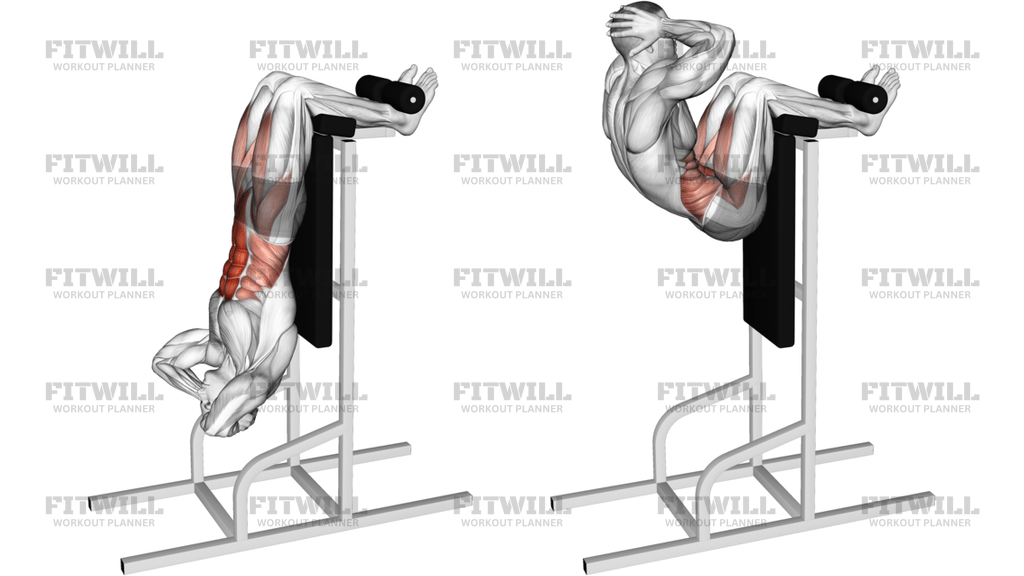
Vertical Sit-Up is a bodyweight core exercise performed on a vertical sit-up or captain's-chair style station, with the legs secured on the upper rollers and the torso moving from a long inverted position into a compact curl. The fixed support changes the leverage dramatically, so the abdominal muscles have to control both the lift and the return instead of relying on a loose, floor-style sit-up pattern.
The main training focus is trunk flexion through the rectus abdominis, with the obliques and deep abdominal muscles helping to keep the ribcage and pelvis organized. The hip flexors assist because the lower body is anchored overhead, but a clean rep should still feel like the abs are rounding the trunk rather than the legs swinging the body through space.
Setup matters more here than it does in many basic core drills. Anchor the hips and lower back against the pad, secure the ankles or lower legs under the rollers, and make sure the hands are only a light support at the sides of the head or across the chest. If the neck is doing the work or the pelvis is drifting off the pad, the station is set up too loosely and the rep will turn into a swing.
Each repetition should start from the long position, then curl the ribcage toward the pelvis in a smooth arc. Exhale as you lift, pause briefly when the trunk is fully shortened, and lower slowly until the torso is long again. The best reps look quiet and deliberate: shoulders move, the legs stay fixed, and the lower back stays under control instead of arching away from the pad.
This exercise works well as a focused accessory, core-strength finisher, or controlled warm-up drill when you want strict abdominal work without loading the spine externally. It is also useful for beginners who need a small, measurable range of motion, as long as they keep the tempo slow and the range pain-free. Use it for quality repetitions, not momentum, and stop the set as soon as the torso starts to swing or the neck starts to take over.
Fitwill
Log Workouts, Track Progress & Build Strength.
Achieve more with Fitwill: explore over 9600 exercises with images and videos, access built-in and custom workouts, perfect for both gym and home sessions, and see real results.
Start your journey. Download today!




Instructions
- Sit into the vertical sit-up station with your hips and lower back supported on the pad and your legs secured under the top rollers.
- Place your hands lightly beside your head or across your chest, and keep your elbows relaxed instead of flaring hard or pulling on the neck.
- Start from the long inverted position with your torso extended and your abs braced before the first rep.
- Exhale and curl your ribcage toward your pelvis, lifting your shoulders and upper back in a smooth arc.
- Keep your legs anchored and avoid kicking, swinging, or jerking the hips to finish the rep.
- Squeeze the abs briefly in the tucked position at the top of the curl.
- Lower yourself slowly until the torso lengthens again and the pad still supports your lower body.
- Reset your brace between reps and repeat for the planned set.
Tips & Tricks
- Keep the hips firmly against the pad so the torso curls instead of the whole body swinging.
- If your neck feels loaded, reduce the hand pressure behind the head or switch to a crossed-chest arm position.
- Think about bringing the sternum toward the pelvis; that cue usually keeps the abs in charge of the rep.
- The lowering phase should be slower than the lift so the abdominal wall controls the return.
- Use a smaller range if the hip flexors dominate before the abdominals can shorten the trunk.
- Do not let the elbows yank forward at the top; the hands are there for balance, not leverage.
- Keep the shoulders moving as one unit instead of twisting the torso side to side.
- Stop the set the moment the station becomes a swing, because momentum is the first sign that the abs have lost tension.
Frequently Asked Questions
What muscles does Vertical Sit-Up work?
It mainly targets the rectus abdominis, with the obliques and deep core muscles helping stabilize the trunk. The hip flexors assist, but they should not take over the movement.
Is Vertical Sit-Up the same as a regular floor sit-up?
No. The vertical station changes the body angle and leverage, so the abs work against a different line of pull and the movement usually feels more demanding through the trunk.
Where should my feet and legs stay during the rep?
Keep the legs secured under the upper rollers so the lower body stays anchored. The trunk should move while the pelvis and legs stay quiet.
Should I keep my hands behind my head?
You can, but the hands should stay light. If you feel yourself pulling on the neck, switch to a crossed-chest position.
Why do I feel this more in my hips than my abs?
That usually means the rep is too fast or the range is too big. Shorten the curl slightly and focus on rounding the ribs toward the pelvis.
What is the biggest mistake with Vertical Sit-Up?
Swinging the torso or yanking the head forward to create momentum. The rep should stay smooth and controlled from start to finish.
Can beginners do this exercise?
Yes, if they use a small range of motion and a slow tempo. Clean control matters more than how high the torso lifts.
How can I make Vertical Sit-Up harder?
Slow the lowering phase, pause briefly in the tucked position, or add reps only after you can keep the torso controlled through the full arc.