Sun Salutation A
Sun Salutation A is a linked yoga sequence built around standing reach, forward fold, half lift, plank, lower-to-floor, backbend, and downward dog. It is less about one isolated muscle and more about moving the spine, shoulders, hips, hamstrings, and calves through a repeatable flow while the breath sets the rhythm. That makes it useful as a warm-up, a mobility sequence, or a controlled bodyweight conditioning drill when you want clean transitions instead of static holds.
The sequence works best when each position is set up deliberately. The feet stay grounded in the standing phases, the fold comes from the hips instead of the lower back, the plank line stays long from head to heels, and the shoulders stay active as you move between floor and inverted shapes. Small changes in hand placement, foot spacing, and spinal length have a big effect on how smooth the whole flow feels.
Breath is part of the exercise, not an accessory to it. A typical Sun Salutation A links an inhale to the reach and half lift, then uses the exhale to fold, brace, step or jump back, and lower with control. The inhale then opens the chest in the backbend or upward-facing phase, and the exhale presses the body back toward downward dog. When the breathing stays steady, the movement stays organized and the flow becomes easier to repeat without rushing.
This is a good choice for people who need a dynamic sequence that prepares the shoulders, trunk, hamstrings, and calves for more demanding work. It can also be used as a low-load conditioning block because it asks for repeated body control through a full range of positions. Beginners should slow it down, shorten the step-back if needed, and keep the plank and lowering phase conservative until the shoulders and trunk can hold alignment without sagging.
The main safety points are simple: do not dump into the lower back in the up phase, do not collapse the chest between the hands, and do not force the heels to the floor in downward dog. The repetition should feel smooth, coordinated, and repeatable. If the transition starts to break down, reduce speed before you reduce quality.
Fitwill
Log Workouts, Track Progress & Build Strength.
Achieve more with Fitwill: explore over 9600 exercises with images and videos, access built-in and custom workouts, perfect for both gym and home sessions, and see real results.
Start your journey. Download today!




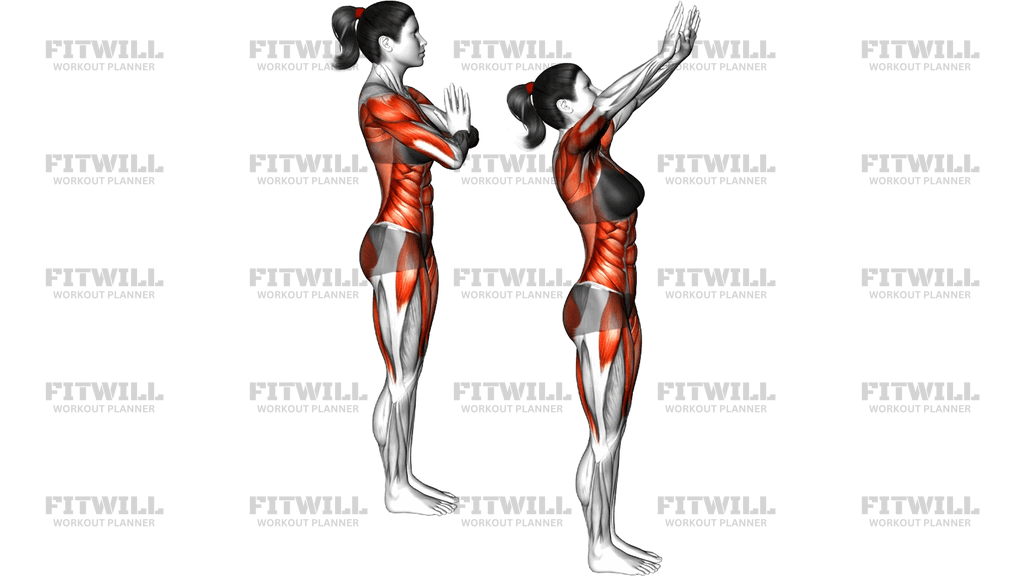
Instructions
- Stand at the top of the mat with your feet together or hip-width apart, ribs stacked over the pelvis, and your hands at your chest.
- Inhale and sweep your arms overhead, lengthening through the sides of your body without leaning back.
- Exhale and hinge at the hips to fold forward, letting the head and arms hang while the spine stays long.
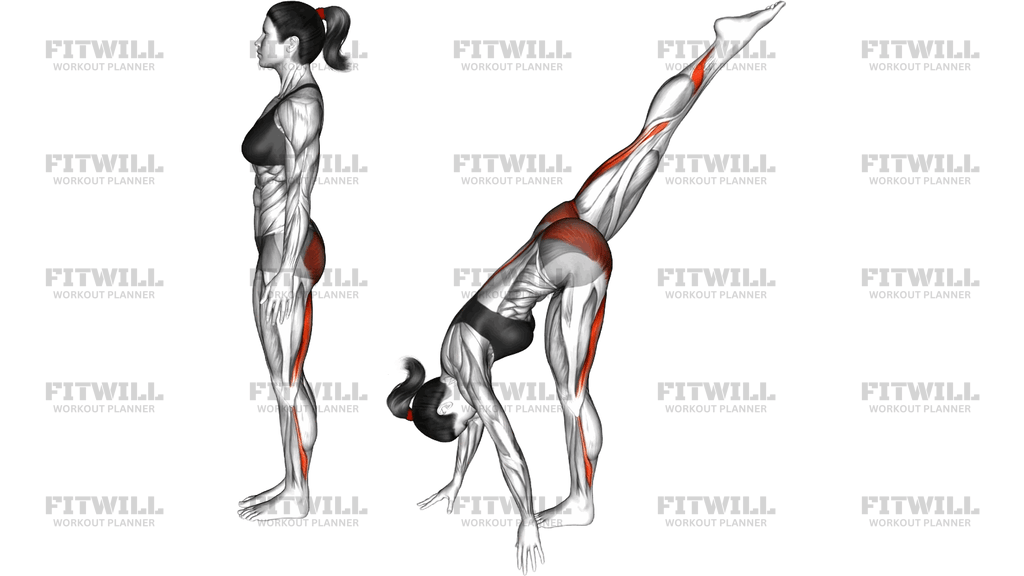
- Inhale to lift into a half lift with a flat back, hands on the shins, thighs, or floor, and the neck aligned with the spine.
- Exhale and place your hands down, then step or jump both feet back into a high plank with shoulders over wrists.
- Lower with control through chaturanga or to the floor, keeping the elbows close and the torso in one line.
- Inhale into upward-facing dog or cobra, opening the chest and keeping the shoulders away from the ears.
- Exhale into downward-facing dog, press the hips up and back, and lengthen the spine before stepping or walking forward to finish the flow.
Tips & Tricks
- Keep the forward fold driven by a hip hinge so the lower back does not round first.
- In the half lift, think about lengthening the crown of the head forward, not lifting the chest high.
- Spread the fingers wide in plank and press the floor away so the shoulders stay active instead of sinking.
- If chaturanga is too demanding, lower the knees first or take the whole body to the floor under control.
- In upward-facing dog or cobra, keep the front of the shoulders open and avoid cranking the neck upward.
- Downward dog should feel like a long spine with active hands, not a forced attempt to get the heels down.
- Match the pace of the flow to the breath; if you cannot finish the inhale or exhale, the sequence is moving too fast.
- Take a shorter step back from the fold if the hamstrings or shoulders make the transition shaky.
- Stop the set if the low back pinches or the shoulders collapse, because the sequence only works when the line stays clean.
Frequently Asked Questions
What does Sun Salutation A train most?
It trains whole-body control through a linked stretch-and-strength sequence, with a strong emphasis on the shoulders, trunk, hamstrings, and hips.
Is Sun Salutation A good for beginners?
Yes, but beginners should move slowly, use shorter steps, and simplify the lowering phase so the plank stays controlled.
What should my hands do in the plank phase?
Place the hands under the shoulders, spread the fingers, and press the floor away so the chest does not sag between the shoulders.
What is the most common form mistake?
Rushing the transitions and losing shape, especially in the fold, plank, and backbend positions.
Should downward-facing dog be forced?
No. The goal is a long spine and active shoulders; the heels can stay lifted if that lets the position stay organized.
What is the difference between cobra and upward-facing dog here?
Cobra keeps more support from the legs and pelvis on the floor, while upward-facing dog lifts the thighs and asks for more shoulder and spinal extension.
When should I use Sun Salutation A in a workout?
It works well in a warm-up, recovery session, or mobility block before heavier lifting or harder conditioning.
How can I make the sequence harder?
Use slower transitions, cleaner plank and lowering control, or longer holds in the fold and downward dog without losing breath rhythm.