Sun Salutation B
Sun Salutation B is a dynamic yoga flow that links standing poses, forward folds, plank work, and backbends into one continuous repetition. It is usually performed with body weight only, but it still demands coordination, balance, shoulder control, hip mobility, and steady breathing. The goal is not to force the deepest stretch in every shape. The goal is to keep the transitions smooth so the posture stays organized from the first movement to the last.
This sequence is especially useful as a warm-up or movement practice because it builds temperature while moving the spine, shoulders, hips, calves, and trunk through a wide range of motion. In the standing phases, the legs and glutes support balance. In the floor phases, the shoulders and core keep the body lifted and controlled. Because the flow changes shape quickly, your setup and breathing matter more here than in a static stretch.
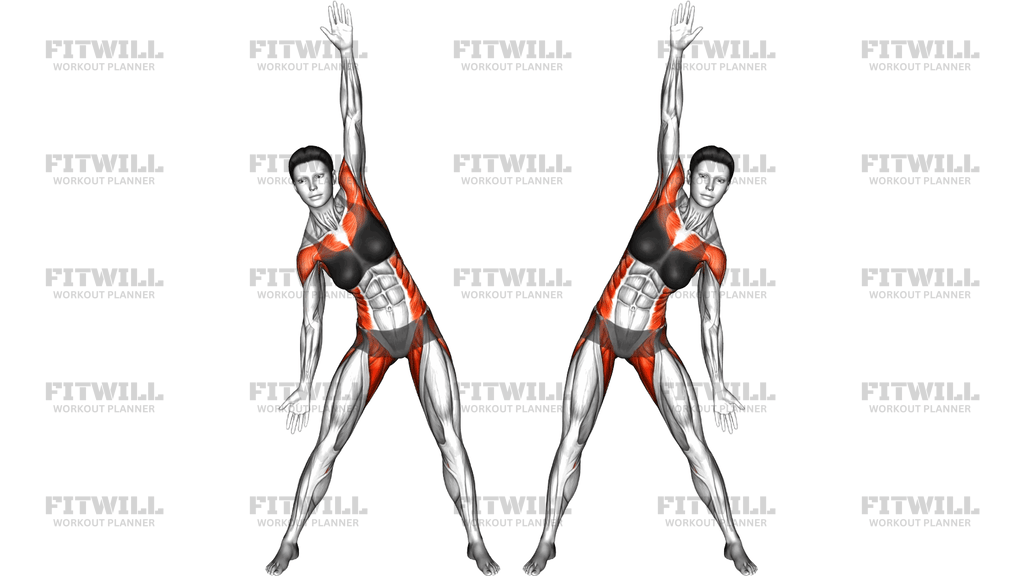
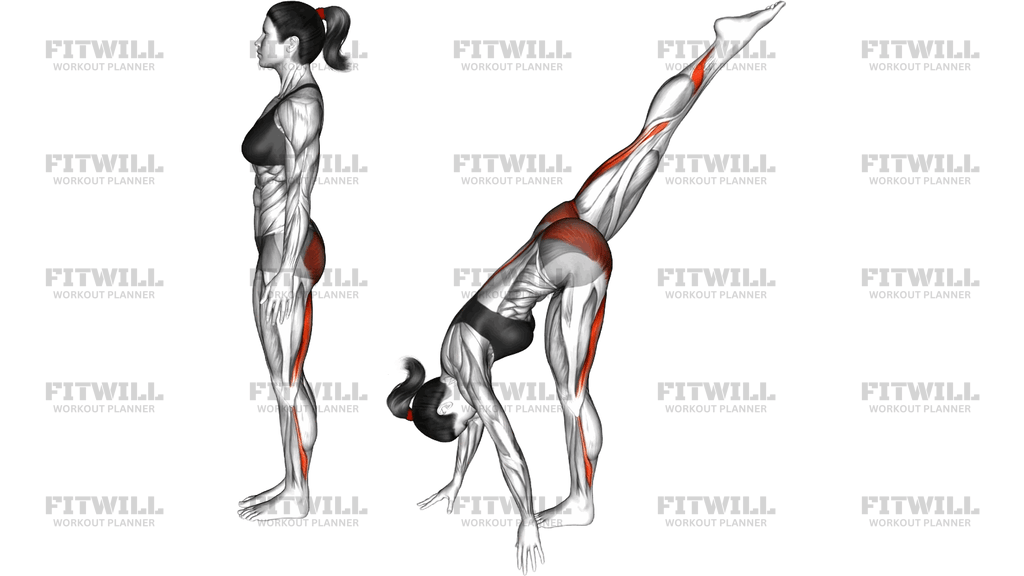
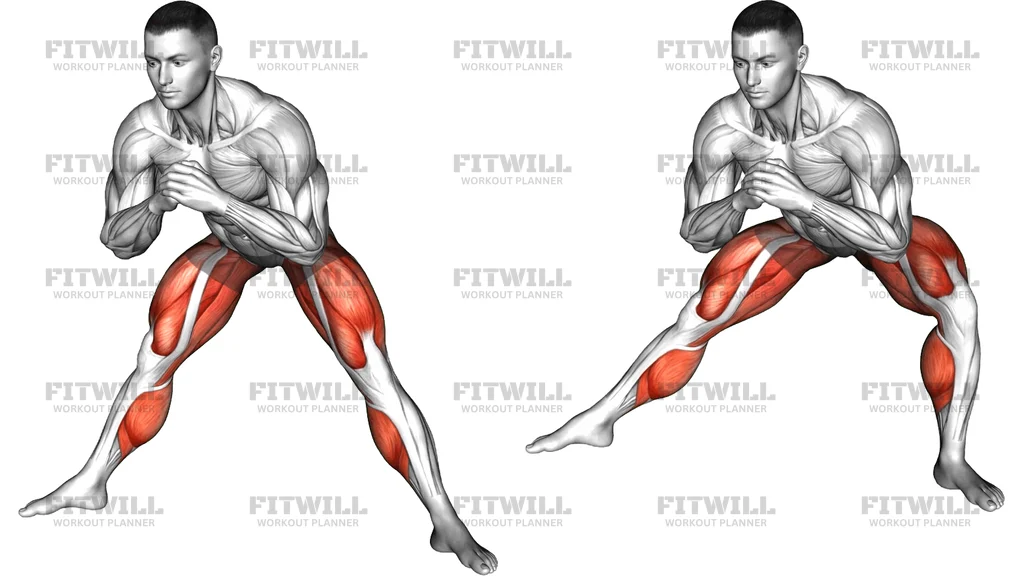
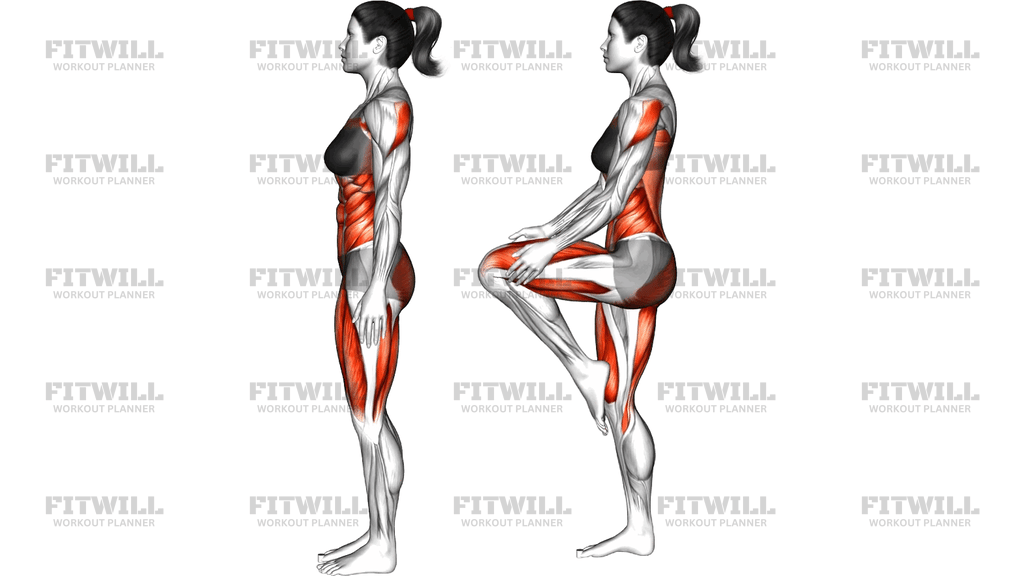
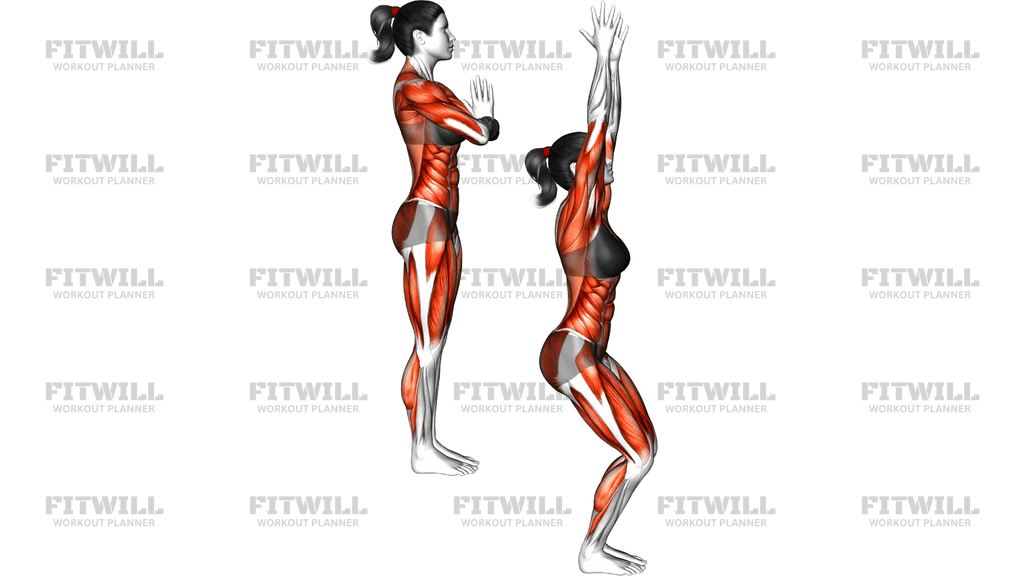
The image shows a classic vinyasa-style progression rather than a single isolated exercise. A clean rep starts in mountain or a tall standing position, moves through chair and forward fold, then passes through plank, chaturanga, upward-facing dog or cobra, and downward-facing dog before stepping or jumping into the warrior/lunge portion of the sequence. Each transition should feel deliberate. If the movement becomes rushed, the sequence turns into collapse and momentum instead of controlled training.
Sun Salutation B is a good choice for beginners who want a guided yoga sequence, but it should be scaled to the person's current shoulder mobility, hamstring length, and ability to hold plank positions. Hands, feet, and lunges should be placed where the spine can stay long and the breath can stay smooth. If the backbend or low plank is too demanding, the flow can be simplified without losing the main pattern.
Use this exercise when you want a rhythmic combination of mobility, light strength, and breath control. It works well at the start of a session, in a dedicated mobility block, or as part of a yoga practice. Keep the movement clean rather than dramatic, and let the sequence build quality through repetition instead of speed.
Fitwill
Log Workouts, Track Progress & Build Strength.
Achieve more with Fitwill: explore over 9600 exercises with images and videos, access built-in and custom workouts, perfect for both gym and home sessions, and see real results.
Start your journey. Download today!




Instructions
- Start in mountain pose with your feet grounded, ribs stacked over your pelvis, and your hands at your sides or in prayer at the chest.
- Inhale as you sweep your arms overhead, then sit the hips back and lower into chair pose with the weight in the heels.
- Exhale to fold forward, letting the hips hinge back so the spine can lengthen rather than collapse.
- Inhale into a half lift with a long back, hands on shins, fingertips, or floor, and keep the neck in line with the spine.
- Exhale to step or jump back into plank, then lower through chaturanga with elbows close to the ribs.
- Inhale into upward-facing dog or cobra, keeping the chest open and the shoulders away from the ears.
- Exhale into downward-facing dog and hold the shape long enough to reestablish your breath and lift the hips.
- Step or walk the right foot forward, rise into warrior I or high crescent lunge, then repeat the vinyasa before moving to the left side.
- After both sides, return to standing with control and finish the sequence without crashing into the mat or rushing the transitions.
Tips & Tricks
- Treat the breath as the tempo: inhales should create length, and exhales should help you fold, step back, and lower with control.
- In chair pose, keep the knees tracking over the middle toes instead of collapsing inward as the arms reach overhead.
- In the forward fold, bend the knees enough to keep the pelvis tipped forward and the hamstrings from yanking the low back.
- On the plank-to-chaturanga transition, keep the elbows tucked and stop high if the shoulders dip below elbow level.
- In upward dog or cobra, press the tops of the feet down and keep the glutes from hard-clenching the lower back into compression.
- Use a shorter stance in warrior I if the back heel cannot stay grounded without twisting the hips open.
- In downward dog, think about lengthening the spine more than forcing the heels to the floor.
- If the flow loses rhythm, simplify the vinyasa by stepping back instead of jumping and lowering to the floor one piece at a time.
- Move slowly enough that each transition feels like a shape you can recognize, not a blur of connected positions.
Frequently Asked Questions
What does Sun Salutation B work most?
It trains the whole body, with emphasis on the shoulders, core, legs, back, and hips as you move through the flow.
Is Sun Salutation B the same as Sun Salutation A?
No. Sun Salutation B adds a chair pose and a warrior I or high lunge phase, so it is usually more demanding.
Do I need to jump back into plank?
No. Stepping back is a valid modification and often the better choice if you want cleaner alignment or less impact.
How should my hands and feet be placed in the flow?
Place your hands where your shoulders can stay stacked and your feet where the hips can fold and lunge without strain.
What is the biggest mistake in chaturanga?
Letting the elbows flare and the shoulders drop too low. Keep the upper arms close to the ribs and lower only as far as you can control.
Can beginners do this sequence?
Yes, but beginners should shorten the stance, step instead of jump, and simplify the backbend if needed.
Why does downward-facing dog appear in the middle of the sequence?
It gives you a brief reset for the breath and helps transition from the floor work back into the standing lunge pattern.
How many rounds of Sun Salutation B should I do?
Most people use several steady rounds, but the right amount depends on your warm-up goal, breath control, and how well your shoulders and wrists tolerate the flow.