Low Lunge Left Side
Low Lunge Left Side is a bodyweight mobility drill that opens the front of the rear hip while asking the front leg to stay planted, aligned, and calm. It is often used to restore hip extension after sitting, warm up for lower-body training, or finish a session with a controlled stretch that helps the pelvis and torso stay organized.
The left side version places the left foot forward and the right knee down, so the stretch is felt most clearly through the right hip flexor and right quad while the left leg stabilizes the shape. That split stance matters: if the feet are too close together, the hips cannot settle; if the stance is too long, the lower back tends to take over. The goal is a clean line from the rear knee through the hips rather than a forced backbend.
A good rep starts by finding the floor first. Use a mat or folded pad under the right knee, keep the left foot flat, and set the torso tall before moving forward. Once the base feels steady, lightly tuck the pelvis, breathe out, and shift the hips forward only until the stretch lands in the front of the right hip instead of the low back. The chest can stay lifted, but the ribs should remain stacked rather than flaring upward.
Low Lunge Left Side is most useful when the hip flexors feel stiff, the stride feels restricted, or the body needs a controlled reset between more aggressive strength work. It is also a practical option for people who spend a lot of time seated because it puts the rear hip into extension without requiring equipment. The stretch should feel direct and specific, not wobbly or compressed.
Keep the movement smooth and deliberate. The front knee should track over the left foot, the back glute should stay lightly active, and the neck should remain relaxed so the whole position can settle. If the stretch turns into a pinch in the front of the hip or pressure in the low back, shorten the stance, reduce the forward shift, and rebuild the position from the ground up before going deeper. Small adjustments usually make the biggest difference here.
Fitwill
Log Workouts, Track Progress & Build Strength.
Achieve more with Fitwill: explore over 9600 exercises with images and videos, access built-in and custom workouts, perfect for both gym and home sessions, and see real results.
Start your journey. Download today!




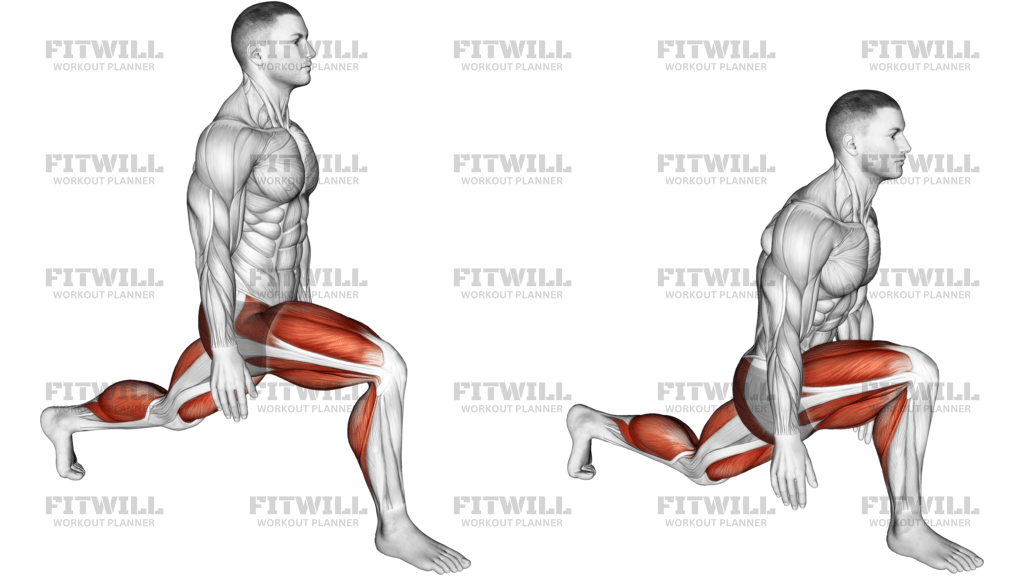
Instructions
- Kneel on a mat with your right knee down and your left foot planted in front, then place your left knee over the ankle and keep the back toes either tucked or relaxed on the floor.
- Square both hips toward the front and stack your torso tall before you move deeper into the stretch.
- Lightly squeeze the right glute and tuck the pelvis so your lower back stays long instead of arching.
- Keep the left heel grounded and the left shin stable while you brace the midsection with a quiet breath in.
- Shift the hips forward a few inches until you feel a clear stretch across the front of the right hip and thigh.
- Let the chest stay lifted without flaring the ribs or leaning the shoulders far past the front knee.
- Breathe slowly into the position and settle for a brief hold without bouncing or rocking.
- To finish, press through the left foot, bring the right knee off the floor, and step back out of the lunge with control.
Tips & Tricks
- A folded pad under the right knee makes the stretch easier to hold and keeps the joint from getting sore on hard flooring.
- If the stretch moves into the low back, shorten the stance and re-tuck the pelvis before going farther forward.
- Keep the left foot far enough ahead that the shin stays close to vertical instead of collapsing the knee far past the toes.
- Squeezing the right glute is the quickest way to shift the stretch into the front of the hip instead of the spine.
- Do not chase depth by letting the ribs pop up; keep the chest tall and the waistband heavy.
- If the rear hip feels pinchy, move the right knee back a little and reduce the forward glide until the pinch disappears.
- Use the front foot as an anchor and avoid twisting the left knee inward as you settle into the position.
- A slow exhale usually lets the pelvis drop a little farther without forcing the stretch.
- For a stronger quad bias, keep the right toes tucked; for a gentler shape, rest the top of the back foot on the floor.
Frequently Asked Questions
What does Low Lunge Left Side stretch most?
It mainly stretches the right hip flexor and right quadriceps while the left leg and trunk stabilize the position.
Should my left knee stay over the ankle in Low Lunge Left Side?
Yes, that is a good starting point for most people. If the front knee drifts too far forward or caves inward, shorten the stance and reset.
Is Low Lunge Left Side supposed to hurt in the low back?
No. If you feel the low back taking over, tuck the pelvis, squeeze the rear glute, and reduce how far you drive the hips forward.
Do I keep the back toes tucked or flat on Low Lunge Left Side?
Either works. Tucked toes usually feel a little stronger and can add a calf stretch, while the top of the foot on the floor feels more relaxed.
Can beginners do Low Lunge Left Side?
Yes. A pad under the rear knee and a shorter stance make it much easier to learn without losing balance or overextending the spine.
Why do I feel Low Lunge Left Side in my front thigh too?
That is normal if the rear knee is bent deeply and the pelvis stays tucked. The front leg also works to keep the split stance steady.
When should I use Low Lunge Left Side in a workout?
It fits well in a warm-up, mobility sequence, or cooldown, especially before or after squats, running, lunges, or long periods of sitting.
What is the easiest way to make Low Lunge Left Side deeper?
First square the hips and tighten the rear glute, then exhale and glide forward a little farther. Depth should come from position, not from arching the low back.