Low Lunge Left Side
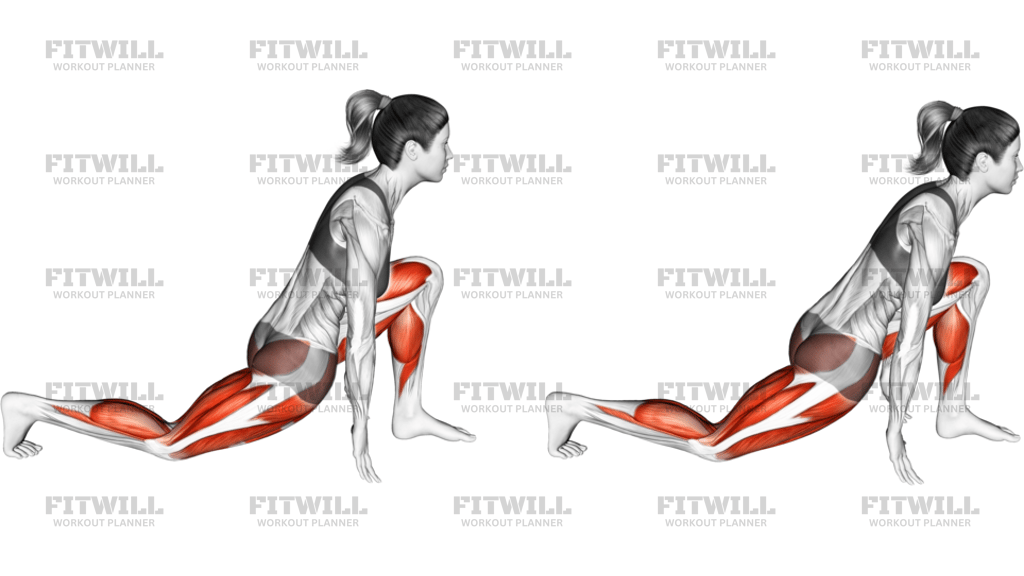
Low Lunge (left) is a half-kneeling stretch used to open the front of the left hip and thigh while keeping the pelvis and ribs under control. It is most useful when the hip flexors feel tight from sitting, sprinting, cycling, running, or lower-body training, because the kneeling position lets you target the trailing leg without needing speed or load.
The stretch works best when the setup is precise. The front foot stays planted, the back knee and shin stay anchored, and the torso stays long instead of collapsing forward. That position matters because it shifts the stretch into the hip flexor and quad instead of dumping the work into the low back or forcing the front knee to take unnecessary stress.
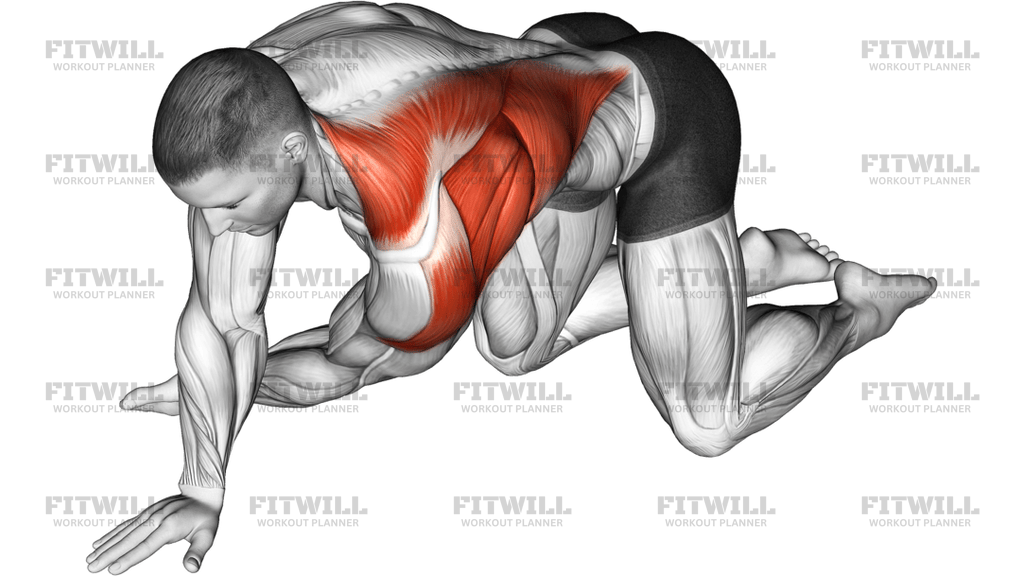
In the image, the body is supported by the hands so the lunge can be adjusted gradually. That hand support is useful for anyone who needs to control how much bodyweight enters the stretch. You can keep the hands on the floor, place them on blocks, or come more upright as your mobility improves, but the pelvis should stay organized the whole time.
Think of this as a controlled position hold, not a bounce. Ease forward until you feel a clear stretch in the front of the left hip and upper thigh, then breathe there without twisting or arching. The goal is a clean, repeatable end position that feels strong and open rather than forced. That makes the movement suitable for warm-ups, cool-downs, mobility sessions, and recovery work between harder training days.
Use a smaller stance if the front knee feels compressed, and use a taller torso if the stretch migrates into the low back. Low Lunge (left) should leave the hip flexors feeling lengthened and the posture feeling more open, with no pinching at the hip joint and no sharp pressure on the kneeling knee.
Fitwill
Log Workouts, Track Progress & Build Strength.
Achieve more with Fitwill: explore over 9600 exercises with images and videos, access built-in and custom workouts, perfect for both gym and home sessions, and see real results.
Start your journey. Download today!




Instructions
- Start in a half-kneeling lunge with the left knee on the floor, the right foot flat in front, and both hands supporting you on the floor or on blocks.
- Place the right knee over the ankle and keep both toes pointing forward so the front leg stays stable.
- Lightly tuck the pelvis and stack the ribs over the hips before you move deeper into the stretch.
- Press the top of the left foot into the floor and gently squeeze the left glute to keep the stretch in the front of the hip.
- Shift the hips forward a few centimeters until you feel the stretch build in the left hip flexor and quad.
- Keep the torso long and avoid letting the lower back arch or the chest dump toward the front thigh.
- Breathe slowly and stay in the position for the programmed hold time, letting the exhale soften the front of the hip.
- Come back out by shifting the hips slightly backward, then reset before repeating or switching sides.
Tips & Tricks
- If the kneeling knee feels sensitive, place a folded mat or pad under it before you settle into the lunge.
- Keep the front heel grounded; if it starts to lift, shorten the stance and reduce the forward shift.
- Squeeze the left glute to intensify the hip-flexor stretch without forcing the low back into extension.
- Use blocks under the hands if the torso collapses when you try to get deeper.
- Move the hips forward, not the ribs; the stretch should come from the pelvis shifting, not from bending the spine.
- A smaller stance usually feels better than an exaggerated split if the front knee or groin feels strained.
- Exhale as you settle into the end range so the hip can open without bouncing.
- Stop before any pinching in the front of the hip, especially when the stretch is already strong.
Frequently Asked Questions
What does Low Lunge (left) stretch most?
It mainly stretches the front of the left hip, especially the hip flexors and upper quad.
Which knee is on the floor in this version?
The left knee is down in the half-kneeling setup, with the right foot forward for support.
Should I keep my hands on the floor the whole time?
Not necessarily. Hands on the floor or on blocks are helpful at first, then you can come more upright if you can keep the pelvis controlled.
Why am I feeling this in my lower back instead of my hip?
That usually means the pelvis is tipping forward too far. Tuck slightly, squeeze the left glute, and reduce how far you shift forward.
Can beginners use this stretch safely?
Yes. A shorter stance, a pad under the knee, and support from the hands make it very beginner-friendly.
How long should I hold Low Lunge (left)?
A controlled hold of about 20 to 45 seconds is common, or whatever time your program assigns.
What is a common mistake with the front leg?
Letting the front knee drift too far forward or the heel lift off the floor usually makes the stretch feel less stable.
When is this stretch most useful?
It works well after lower-body lifting, running, cycling, long sitting periods, or any session where the hip flexors feel shortened.