Cable Rear Delt Row Parallel Bar
Cable Rear Delt Row (parallel bar) is a seated cable row variation that uses a neutral-grip parallel handle and a foot-braced bench position to train the rear delts, upper back, and elbow flexors through a controlled horizontal pull. The setup matters because the feet-on-plate position, torso angle, and elbow path decide whether the exercise becomes a rear-delt and upper-back row or just another generic cable row.
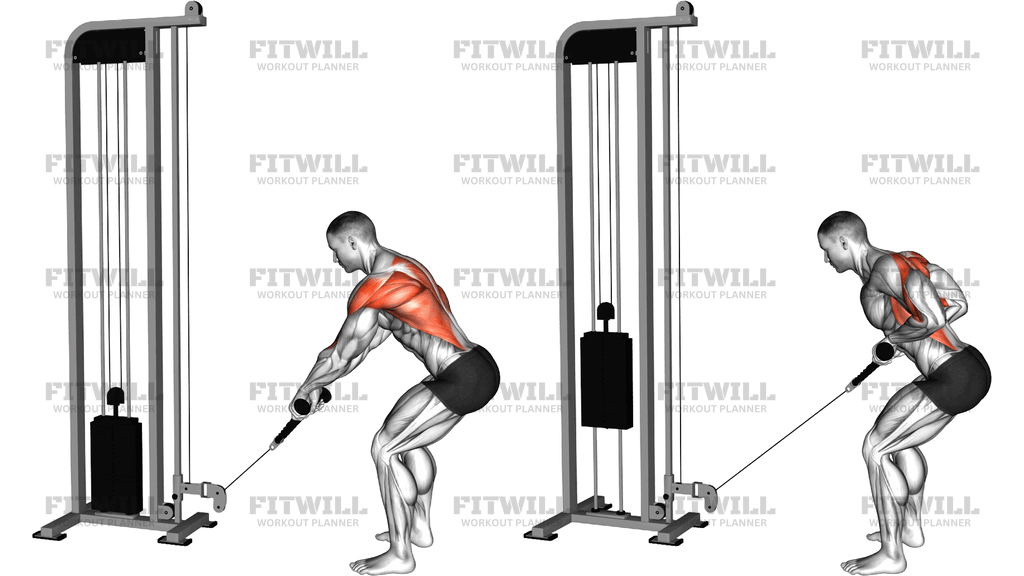
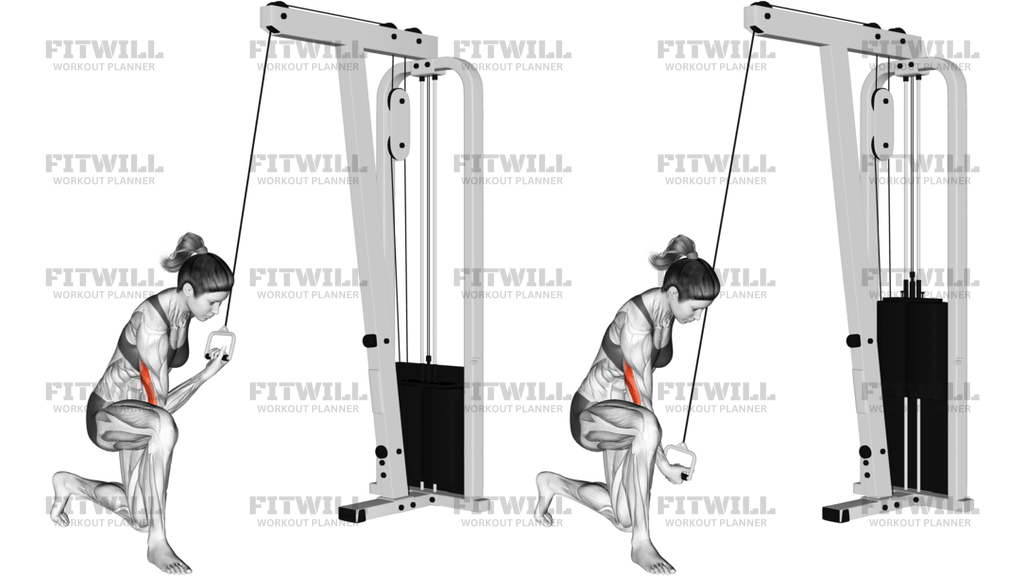
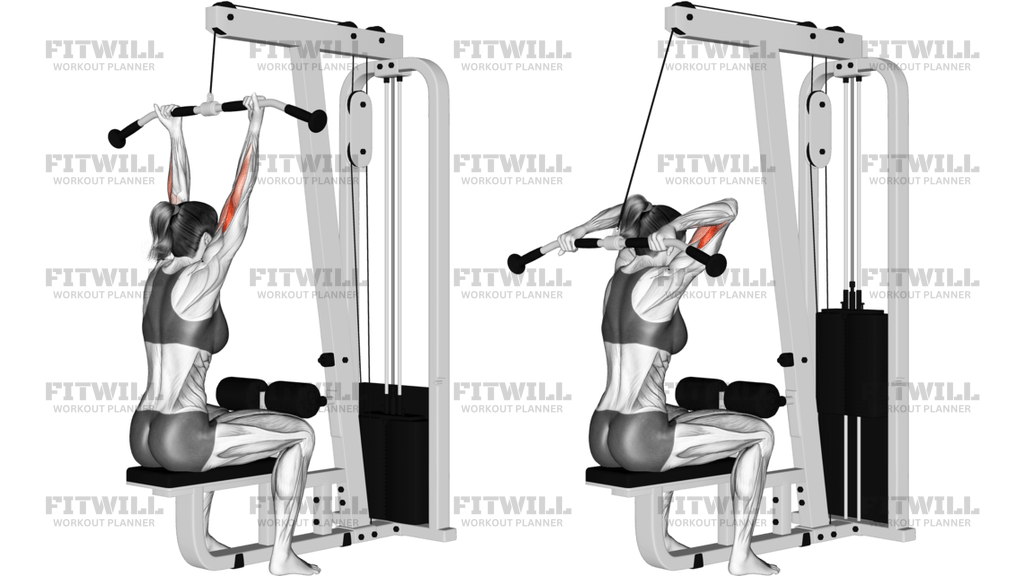
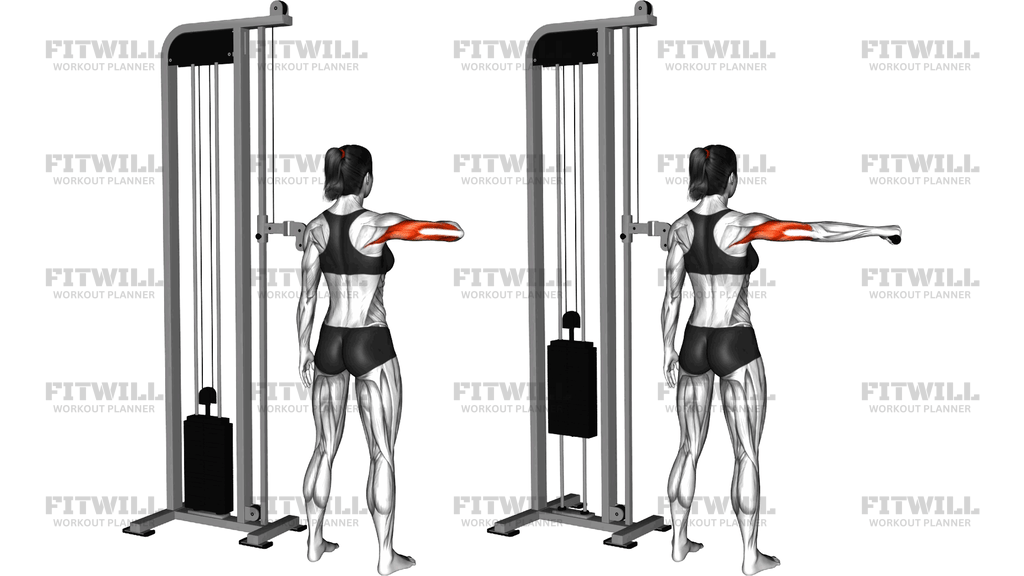
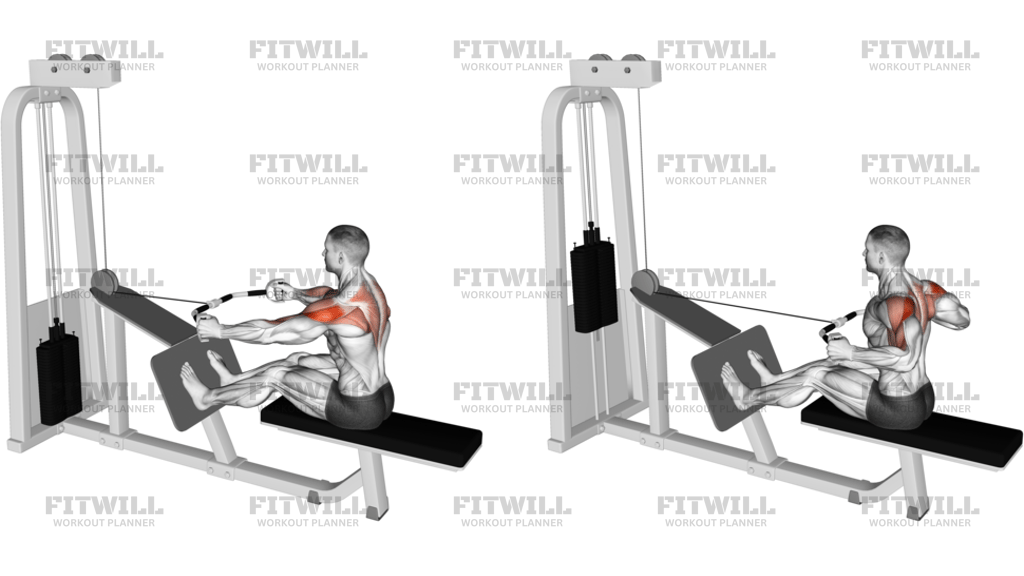
The image shows a lifter seated facing the cable stack with the feet planted against the footplate, the arms reaching forward, and the elbows driving out and back instead of staying tucked. That arm path shifts the emphasis toward the posterior deltoids, rhomboids, and mid traps while the biceps and forearms help hold the handle and finish the pull. The neutral handle also keeps the wrists in a comfortable position for repeated reps.
Treat each repetition as a small, deliberate row: set the torso tall, anchor the feet, pull the handle toward the upper chest or upper rib line, then let the shoulder blades move forward again under control. The goal is not to heave the weight or lean way back; it is to keep the chest open, the neck long, and the elbows tracking wide enough to keep tension on the rear shoulder and upper back.
This movement is useful when you want rear-delt work without dumbbells, when you need a cable option that keeps continuous tension on the target muscles, or when you are pairing pulling volume with shoulder health work. It can fit into upper-body hypertrophy sessions, pull days, or accessory work after bigger back lifts. Because the machine guides the load, it is also easy to scale down and learn with light resistance.
The most common mistakes are shrugging the shoulders, turning the pull into a biceps curl, and swinging the torso to finish the rep. Use a load that lets you keep the elbows high, the wrists neutral, and the return phase slow. If the shoulders pinch or the upper traps take over, shorten the range slightly and lower the resistance until the rear delts and upper back can do the work cleanly.
Fitwill
Log Workouts, Track Progress & Build Strength.
Achieve more with Fitwill: explore over 9600 exercises with images and videos, access built-in and custom workouts, perfect for both gym and home sessions, and see real results.
Start your journey. Download today!




Instructions
- Sit on the bench facing the cable stack and place both feet firmly against the footplate.
- Grip the parallel handle with a neutral grip and let your arms extend forward until the cable is just taut.
- Set your torso tall with a slight hinge from the hips, a long neck, and your shoulders relaxed away from your ears.
- Brace your midsection before you pull so your lower back stays quiet.
- Drive your elbows out and back to pull the handle toward your upper chest or upper rib line.
- Squeeze the rear delts and upper back at the end of the pull without leaning hard into the finish.
- Pause for a brief moment, then lower the handle forward under control until your arms are almost straight again.
- Keep the shoulder blades moving smoothly as you repeat each rep, breathing out on the pull and in on the return.
Tips & Tricks
- If the elbows stay tucked against your ribs, the exercise turns into more of a lat row; let them flare slightly to keep the rear delts involved.
- Keep the wrists in line with the forearms so the handle does not fold the wrists back at the finish.
- Use the footplate to pin your legs in place; if the feet slide, the torso will usually start swinging too.
- Think about pulling the handle apart with the shoulder blades rather than yanking it with the hands.
- Stop the rep when the upper traps take over or the shoulders start to shrug upward.
- A small torso lean is fine, but do not rock backward to steal extra range from the machine.
- Lower the weight if you cannot control the reach forward as the shoulder blades separate.
- A two-count return keeps tension on the rear delts longer than dropping the stack back to the start.
Frequently Asked Questions
What does Cable Rear Delt Row (parallel bar) train most?
It primarily targets the rear delts and upper back, especially the rhomboids and mid traps, with the biceps helping as secondary movers.
Why use the parallel handle instead of a straight bar?
The neutral grip usually feels easier on the wrists and lets you focus on pulling the elbows out and back instead of forcing an awkward hand position.
How should my elbows move during the pull?
Let the elbows travel out and slightly back toward the upper ribs or lower chest instead of keeping them pinned close to the body.
Should I lean back to finish the rep?
No. A tiny body angle is fine, but the rep should end from the shoulder blades and elbows, not from swinging the torso backward.
Can beginners use this cable row variation?
Yes. Start with a light load, keep the footplate and seat position stable, and practice the elbow path before adding weight.
Where should I feel the tension?
You should feel it mainly across the back of the shoulders and the upper middle back, with the arms working more like hooks than prime movers.
What is the most common mistake with this exercise?
Shrugging the shoulders and turning the row into a biceps pull are the two biggest form problems.
How many reps work well on this movement?
Moderate-to-higher reps usually work best because the rear delts respond well to controlled tension and clean repeats.