Bottle Weighted Bent-Over Reverse Fly
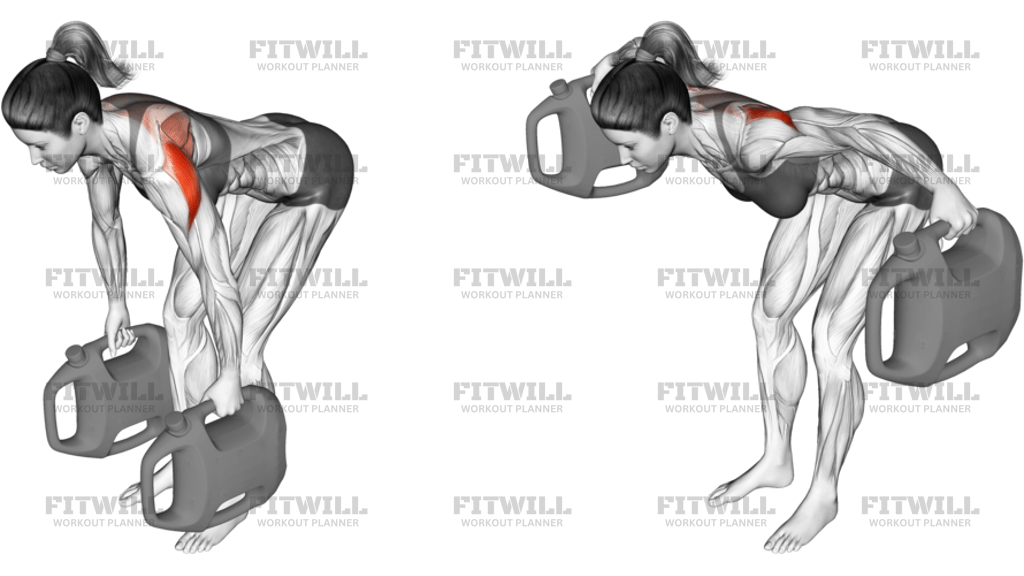
Bottle Weighted Bent-Over Reverse Fly is a bent-hip rear-shoulder isolation exercise that also challenges the upper back and postural muscles. It is useful when you want a simple free-weight movement that teaches you to keep the torso fixed while the arms move out to the sides under control. Because bottles or jugs place the load in an awkward hand position, the exercise rewards patience, light loading, and clean mechanics more than brute force.
The setup matters because the hinge angle determines how much the shoulders can move without the low back or neck taking over. Hinge at the hips until the torso is close to parallel with the floor, soften the knees, and let the arms hang under the shoulders with the palms facing each other. Keep the ribcage stacked over the pelvis and the neck long so the rear delts can do the work instead of momentum, shrugging, or spinal extension.
From that position, lift the arms out in a wide arc until the hands reach about shoulder height or slightly below, then lower them slowly back to the hanging start. Think about leading with the elbows and spreading the bottles apart rather than yanking the hands backward. A brief squeeze at the top helps you feel the rear delts and upper back finish the rep, while a controlled lowering phase keeps the tension where it belongs.
Bottle Weighted Bent-Over Reverse Fly is a practical accessory movement for home workouts, upper-body balance work, warmups before pressing, or higher-rep shoulder training. It can help offset a lot of pressing and front-delt dominant work by giving the rear shoulders and scapular muscles direct attention. The exercise is also easy to scale down for beginners, as long as the hinge stays stable and the bottles remain light enough to move without twisting.
The most common problems are turning the rep into a shrug, swinging the torso, or lifting the hands too high. If your low back starts to work harder than your shoulders, shorten the range or support your chest on an incline bench. If the bottles feel unstable, switch to a lighter pair or a more secure grip before the set gets sloppy. Clean, repeatable reps matter more here than chasing a big range or heavy load.
[ Workout Log & Planner ]
Put your next workout in Fitwill
Keep your plan and training log ready when you are.


Instructions
- Stand with your feet about hip-width apart, hold a bottle in each hand, and hinge forward until your torso is close to parallel with the floor.
- Keep a soft bend in your knees, let the bottles hang under your shoulders, and turn your palms to face each other.
- Set your neck long, draw your shoulders away from your ears, and brace your midsection before the first rep.
- Raise both arms out to the sides in a wide arc, leading with your elbows and keeping only a slight bend in each arm.
- Stop when the bottles reach shoulder height or slightly below, and squeeze the rear shoulders without shrugging.
- Lower the bottles slowly until your arms hang straight beneath your shoulders again.
- Keep your torso still, your hips fixed, and your chest angled toward the floor as you move through each repetition.
- Exhale as you lift, inhale as you lower, and keep the tempo smooth instead of swinging the weights.
- After the final rep, stand up by driving through your hips and set the bottles down with a neutral spine.
Tips & Tricks
- Use lighter bottles than you would use for dumbbells; the awkward grip makes the exercise feel heavier than it looks.
- Think about spreading the weights apart rather than pulling them behind you.
- Stop the lift before your shoulders start to shrug toward your ears.
- Keep the palms facing each other so the arms track naturally and the wrists do not twist.
- If your lower back starts to burn first, shorten the hinge or support your chest on an incline bench.
- A slow two- to three-second lowering phase keeps tension on the rear delts and upper back.
- Do not let the bottles drift forward and backward; they should travel mostly out to the sides.
- If the top position makes you lean back, lower the range and reset the hinge before the next rep.
Frequently Asked Questions
What does Bottle Weighted Bent-Over Reverse Fly work?
It mainly trains the rear shoulders and upper back, especially the muscles that help pull the shoulder blades back and keep the shoulders balanced.
Is Bottle Weighted Bent-Over Reverse Fly beginner-friendly?
Yes, as long as you use very light bottles and keep the hinge, arm path, and lowering phase under control.
How bent over should I be for Bottle Weighted Bent-Over Reverse Fly?
Hinge until your torso is close to parallel with the floor, then hold that angle steady so the arms can move without the torso rising.
Should my elbows stay straight or bent?
Keep a slight bend in the elbows and maintain that angle through the rep. That keeps stress off the joints and makes the rear shoulders do more of the work.
Why do I feel Bottle Weighted Bent-Over Reverse Fly in my traps?
That usually means you are shrugging at the top or lifting too high. Stop around shoulder height and keep the shoulders down away from the ears.
Can I use dumbbells instead of bottles?
Yes. Dumbbells usually feel more stable, but bottles are fine if you want a home-friendly version and can keep the grip secure.
How many reps should I do?
This movement usually works well for moderate to higher reps, such as 10 to 20, because control matters more than heavy loading.
What if my lower back gets tired first?
Reduce the hinge angle, lighten the load, or do the exercise with your chest supported on a bench so the back does not have to hold the position as hard.