Namaskarasana Yoga Pose
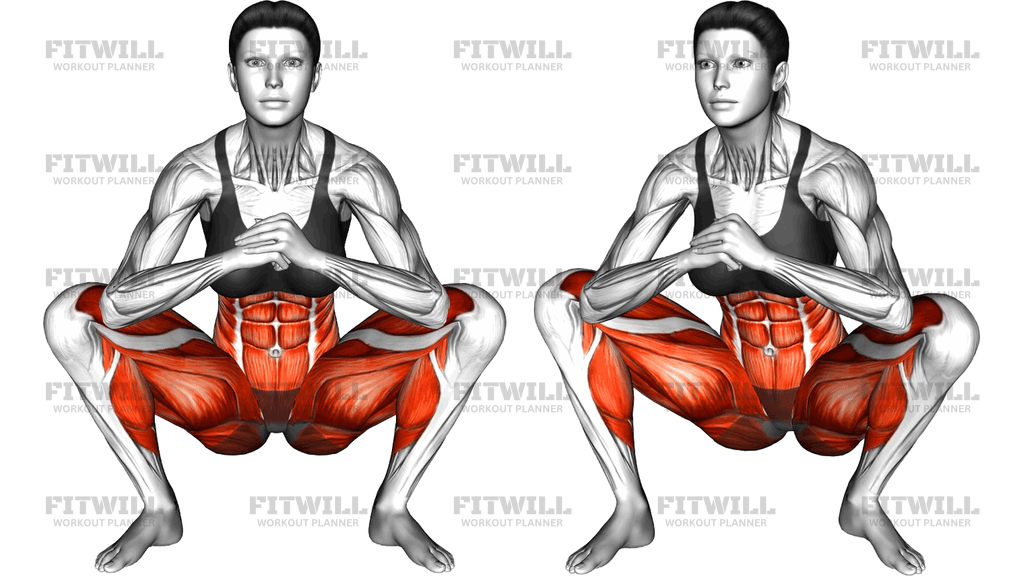
Namaskarasana, often called Prayer Squat or Yogi Squat, is a bodyweight yoga position built around a deep squat, an upright chest, and the hands in prayer at the heart. In this version, the hips sit low between the heels while the elbows press gently into the inner knees to open the hips and keep the posture organized. Some variations stay isometric in the bottom position, while others flow between prayer at the chest and a forward reach or arm drop between the legs, matching the motion shown in the exercise image.
This pose is less about forcing depth and more about finding a squat shape you can hold with steady breathing. The feet usually sit a little wider than hip width with the toes turned out enough to let the knees track cleanly. A long spine, lifted chest, and relaxed neck matter because they keep the stretch in the hips, ankles, and inner thighs instead of dumping stress into the low back. If the heels want to lift, widening the stance or using a small heel lift is usually better than collapsing the torso.
Namaskarasana is useful as a mobility drill, warm-up, or recovery position when you want to open the hips, adductors, and ankles without loading the spine. The squat position also encourages balance and body awareness, so the exercise works well before lower-body training or as a reset between stronger movements. When performed well, it should feel grounded and controlled, not like a forced sit. If the knees or hips feel pinched, reduce the depth immediately and shorten the range.
The main coaching point is to let the breath and the knee-to-elbow pressure create the stretch rather than trying to drop lower by rounding forward. Press the knees outward only as much as you can while keeping the feet planted and the toes relaxed. If the flowing variation is used, move slowly from the prayer position into the forward reach and back again so the trunk stays active and the transition remains smooth. The goal is a stable, repeatable squat that can be held comfortably for several breaths or moved through with control.
For most people, Namaskarasana works best as a low-load technique exercise, a hip opener, or a restorative part of a lower-body session. It is beginner friendly when the depth is adjusted to match ankle and hip mobility, but it still deserves respect because a deep squat can expose tight calves, stiff ankles, or irritated knees quickly. Keep the posture clean, breathe steadily, and use the shape you can own instead of chasing the deepest possible squat.
[ Workout Log & Planner ]
Put your next workout in Fitwill
Keep your plan and training log ready when you are.


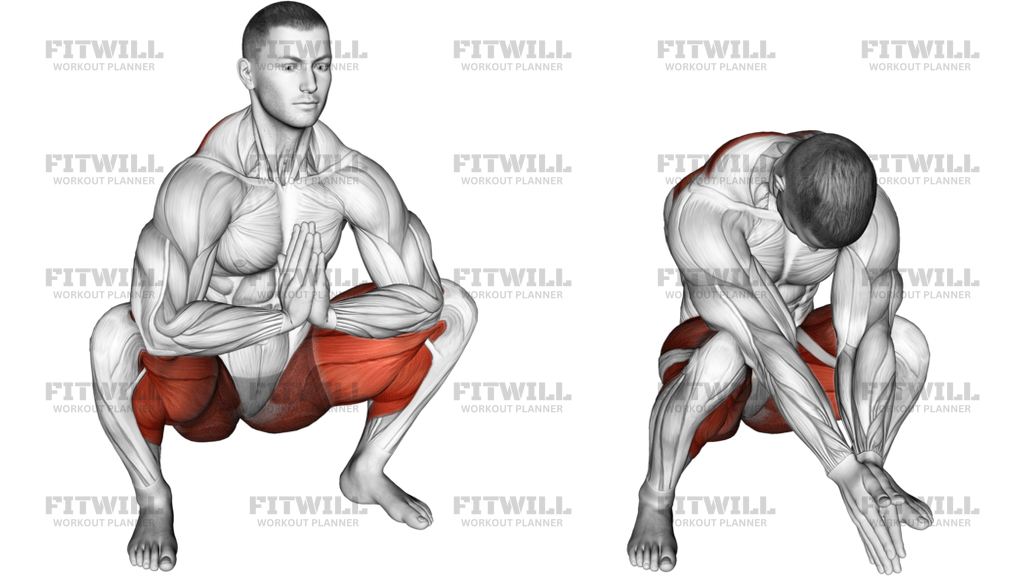
Instructions
- Stand tall, then step your feet slightly wider than hip width and turn the toes out just enough to let your knees open comfortably.
- Lower into a deep squat by bending the knees and sending the hips down between the heels while keeping the chest lifted.
- Settle your weight through the whole foot and keep the heels down as far as your mobility allows.
- Bring your palms together at your chest in prayer and lengthen the spine before you sink any deeper.
- Press the elbows gently into the inner knees to open the hips without letting the knees cave inward.
- Hold the bottom position for a steady breath or, if your version uses the flow, reach the hands down between the legs as you soften the torso slightly forward.
- On the inhale, return the hands to prayer and re-stack the chest over the hips without bouncing.
- Exhale and either repeat the flowing transition or press through the feet to stand back up under control.
Tips & Tricks
- If your heels lift, widen the stance first before you try to push deeper into the squat.
- Keep the knees tracking in the same direction as the toes so the stretch stays in the hips instead of the knees.
- Use the elbows to guide the knees open gently; forcing them apart can make the squat feel unstable.
- Keep the chest proud and the sternum lifted even if the torso leans forward a little in the lower position.
- Let the neck stay long and relaxed instead of tucking the chin hard toward the chest.
- Breathe into the bottom of the squat for a few seconds rather than bouncing in and out of the position.
- If the reach-down variation is used, move slowly so the arms and trunk do not pull you off balance.
- Stop the set if the knees pinch, the low back rounds sharply, or the heels cannot stay controlled.
Frequently Asked Questions
What does Namaskarasana work the most?
It mainly opens the hips, inner thighs, ankles, and lower body chain while the trunk helps keep the squat balanced.
Is this the same as Prayer Squat or Yogi Squat?
Yes. Namaskarasana is commonly used for the prayer squat shape with the hands together at the chest.
Should my heels stay on the floor in the squat?
Ideally yes, but a slightly wider stance or a small heel lift is fine if that lets you keep the movement controlled and pain free.
Why do the elbows press into the knees?
That gentle pressure helps open the hips and keeps the squat from collapsing inward, which makes the position feel more stable.
Can I stay in the bottom position instead of moving?
Yes. A static hold for a few breaths works well if you want more mobility and balance work.
What if the image version that reaches the hands down feels awkward?
Keep the hands at the chest or lower only partway. The goal is a smooth squat, not a forced forward fold.
Is Namaskarasana beginner friendly?
Yes, as long as you shorten the squat depth and adjust foot width to match your ankle and hip mobility.
When should I avoid this pose?
Skip or modify it if deep knee flexion, hip pinching, or ankle restriction causes pain.