Dolphin Pose
Dolphin Pose is a forearm-supported yoga position that combines shoulder opening, hamstring length, and core engagement in one controlled hold. With the elbows planted and the hips lifted, it asks you to organize the upper body while you breathe into a strong inverted stretch. It is useful as a warm-up for forearm balances, a wrist-friendly alternative to Downward Dog, or a mobility drill that still creates real muscular effort.
The setup matters because the pose changes quickly when the elbows drift wide or the shoulders collapse. When the forearms are stacked correctly under the shoulders, the base feels stable enough to shift weight back toward the feet without dumping into the neck. That position also helps the rib cage stay controlled so the spine can lengthen instead of folding at the lower back.
A good Dolphin Pose should feel active, not passive. Press the forearms down, lift the hips, and walk the feet in only as far as you can while keeping the spine long and the breathing smooth. The goal is to create a steady line from the shoulders through the hips while the heels ease toward the floor at your available range.
Use Dolphin Pose when you want a shoulder-strengthening stretch that does not load the hands the same way a plank or hand-supported inversion does. It fits well in warm-ups, yoga sequences, or accessory work for athletes who need overhead control and posterior-chain mobility. If the shoulders pinch, the neck tightens, or the lower back starts to take over, shorten the stance, bend the knees more, and reset the shape before holding again.
[ Workout Log & Planner ]
Put your next workout in Fitwill
Keep your plan and training log ready when you are.


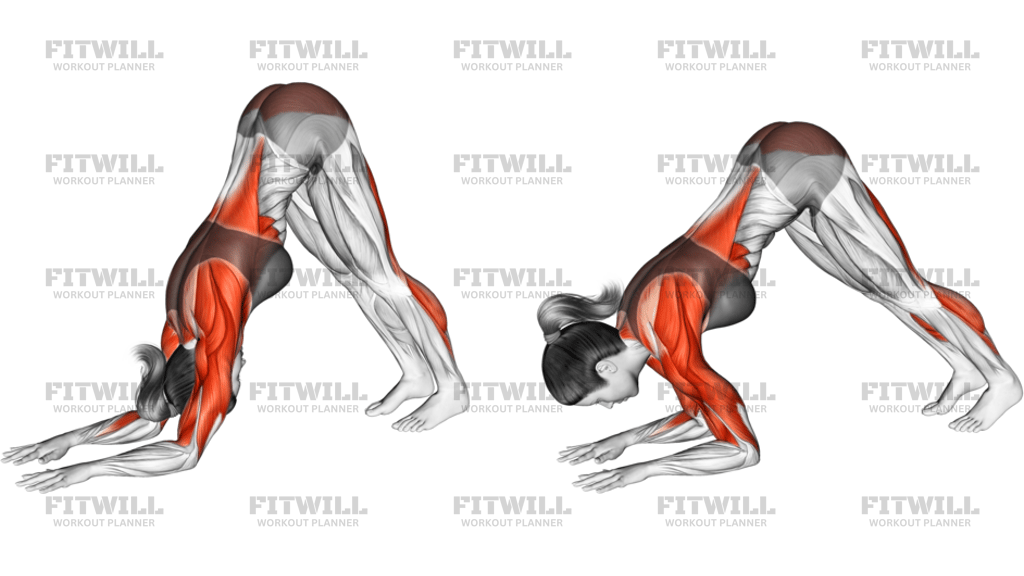
Instructions
- Kneel on a mat and place both forearms on the floor with your elbows directly under your shoulders, forearms parallel, and hands clasped or palms flat.
- Tuck your toes, press down through the forearms, and lift your knees so your weight begins to shift between your elbows and feet.
- Send your hips up and back until your torso forms an inverted V, keeping your neck long and your gaze softly on the mat.
- Walk your feet a little closer to your elbows if you want more stretch, or step them back if your lower back starts to round.
- Keep pressing the chest gently back toward the thighs so the ribs stay knit instead of flaring forward.
- Lengthen one heel at a time toward the floor while keeping the legs active and the shoulders lifted away from the ears.
- Breathe slowly and steadily through the hold, letting each exhale help the hips rise without losing the forearm base.
- Lower your knees to the mat first, then sit back or rest briefly before repeating the pose.
Tips & Tricks
- Keep the elbows no wider than shoulder width so the pose stays anchored through the upper arms instead of dumping into the front delts.
- If your neck feels compressed, push the floor away through the forearms and keep the head between the upper arms instead of reaching forward.
- Bend the knees more if the spine starts to round before the hamstrings open.
- Step the feet in only a few inches at a time; small changes make a big difference in this pose.
- Use the forearms to create lift, not just as a resting shelf, so the shoulders stay active.
- Let the heels stay high if needed; forcing them down usually shortens the spine and steals the stretch from the upper body.
- Keep the ribs from flaring forward, especially when you exhale and try to lift the hips higher.
- Come out of the pose before the shoulders lose control or the lower back starts pinching.
Frequently Asked Questions
What muscles does Dolphin Pose work?
Dolphin Pose mainly trains the shoulders, upper back, core, and the back line of the legs. The forearms and serratus also work hard to keep the body lifted.
Is Dolphin Pose beginner friendly?
Yes, if you shorten the stance and keep the knees bent. Beginners should focus on a stable forearm base and a long spine before trying to push the heels lower.
Should my hands be clasped in Dolphin Pose?
Many people clasp the hands to make the forearm base feel firmer, but flat palms can also work if that keeps the elbows under the shoulders. Use the version that keeps the forearms steady and the neck relaxed.
Why do my shoulders burn so quickly in Dolphin Pose?
Dolphin Pose asks the shoulders to support body weight while staying lifted. If it burns right away, shift a little more weight into the feet, bend the knees, and stop shrugging toward the ears.
How is Dolphin Pose different from Downward Dog?
Dolphin Pose uses the forearms instead of the hands, so it usually reduces wrist load and increases the demand on the shoulders. The leg and hamstring stretch is similar, but the support base is lower and more challenging.
How long should I hold Dolphin Pose?
Short holds of 15-30 seconds are common for mobility or warm-up work, while longer holds can be used if the shoulders and breathing stay calm. End the hold as soon as the neck tightens or the lower back starts to arch.
Can I do Dolphin Pose if my hamstrings are tight?
Yes, and tight hamstrings are one reason this pose is useful. Keep the knees bent and walk the feet only as far as you can while keeping the spine long.
What is the most common mistake in Dolphin Pose?
Letting the elbows drift wide or collapsing the chest toward the floor. Keep the elbows stacked under the shoulders and the chest gently moving back so the pose stays organized.