Chaturanga Dandasana Four Limbed Staff Pose
Chaturanga Dandasana, or Four Limbed Staff Pose, is the low-plank lowering used throughout many yoga flows and sun salutations. The body stays rigid and long as you lower from a high plank into a controlled hover with the elbows tucked close to the ribs. In the image, the shoulders, hips, and heels stay aligned instead of sagging, which is the main standard for the pose.
This position trains pressing strength, shoulder stability, triceps endurance, serratus control, and trunk stiffness at the same time. It is not a loose push-up or a relaxed plank hold. The whole point is to keep the chest, hips, and thighs moving as one unit while the shoulders stay organized and the elbows track straight back. That makes the pose valuable both as a strength drill and as a transition between plank, upward dog, and vinyasa-style sequences.
The setup matters because the shoulders take most of the load when the body drifts too far forward or the hips drop first. Start in a strong high plank with the hands planted under or slightly behind the shoulders, fingers spread, legs active, and the heels pressing back. From there, shift forward just enough to load the hands and then bend the elbows close to the sides so the upper arms stay parallel to the floor. A good chaturanga feels compact and organized, not collapsed.
When the lowering is done well, the chest stays open, the neck stays long, and the torso hovers a small distance above the floor without losing the line from head to heels. That control is why the pose is so common in yoga practice: it teaches you how to move through the transition without dumping into the shoulders or losing core tension. If the full position is too demanding, the knees-down version or a higher hover is a better choice than forcing a low, sloppy shape.
Use Chaturanga Dandasana as a technical strength element in yoga sessions, mobility flows, warmups, or bodyweight conditioning work where shoulder position and trunk control matter. It can be practiced as a brief pause, a slow lower, or a repeated transition in a sequence, but the same rule applies each time: stay long through the spine, keep the elbows tight, and lower only as far as you can control. If wrists, shoulders, or the lower back start to complain, reduce the range or switch to an easier regression instead of fighting the pose.
[ Workout Log & Planner ]
Put your next workout in Fitwill
Keep your plan and training log ready when you are.


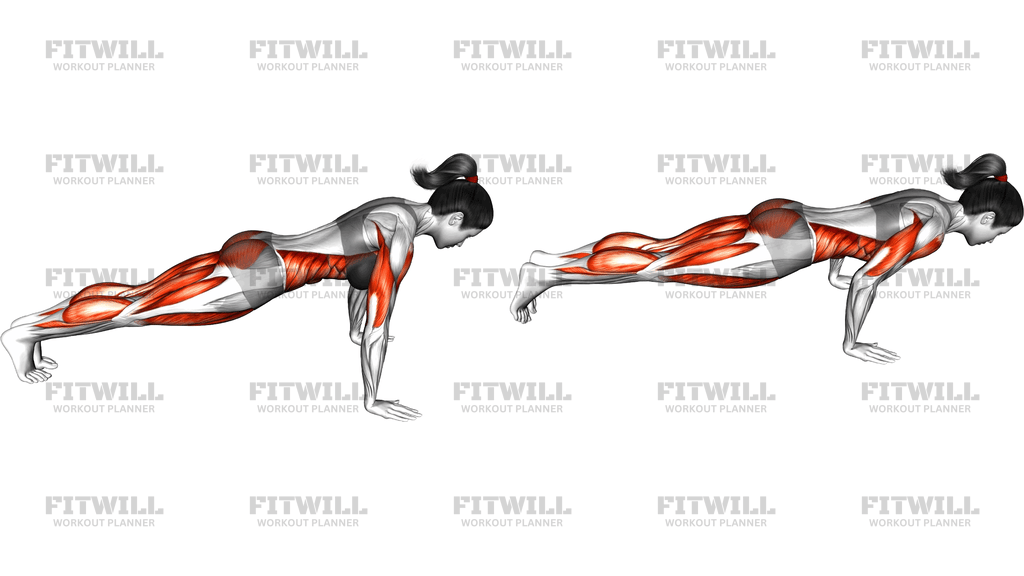
Instructions
- Start in a high plank with your hands under or slightly behind your shoulders, fingers spread wide, legs straight, and heels reaching back.
- Press the floor away so your shoulders are active and your body forms one long line from the back of your head to your heels.
- Shift slightly forward to load the hands, then bend your elbows straight back alongside your ribs.
- Keep your upper arms close to parallel with the floor as you lower, rather than letting the elbows flare out.
- Lower your chest and thighs together as one unit until you reach a controlled hover just above the floor.
- Keep your neck long, your gaze slightly ahead of your hands, and your core tight enough to prevent the hips from dropping first.
- Pause briefly in the low position if you are holding the pose, or continue smoothly into the next yoga transition if you are flowing.
- Press back to plank or move into the next posture with control, and reset before the next repetition if your alignment breaks down.
Tips & Tricks
- Think about moving the shoulders, chest, and hips together; if the chest drops first, the position is already too low.
- Keep the elbows brushing close to the ribs so the shoulders do not flare into an unstable push-up pattern.
- A slightly forward shoulder position is normal, but dumping too far forward can overload the wrists and front delts.
- Spread the fingers and press through the knuckles to make the hands feel more secure on the floor.
- Keep the thighs active and the heels reaching back so the lower body does not sag as you lower.
- If you cannot hold the hover with clean lines, use the knees-down variation instead of forcing a broken shape.
- The most common mistake is letting the shoulders sink below elbow height and then trying to save the rep at the bottom.
- In a flow, keep the transition smooth rather than dropping quickly; chaturanga is a controlled lowering, not a dive.
Frequently Asked Questions
What does Chaturanga Dandasana work most?
It strongly challenges the chest, triceps, front shoulders, serratus, and deep core muscles while the body stays rigid in one line.
Is this just a push-up?
No. The shape is closer to a low plank hold or a controlled halfway lower, with the elbows tucked and the body kept long.
How low should my chest be in chaturanga?
Lower until the upper arms are roughly parallel to the floor and the chest is hovering just above it, without collapsing through the shoulders.
Should my elbows stay tucked in?
Yes. The elbows should track back close to the ribs so the shoulders stay organized and the load does not drift outward.
Can beginners do this pose?
Yes, but many beginners need the knees-down version, a higher hover, or a shorter range until the shoulder and core control improves.
Why do my shoulders feel stressed in chaturanga?
That usually happens when you drop too low, let the elbows flare, or shift too far forward before the lowering is under control.
When is this pose used in yoga?
It is common in vinyasa flows, especially when moving between plank, chaturanga, upward dog, and other sun-salutation transitions.
What is a good regression if I cannot hold the hover?
Lower with the knees on the floor, keep the elbows tucked, and practice the same shoulder and trunk alignment without forcing the full bodyweight version.