Sage Marichi I Pose Marichyasana
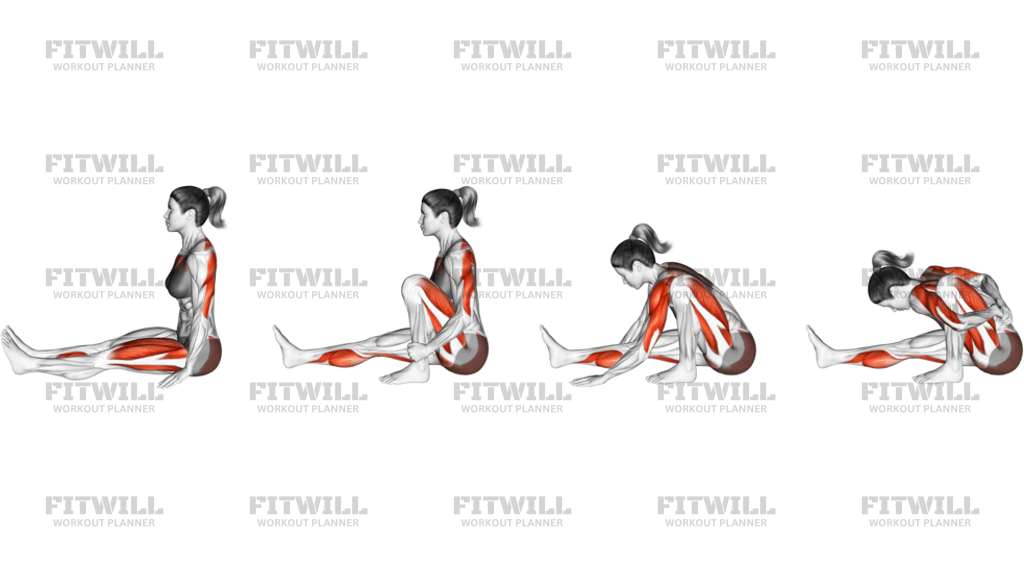
Sage Marichi I Pose, or Marichyasana I, is a seated yoga stretch built around one straight leg, one bent knee, and a forward fold that wraps the torso toward the extended thigh. In the image, the pose is shown as a long seated hold rather than a loaded strength rep, so the main training value comes from controlled positioning, calm breathing, and a steady lengthening through the back of the straight leg.
The stretch usually targets the hamstrings and calf of the extended leg while also asking the hip of the bent leg to stay compact and grounded. As you fold, the lower back, glutes, and upper back help you keep the spine long enough to avoid collapsing into the pose too early. Because this is an asymmetrical position, the quality of the setup matters more than depth. If the pelvis tips, the stretch often moves away from the hamstrings and into the lumbar spine.
To perform it well, sit tall first, then set one leg straight and draw the other foot in close to the opposite hip. Keep both sitting bones as grounded as your mobility allows, lengthen through the crown of the head, and let the fold come from the hips instead of from a hard crunch in the waist. The arms can wrap around the bent leg or reach toward the foot or shin depending on your range, but the goal is the same: keep the chest moving forward while the breath stays slow and even.
Marichyasana I is useful in yoga flows, mobility sessions, cool-downs, or any warmup block where you want a hamstring and hip-opening position without impact. It also helps build awareness of pelvic control and side-to-side differences, which makes it a good test of whether one hamstring, one hip, or one lower-back side is limiting the fold more than the others.
Treat the pose as a calm, repeatable shape rather than a max-effort stretch. Stop short of sharp pulling behind the knee, pinching in the hip, or rounding so far that you lose the seated base. A good version feels long through the straight leg, compact through the bent leg, and quiet through the neck and shoulders while you hold and breathe.
[ Workout Log & Planner ]
Put your next workout in Fitwill
Keep your plan and training log ready when you are.


Instructions
- Sit on the floor with one leg extended straight in front of you and the other knee bent, with that foot tucked close to the inside of the opposite thigh or hip.
- Root both sitting bones into the floor and lengthen your spine before you reach forward.
- Keep the toes of the straight leg pulled back toward you so the hamstring line stays active.
- Wrap the arm that is closest to the bent knee around the shin or thigh, then let the other hand support the reach, the foot, or the floor beside the leg.
- Inhale to lift through the chest and exhale to fold the torso toward the straight thigh without collapsing the neck.
- Keep the bent knee drawing inward and the pelvis as square as your mobility allows while you hold the shape.
- Stay in the stretch for several slow breaths, letting each exhale soften the hamstrings and hips a little more.
- To come out, lift the chest first, release the arms, and switch sides before repeating.
Tips & Tricks
- Keep the straight knee long without locking it violently; the goal is an active line through the back of the leg, not joint pressure.
- If your lower back rounds hard before the chest moves forward, sit on a folded towel or blanket to tilt the pelvis up.
- Reach from the hips, not the shoulders. Pulling the torso forward with the arms usually shortens the breath and irritates the neck.
- Let the bent knee stay heavy and close to the body instead of flaring wide; that keeps the pose organized and makes the fold cleaner.
- A strap around the foot or shin is a good substitution when the hands cannot reach without yanking the spine.
- Keep the toes of the extended leg flexed to reduce any tugging behind the knee and to intensify the hamstring line safely.
- Breathe into the sides of the rib cage while holding the pose so the chest does not collapse toward the thigh too early.
- Stop short of sharp pain in the hamstring, groin, or knee; this stretch should feel long and controlled, not aggressive.
Frequently Asked Questions
What does Marichyasana I stretch the most?
It mainly stretches the hamstrings of the straight leg, along with the hip of the bent leg, the lower back, and some of the upper back and shoulders.
Do I need to hold the bent knee with my hands?
No. If the wrap is too tight, hold the shin, ankle, or a strap and keep the torso lengthening forward.
Should the straight leg be fully locked out?
It should stay long and active, but not jammed into hyperextension. A gentle flex at the ankle usually helps keep the leg organized.
Why does my lower back feel it more than my hamstring?
That usually means the pelvis is tucking under and the fold is coming from the spine instead of the hips. Sitting higher and lengthening before you fold usually helps.
Can beginners do this pose?
Yes. Beginners can keep the fold shallow, use a strap, and sit on support until the spine can stay long in the position.
What should I avoid feeling in the knee?
Avoid a sharp twist or pinching sensation in the bent knee. The knee should feel tucked in, not forced sideways.
How long should I hold each side?
Hold for several slow breaths, usually long enough to settle the posture and soften the stretch before switching sides.
Is this more of a stretch or a strength exercise?
It is primarily a stretch and mobility pose. The work comes from posture, breath control, and staying organized in the seated shape.