Bird Of Paradise Pose Svarga Dvijasana
Bird of Paradise Pose, or Svarga Dvijasana, is a standing yoga balance that combines a deep hip opening, a forward fold, and a controlled leg extension. The pose begins from a bound position and asks you to transfer weight onto one foot while the other leg stays hooked or lifted, so the body has to manage mobility and balance at the same time.
This pose trains more than flexibility. The standing foot, ankle, and hip have to stabilize the body, while the torso stays long enough to keep the bind and avoid collapsing into the lower back. The lifted leg, inner thigh, glutes, and core all contribute to holding the shape, especially when you move from the bent-knee balance into the longer, more open final position.
The setup matters because the bind creates the base for the whole pose. If the shoulders, hamstrings, or hips are too rushed, the balance becomes unstable and the torso twists out of control. Enter gradually, keep the standing knee soft while you shift weight, and use the bind to anchor the lifted leg before you try to rise or straighten it.
The cleanest version is usually built in stages. First find a steady standing balance, then hinge the chest forward enough to keep your center of mass over the planted foot, and finally extend the free leg only as far as you can keep the breath smooth. The pose should feel active and organized, not forced. If the lift or straightening makes you wobble, stay in the bent-knee version and build control there.
Bird of Paradise works well in yoga sequences focused on hip opening, hamstring length, single-leg stability, and body awareness. It is also useful as an advanced balance drill because it exposes side-to-side differences in range, coordination, and control. Keep the movement smooth, avoid yanking into the final extension, and treat the pose as a progressive balance rather than a maximum stretch.
[ Workout Log & Planner ]
Put your next workout in Fitwill
Keep your plan and training log ready when you are.


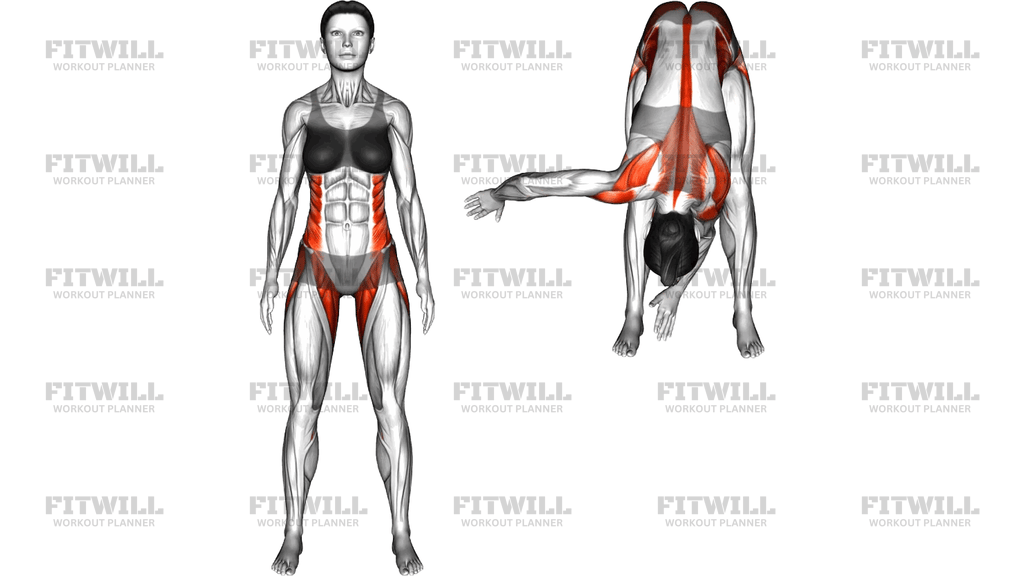
Instructions
- Stand tall in a side-angle style entry and bind the lifted leg with both arms before you try to balance.
- Shift your weight fully onto the standing foot and keep the planted toes spread so the ankle can stabilize.
- Hinge your torso forward slightly to keep your center of mass over the standing leg.
- Lift the bound knee up and across the body, keeping the bind snug enough to support the leg without yanking the shoulder.
- Once you feel steady, begin to straighten the lifted leg in front of you and up toward the ceiling.
- Keep the standing knee softly unlocked until the balance is secure, then lengthen through the standing hip.
- Hold the top position with a long spine, open chest, and smooth breathing instead of forcing the leg higher.
- Lower the lifted leg back to the bent-knee balance with control, then step out of the bind safely before switching sides.
Tips & Tricks
- Keep the standing foot active from big toe to heel so the balance does not collapse into the outer ankle.
- If the torso rounds hard, stop the rise and stay in the bent-knee version until you can keep the chest open.
- Use the bind to guide the leg, not to pull the shoulder forward or crank the knee upward.
- Straighten the lifted leg only after the pelvis feels level and the standing hip no longer feels like it is twisting.
- A micro-bend in the lifted knee is better than forcing a straight line that makes you wobble.
- Look at a fixed point in front of you to reduce sway when you transition from the fold into the upright balance.
- Move slowly through the exit; dropping the lifted leg too quickly usually pulls the standing hip out of position.
- If hamstrings or shoulders are tight, work the lower entry positions first and earn the full extension later.
Frequently Asked Questions
What does Bird of Paradise Pose train most?
It challenges hip opening, hamstring length, single-leg balance, and trunk control at the same time.
Do I need to be able to bind before trying this pose?
Yes. The bind is the base of the pose, so a secure bind should come first before you try to lift or straighten the leg.
Why does the pose start with the knee bent?
The bent-knee balance is the stable middle step that lets you organize the torso and pelvis before extending the leg.
What is the most common mistake in Bird of Paradise?
Trying to straighten the lifted leg too early usually pulls the body off balance and collapses the chest.
Should the standing leg be locked straight?
No. Keep a soft knee until the balance is steady, then lengthen the standing leg without locking out the joint.
Can beginners work toward this pose?
Yes, but they should stay with the bind and bent-knee balance first, then gradually increase the lift and extension.
Which muscles should I feel holding me up?
The standing glute, outer hip, inner thigh, foot, and core should all work to keep the pose stable.
How do I know if I am forcing the pose?
If the shoulder is strained, the standing foot is collapsing, or the breath becomes choppy, the shape is probably too deep.