One Legged Upward Bow Pose Eka Pada Urdhva Dhanurasana
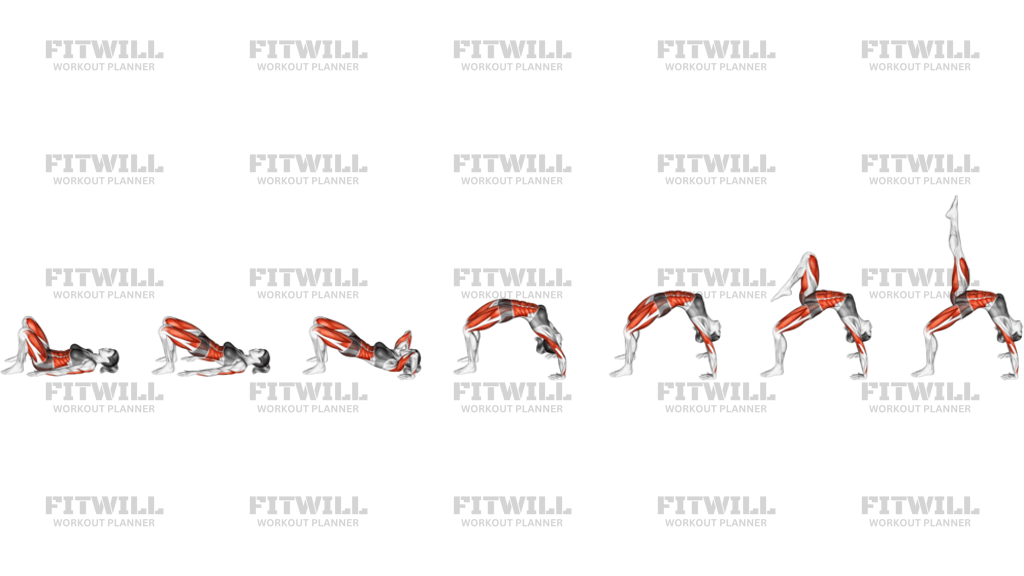
One Legged Upward Bow Pose Eka Pada Urdhva Dhanurasana is an advanced backbend and hip-opening yoga variation performed from a wheel pose base. The body starts on the floor, then rises into a strong arch through the hands and one standing foot while the other leg reaches toward the ceiling. It asks for shoulder extension, spinal mobility, hip extension, and enough core and glute control to keep the pelvis from twisting as the lifted leg comes off the floor.
This pose is useful when you want a deep anterior-chain stretch without losing whole-body tension. The front of the thighs, hip flexors, abdomen, chest, and shoulders all have to lengthen while the glutes, hamstrings, triceps, and deep trunk muscles keep the shape organized. The lifted leg adds a balance challenge that makes the pose much less passive than a simple bridge stretch.
The setup matters more here than in a standard backbend. Hands need to be placed so the forearms can stay strong, feet need to be close enough to drive the hips up, and the supporting foot has to stay rooted through the heel and big-toe mound. If the stance is too wide or the hands are too far away, the lower back takes over and the lift becomes unstable. The goal is a clean arch with the chest opening first and the lifted leg rising from the hip, not from a twist in the spine.
When you perform it well, press into the floor, lift into a steady wheel, then shift your weight slightly into the grounded foot before floating the other leg upward. Keep both hip points as level as you can, reach the raised foot straight up, and keep breathing even while the posture feels intense. Come down with the same control you used to rise, lowering the lifted leg first and then returning the spine to the mat one section at a time.
This is a skill and mobility drill more than a high-rep exercise, so quality matters far more than volume. It is best used in a yoga flow, mobility sequence, or advanced bodyweight session after the wrists, shoulders, and hips are already warm. If your bridge or full wheel is shaky, build those first before adding the single-leg variation.
[ Workout Log & Planner ]
Put your next workout in Fitwill
Keep your plan and training log ready when you are.


Instructions
- Lie on your back with your knees bent, feet hip-width apart, and heels close enough to your hands that you can press into a strong backbend.
- Place your palms beside your ears with fingers pointing toward your shoulders and elbows bent, setting your forearms so they can help you push.
- Press through your feet and hands to lift your hips and chest into wheel pose, keeping your knees tracking over your feet.
- Straighten your arms as much as your shoulders allow while keeping your chest open and your neck relaxed.
- Shift a little more weight into one foot, then slowly lift the opposite leg upward from the hip without twisting the pelvis.
- Reach the lifted leg toward the ceiling and keep both hip points as level as possible while the standing foot stays firmly grounded.
- Breathe steadily and hold the top position for a controlled pause instead of trying to force a higher arch.
- Lower the raised leg back to the floor with control, then bend the elbows and roll your spine down to the mat one segment at a time.
- Reset both feet and repeat on the other side if your program calls for alternating sides.
Tips & Tricks
- Warm up bridge, wheel, hip flexors, and wrists before trying the single-leg version so the pose does not feel like a max-effort lift from a cold start.
- Keep the standing foot active through the heel and big-toe mound; if that foot collapses inward, the pelvis usually starts to rotate.
- Press the chest up before you lift the free leg. If the rib cage stays low, the low back usually over-extends to compensate.
- Move the lifted leg from the hip socket, not by swinging the knee outward. A clean vertical line is safer than a bigger-looking kick.
- If the shoulders feel crowded, walk the hands a little closer to the head before pressing up rather than forcing the elbows to lock early.
- Do not let the lifted-side hip open. Imagine both front hip points aiming straight ahead as the leg rises.
- Keep your gaze neutral or slightly back toward the floor behind you if your neck is comfortable; avoid turning the head while the pose is loaded.
- Short holds with perfect control are better than long holds with wobbling shoulders, uneven hips, or collapsing elbows.
- If the lower back pinches, reduce the arch and practice a supported bridge or regular wheel instead of chasing the full one-legged shape.
Frequently Asked Questions
What does One Legged Upward Bow Pose Eka Pada Urdhva Dhanurasana train?
It trains deep backbend mobility and strength through the chest, shoulders, hip flexors, glutes, and spinal extensors while adding a strong balance demand.
Is this just a wheel pose with one leg up?
Yes. The base is a full wheel pose, then one leg lifts straight toward the ceiling while the other foot and both hands keep the arch stable.
Can beginners do this variation?
Usually not as a first-choice pose. Most people should build comfort with bridge pose and regular wheel before adding the one-leg lift.
Where should my hands be in this pose?
Place the hands beside the ears with fingers pointing toward the shoulders so the forearms can help press you into the backbend.
How do I keep my hips from twisting when one leg lifts?
Keep the standing foot rooted, square the pelvis, and lift the free leg from the hip without letting that side roll open.
What muscles should feel most active?
The glutes, triceps, shoulders, and deep core should stay active, while the front of the hips, thighs, and chest get the stretch.
Why does this pose bother my wrists or lower back?
Too much load on the hands or too much arch in the lumbar spine usually means the setup is off. Shorten the hold, warm up more, or regress to bridge pose.
Should I hold both sides equally?
Yes. If you train each side separately, match the hold time and control so one side does not dominate the backbend.
What is a good regression for this exercise?
Bridge pose, then full wheel pose, then a supported one-leg lift are the usual progressions before trying the full unsupported version.