Half Boat Pose Ardha Navasana
Half Boat Pose Ardha Navasana is a bodyweight yoga core hold built around a short-lever balance on the sit bones. The pose asks you to keep the chest lifted while the torso reclines, the abdomen stays active, and the legs float or extend without letting the lower back collapse. It trains the rectus abdominis, deep abdominal wall, hip flexors, quads, and the postural control needed to hold a stable hollow position.
The setup is the whole exercise. Start seated with knees bent and feet on the floor, then lean back only until you can keep the spine long and the sternum open. As you lift the feet, shift your weight onto the sit bones rather than rolling onto the tailbone. In the fuller expression, the shins come up near parallel or the knees begin to straighten, but the torso should stay organized instead of collapsing into a C-curve.
From there, reach the arms forward at shoulder height and keep the gaze steady. Draw the lower ribs down, lightly tuck the pelvis, and hold the front of the body firm enough that the legs feel supported instead of dangling. Breathe with control instead of bracing so hard that the neck or jaw takes over: exhale to deepen the hold, then inhale without losing the shape. If you are working repetitions, move in and out of the hold slowly; if you are holding for time, stay smooth and avoid chasing a bigger range than you can control.
This is a useful accessory in yoga, core training, and warmups when you want a compact abdominal challenge without equipment. It is also a good regression or bridge to full Navasana because the shorter lever makes it easier to keep the spine long and the hips organized. Beginners should keep the knees bent and the shins low; more advanced lifters can lengthen the legs only as far as the low back remains quiet. If the lower back pinches, the hip flexors cramp, or the shoulders creep up, shorten the range immediately and reset.
Half Boat Pose works best when you treat it as a precision hold, not a race for height. Small changes in trunk angle and leg position make a big difference, so the goal is a steady, repeatable line from ribs to toes. Done well, it builds core endurance, balance, and control that carry over to other floor-based abs work and to more demanding boat-posed variations.
[ Workout Log & Planner ]
Put your next workout in Fitwill
Keep your plan and training log ready when you are.


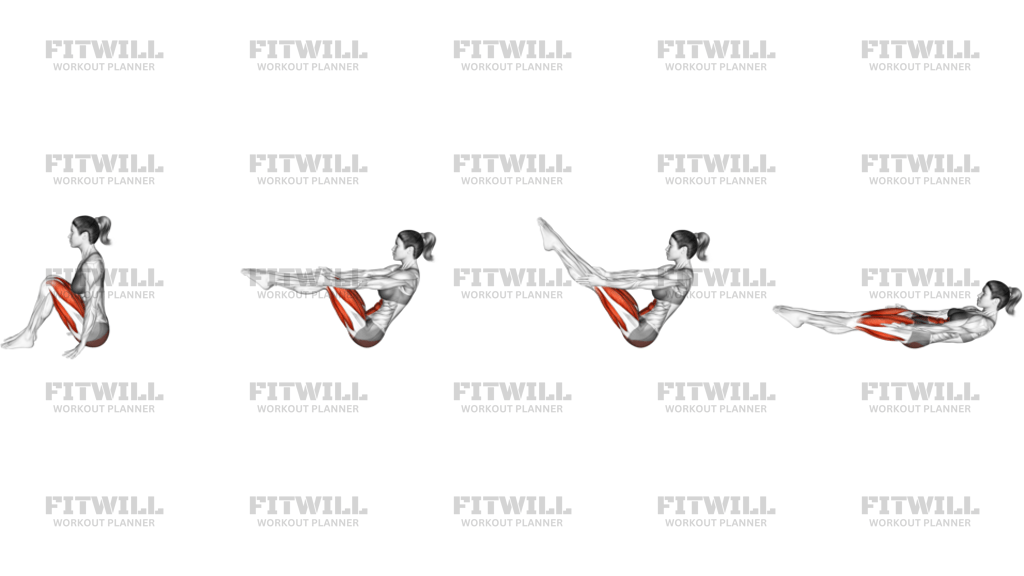
Instructions
- Sit on a mat with your knees bent, feet flat, and hands beside your hips for support.
- Lean your torso back a few inches while keeping your chest open and your spine long.
- Shift onto your sit bones, then lift both feet so you are balancing without dumping into the tailbone.
- Bring your arms straight forward at shoulder height, palms facing each other.
- Keep the shins lifted or extend the knees a little farther only if the low back stays flat and quiet.
- Draw the lower ribs down, keep the neck long, and look forward rather than tucking the chin.
- Breathe steadily through the hold, using a controlled exhale to keep the abdomen tight.
- Lower the feet, bend the knees, and sit tall before repeating or ending the set.
Tips & Tricks
- If you feel pressure in the sacrum, sit taller and bend the knees more.
- Keep the shoulders as relaxed as possible so the neck does not take over the hold.
- Reach through the fingertips to lengthen the torso instead of collapsing the upper back.
- The abs should start the hold; do not swing the legs up with momentum.
- Shorter holds with clean form are better than long holds with a collapsing spine.
- If the hip flexors cramp, reduce the leg angle and keep the knees closer to the chest.
- Keep the jaw and face relaxed so the neck stays out of the effort.
- Stop the set when you can no longer keep the chest lifted and the pelvis controlled.
Frequently Asked Questions
What muscles do Half Boat Pose Ardha Navasana work most?
The main emphasis is on the rectus abdominis and deep core, with the hip flexors and quads helping hold the legs up.
Is this a good beginner core exercise?
Yes, if you keep the knees bent and the feet closer to the floor instead of forcing a full balance.
How is half boat different from full boat pose?
Half boat uses a shorter lever and usually a more bent-knee position, so it is easier to keep the spine long and the balance steady.
Should my lower back round in this pose?
No. A small natural hinge is fine, but a hard rounded collapse usually means the lever is too long or the hold is too hard.
What if I cannot keep my feet off the floor?
Keep the toes lightly tapping the mat or hold behind the thighs until you can control the balance better.
Where should I feel the exercise?
You should feel a strong brace across the front of the torso and into the hip flexors, not a sharp pinch in the lower back.
Can I make it harder without adding equipment?
Yes. Extend the knees a little more, lengthen the hold, or keep the arms straighter while maintaining the same torso shape.
When should I stop the set?
End the hold as soon as the neck tightens, the chest drops, or the lower back starts to tuck under.