Two Legged Inverted Staff Pose Dwi Pada Viparita Dandasana
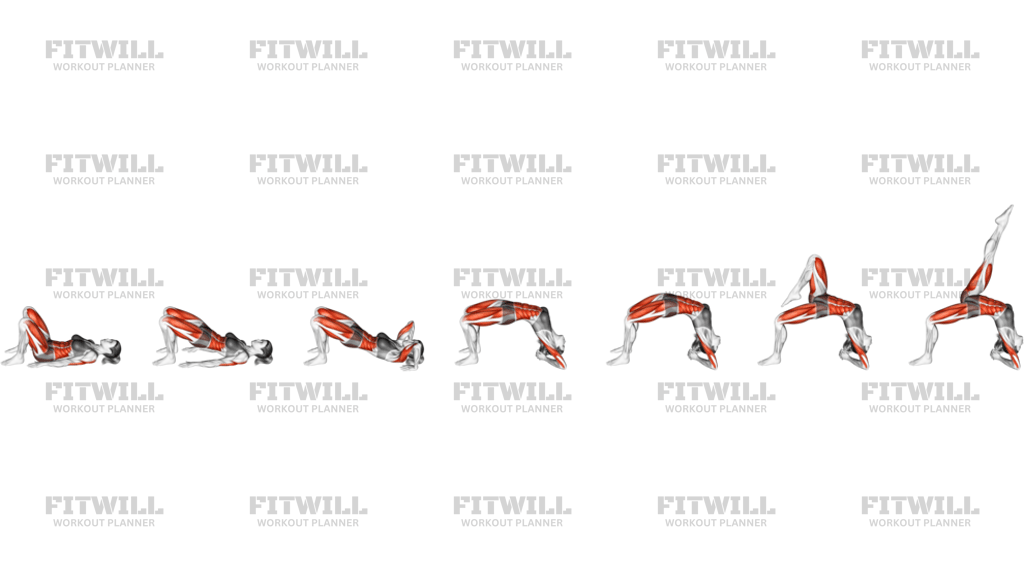
Two Legged Inverted Staff Pose Dwi Pada Viparita Dandasana is a deep yoga backbend built around a strong bridge-to-wheel setup, with the chest lifting high while the hands and feet stay rooted to the floor. In the image sequence, the body moves from a bent-knee floor position into a higher bridge and then into a more open inverted-staff shape, so the exercise should be coached as a full-body extension pattern rather than a simple passive stretch. The goal is not to force the biggest arch possible; it is to create a long, even curve through the spine while keeping the shoulders, wrists, hips, and breath organized.
This pose trains shoulder flexion, thoracic extension, spinal extension, hip extension, and the ability to load the wrists and feet in a controlled backbend. It also asks the glutes, hamstrings, triceps, and deep trunk stabilizers to stay active so the lower back does not take all of the strain. Because the posture is demanding, the setup matters: the feet need to be stable, the hands need to be placed symmetrically beside the head, and the elbows should track in a line that lets the chest rise without collapsing into the neck.
The best version of the pose starts with a calm, precise bridge. From there, the chest keeps lifting as the arms press and the pelvis follows the rib cage instead of flaring away from it. If you are working toward the full expression, the body should feel like it is lengthening as much as it is bending, with the front of the hips open and the back of the neck free. A controlled breath pattern helps the ribs expand and keeps the posture from turning into a hard, breath-holding effort.
Use this exercise as an advanced mobility or yoga-strength drill, especially when you want to open the front line of the body and practice end-range control. It fits best after warm-up work for the wrists, shoulders, and spine, not as a cold-start movement. If the wrists, low back, or shoulders pinch, shorten the range and stay with a simpler bridge variation until the line of force feels smooth. The pose should feel spacious and deliberate, with the chest lifted, the feet grounded, and the neck staying as relaxed as the shape allows.
[ Workout Log & Planner ]
Put your next workout in Fitwill
Keep your plan and training log ready when you are.


Instructions
- Lie on your back on a mat and bend both knees so your feet are flat, parallel, and close enough to your hips that you can press through the whole foot.
- Place your palms on the floor beside your ears with your fingers pointing toward your shoulders, and keep your elbows angled upward rather than flaring wide.
- Root through your feet and hands together, then press the hips and chest up into a stable bridge before you try to deepen the backbend.
- Keep the knees tracking over the feet and the weight distributed evenly between the heels and the base of the palms.
- As the chest rises, draw the shoulders away from the ears and let the upper back open instead of dumping all of the arch into the lower spine.
- If you are moving toward the full pose, continue pressing the floor away until the arms straighten as much as your shoulders allow and the chest feels lifted and long.
- Breathe into the ribs while you hold the top position, keeping the jaw soft and the neck unforced.
- Lower with control by bending the elbows and softening the spine in reverse, then bring the upper back, hips, and head down to the mat one section at a time.
Tips & Tricks
- Warm up the wrists, shoulders, thoracic spine, and hip flexors before trying the full backbend.
- Keep the feet and hands symmetrical; a crooked hand or foot position usually shows up as a twisted arch.
- Press the floor away through the whole palm, especially the mound under the index finger and thumb, so the wrists do not collapse inward.
- Keep the knees from splaying outward if you want the glutes and hamstrings to support the pose instead of the low back taking over.
- Think of the chest moving forward and up, not just the hips moving higher.
- Do not force the head into the floor or load the neck; the lift should come from the arms, shoulders, and back opening together.
- Shorten the range immediately if the lumbar spine feels pinched or if the breath becomes choppy.
- Use a slower descent than ascent so the spine learns the shape under control.
- If the full pose is too deep, stay in a strong bridge and build time there first.
Frequently Asked Questions
What does Two Legged Inverted Staff Pose Dwi Pada Viparita Dandasana work most?
It emphasizes spinal extension, shoulder opening, and posterior-chain support from the glutes, hamstrings, triceps, and upper back.
Is this just a harder version of bridge pose?
It starts from a bridge-like setup, but the full pose asks for much more shoulder extension, chest lift, and overall body control.
Where should my hands and feet be in the setup?
Place the hands beside the ears with the fingers aimed toward the shoulders, and keep the feet flat, parallel, and close enough to the hips to press strongly.
What is the most common mistake in the pose?
People usually over-arch the lower back and let the shoulders and ribs collapse, instead of distributing the curve through the whole spine.
Can a beginner try this pose?
A beginner should usually build from bridge pose or a supported backbend first, because the full expression is advanced.
Should I feel pressure in my neck?
No. The neck should stay long and unforced; if you feel compressive pressure there, reduce the depth immediately.
What should I do if my wrists hurt in the backbend?
Stop pushing into the full shape and use a simpler bridge variation until your wrist loading and shoulder position feel comfortable.
How do I progress toward the full pose?
Spend time in a stable bridge first, then gradually increase chest lift and shoulder openness before trying to straighten the arms more completely.