Camel Pose Ustrasana
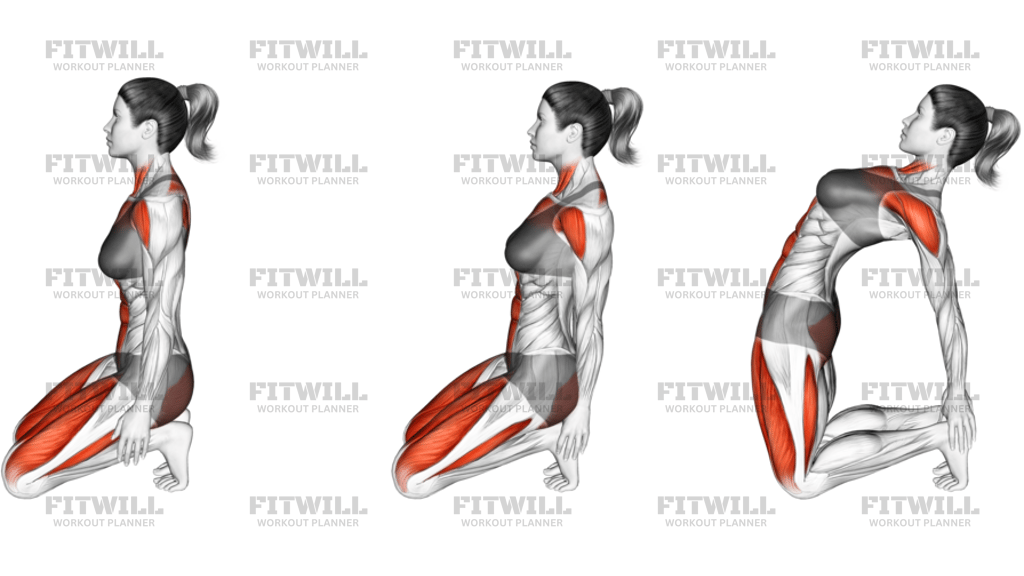
Camel Pose Ustrasana is a kneeling yoga backbend that opens the front of the body while asking the spine, hips, and shoulders to work together in a controlled arc. From a tall kneeling position, the chest lifts as the torso leans back and the hands reach toward the heels, creating a deep stretch through the quadriceps, hip flexors, abdomen, chest, and shoulders. The movement looks simple, but the quality of the pose depends on how well you keep the knees, hips, and ribcage organized as you move.
This pose is usually used to improve thoracic extension, hip opening, and overhead shoulder mobility, while also training body awareness under a strong stretch. The shins and knees stay grounded, the thighs stay active, and the pelvis moves forward only as far as you can support with breath and control. If the lower back takes over or the neck collapses, the pose stops being a clean backbend and becomes a strain on the joints that should be assisting.
The setup matters. Kneel with the knees about hip-width apart, point the tops of the feet into the floor, and stack the torso over the hips before you begin to lean back. Many people benefit from keeping the toes tucked at first or placing the hands on the lower back before reaching for the heels. From there, lift the sternum, gently draw the shoulder blades together, and lengthen the tailbone toward the floor so the backbend spreads through the whole front line instead of dumping into one segment of the spine.
As you move, keep the breath smooth and steady. Inhale to create length through the spine, then exhale as you settle deeper into the backbend without forcing range. The ideal rep is not about touching the heels at any cost; it is about maintaining a long neck, open chest, and stable knees while the hips travel forward and the thoracic spine extends. If the pose causes pinching in the low back or pain in the knees, shorten the range or use a supported version.
Camel Pose Ustrasana is most useful in yoga sessions, mobility work, warmups, or recovery-focused training where posture, breathing, and spinal control matter. It is a strong choice for countering prolonged sitting and for building comfort in extension work, but it should always stay within a pain-free range. When performed well, it feels like a full-body front-side opening with the legs, glutes, core, and upper back all helping you stay balanced in the shape.
[ Workout Log & Planner ]
Put your next workout in Fitwill
Keep your plan and training log ready when you are.


Instructions
- Kneel on the floor with your knees hip-width apart and the tops of your feet flat on the ground.
- Stack your torso tall over your hips, lengthen through the crown of your head, and keep your thighs active.
- Place your hands on your lower back or reach them toward your heels as you prepare to backbend.
- Inhale to lift your chest and gently press your hips forward without collapsing into the low back.
- Lean back gradually, keeping your knees rooted and your ribs from flaring straight up.
- Reach one hand at a time toward the heels if you can maintain control, or keep both hands supporting the pelvis.
- Hold the deepest comfortable position for a controlled breath, keeping the neck long unless your range allows a gentle head drop.
- Exhale to come out of the pose slowly, leading with the chest and bringing the torso back over the knees.
Tips & Tricks
- Keep the shins and knees planted so the backbend comes from the spine and hips instead of sliding forward on the mat.
- If the heels are out of reach, keep the hands on the lower back and lift the chest higher before reaching farther.
- Think of sending the sternum up and back, not just throwing the head behind you.
- Draw the lower ribs in enough to avoid dumping the pose into the lumbar spine.
- Let the thighs stay active and vertical so the hip flexor stretch stays organized.
- Use blocks beside the ankles if reaching the heels strains the shoulders or forces the neck to compensate.
- If the knees feel compressed, place extra padding under them or reduce the depth of the backbend.
- A slow exhale usually helps you settle deeper without forcing range.
Frequently Asked Questions
What does Camel Pose Ustrasana stretch the most?
It strongly opens the front of the body, especially the quadriceps, hip flexors, abdomen, chest, and shoulders.
Is Camel Pose Ustrasana a beginner-friendly stretch?
Yes, if you start with a smaller backbend, keep the hands on the lower back, and only reach for the heels when the spine stays long.
Where should my knees and feet be in Camel Pose Ustrasana?
Keep the knees about hip-width apart and press the tops of the feet into the floor so the shins stay grounded and stable.
What is the most common mistake in Camel Pose Ustrasana?
People usually collapse into the lower back or throw the head back too soon instead of lifting the chest and keeping the spine organized.
Should I try to touch my heels in this pose?
Only if you can do it without losing chest lift or shoulder control; the pose is still effective with the hands on the lower back.
Why do my knees feel uncomfortable in Camel Pose Ustrasana?
The knees are bearing contact pressure in a deep kneeling position, so extra padding, less depth, or a shorter hold often solves the issue.
Can I keep my neck neutral during the pose?
Yes. A neutral or slightly lengthened neck is safer for most people, and you only let the head drop back if your upper back and shoulders can support it.
When is Camel Pose Ustrasana useful in a workout?
It works well in yoga sessions, mobility blocks, or warmups when you want a deep front-body opening and better spinal extension.