Humble Warrior Pose
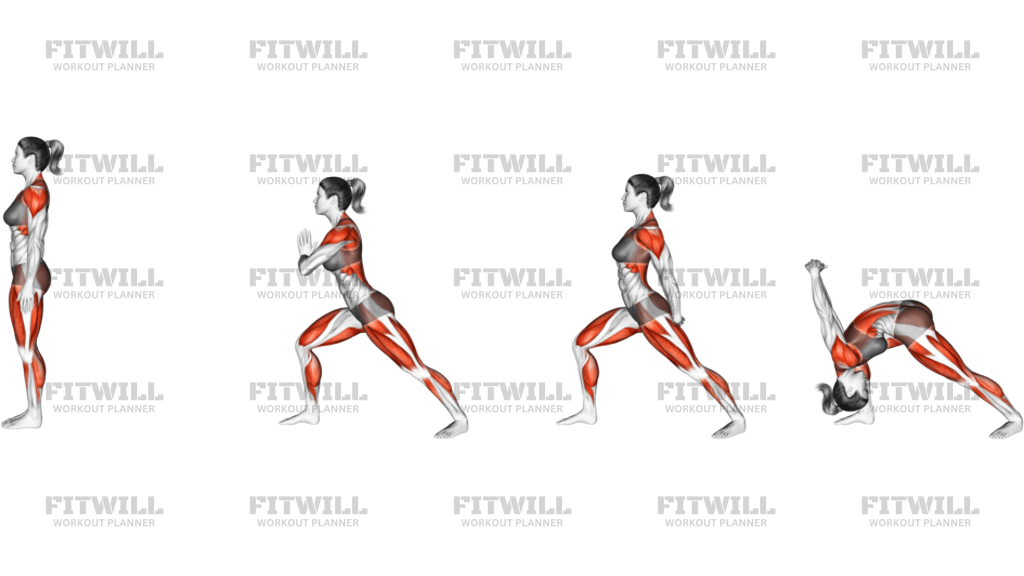
Humble Warrior Pose is a bodyweight yoga stretch that blends a grounded warrior stance with a deep forward fold and shoulder opening. The pose is typically entered from Warrior I or a long lunge, then finished by folding the torso inside the front thigh while the hands stay clasped behind the back. The result is a strong balance of hip opening, hamstring length, chest expansion, and calm breathing.
The shape matters because the pose only feels smooth when the feet, knees, pelvis, and shoulders stay organized. The front knee should track in line with the toes, the back leg stays active, and the torso folds from the hips instead of collapsing through the low back. If the stance is too short or the hips twist open too much, the stretch turns into a loss of control rather than a clean yoga position.
This pose trains posture under tension as much as it trains flexibility. The front thigh and hip work to support the fold, the back leg helps keep the base stable, and the shoulders and chest have to stay open enough for the bound arms to stay comfortable. Because the chest is moving lower than the pelvis, the neck should remain relaxed and the breath should stay slow so the position does not turn into a strain in the lower back or shoulders.
Use Humble Warrior Pose as a mobility drill, a warmup stretch, or a recovery posture when you want to open the hips and front line of the body without abandoning alignment. The stretch should feel strong through the front hip, hamstrings, groin, and shoulders, but never sharp at the knee, groin, or neck. If the bind behind the back limits the fold, shorten the stance or keep the chest a little higher until the shape is stable and repeatable.
The best version of the pose is quiet and deliberate. Set the base first, exhale into the fold, and come back up with control before switching sides. That rhythm keeps the movement useful for beginners and advanced practitioners alike, while preserving the balance, breath control, and shoulder position that make the pose effective.
Fitwill
Log Workouts, Track Progress & Build Strength.
Achieve more with Fitwill: explore over 9600 exercises with images and videos, access built-in and custom workouts, perfect for both gym and home sessions, and see real results.
Start your journey. Download today!




Instructions
- Step into a Warrior I or long lunge stance with the front knee bent, the back heel rooted or the back toes anchored, and both feet pressing firmly into the floor.
- Bring the hands behind the low back and clasp them or interlace the fingers, then draw the shoulders down and away from the ears.
- Square the hips as much as the stance allows and lengthen through the crown of the head before you start folding.
- Inhale to create space in the ribs and chest, keeping the front shin stacked over the foot and the back leg active.
- Exhale and hinge forward from the hips, lowering the torso inside the front thigh while keeping the clasped hands moving away from the lower back.
- Let the chest drift toward the inside of the front leg without collapsing the neck or letting the front knee cave inward.
- Hold the deepest comfortable position for a breath or two, keeping the shoulders broad and the weight balanced through both feet.
- Inhale to press through the feet and rise back to the upright warrior setup with control.
- Release the hands only after you return to standing, then repeat on the other side.
Tips & Tricks
- If the bind behind your back feels tight, keep the fingers loosely clasped instead of forcing the hands together.
- Let the front knee stay stacked over the ankle so the fold comes from the hips, not from drifting the knee forward.
- Keep the back leg straight and active enough to support the fold, but do not lock the knee hard.
- Shorten the stance if the pelvis tips forward or the low back pinches when you fold.
- Think about lifting the knuckles slightly away from the tailbone before you hinge, which helps open the chest.
- Keep the gaze soft toward the floor so the neck stays long while the torso drops lower.
- Breathe into the side ribs and back ribs instead of holding your breath at the bottom of the fold.
- If the shoulders roll forward, rise halfway out of the fold, reset the chest, and try again with a smaller range.
- Use this as a slow mobility hold, not a rushed repetition.
Frequently Asked Questions
What does Humble Warrior Pose stretch the most?
It mainly stretches the front hip, hamstrings, groin, chest, and shoulders while the legs stay active for balance.
Do I need to start from Warrior I or can I use a lunge?
Either works. A Warrior I stance or a long lunge can both lead into the fold as long as the base is stable.
Should the hands stay clasped behind the back the whole time?
Yes, the common version keeps the fingers interlaced or clasped behind the low back while the torso folds forward.
Why does my front knee feel crowded in the fold?
The stance is probably too short or the knee is drifting inward. Widen the stance slightly and keep the knee tracking over the toes.
Is this pose good for beginners?
Yes, if the fold is kept small and the hands are not forced together. Beginners should prioritize balance and breath over depth.
What should I do if my shoulders round forward?
Come up a little, reset the chest, and clasp the hands more loosely before folding again.
Can I keep the back heel down the whole time?
Yes, if you are in Warrior I with the heel grounded. If you are in a lunge variation, the back foot can stay on the toes.
Where should the stretch be strongest?
You should feel it most along the front thigh, hip, chest, and shoulders, not as a sharp pull in the knee or low back.