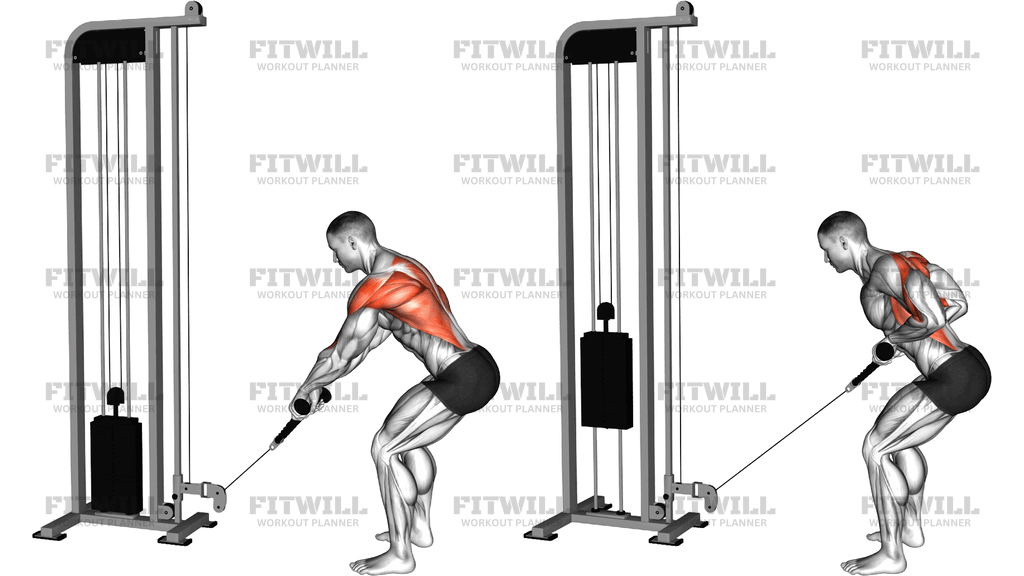
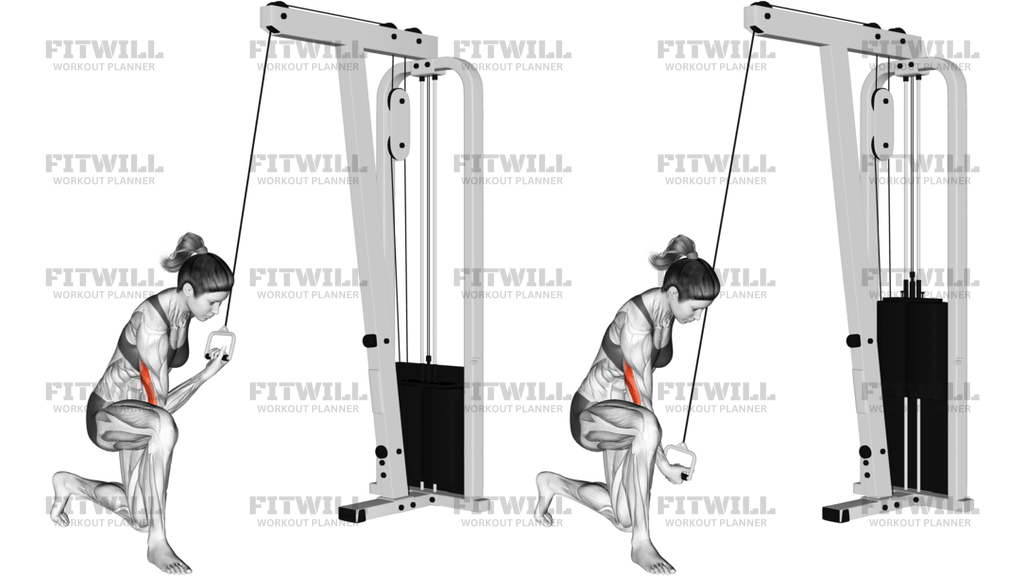
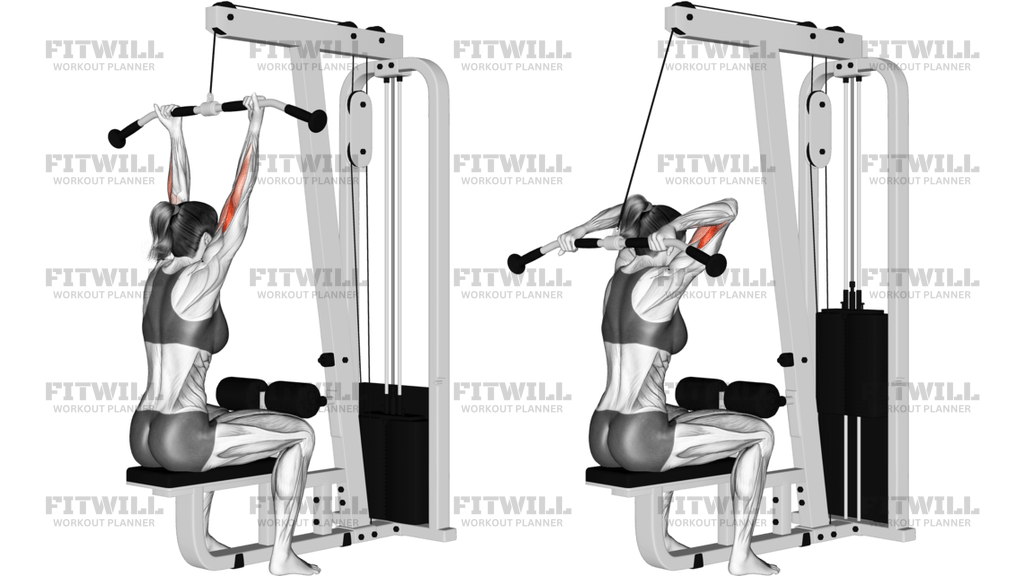
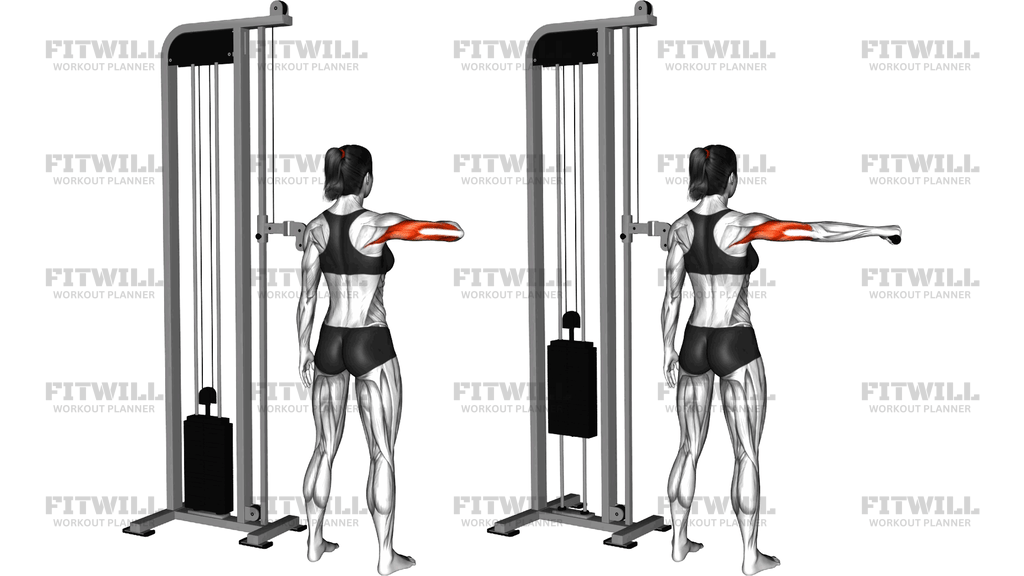
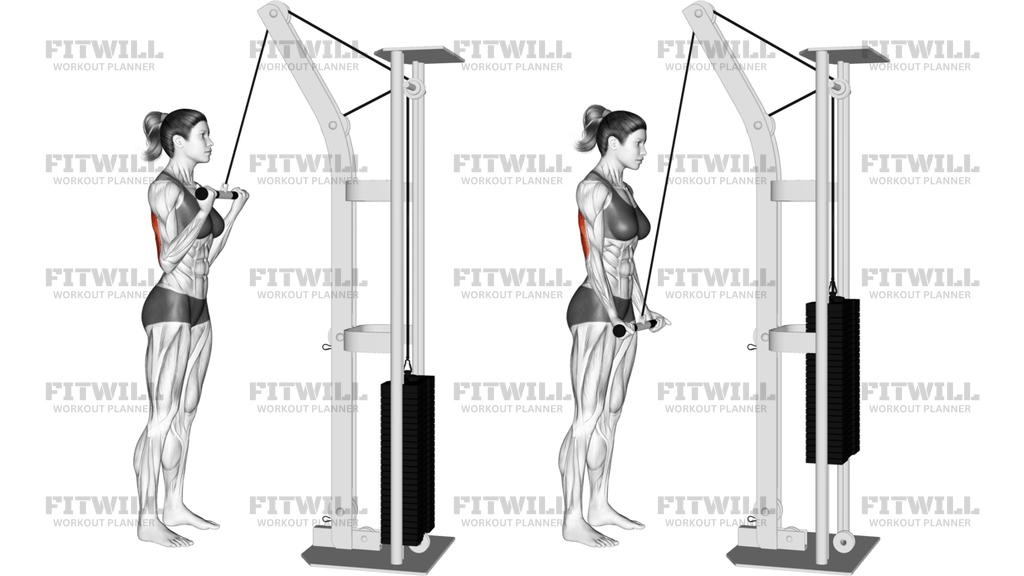
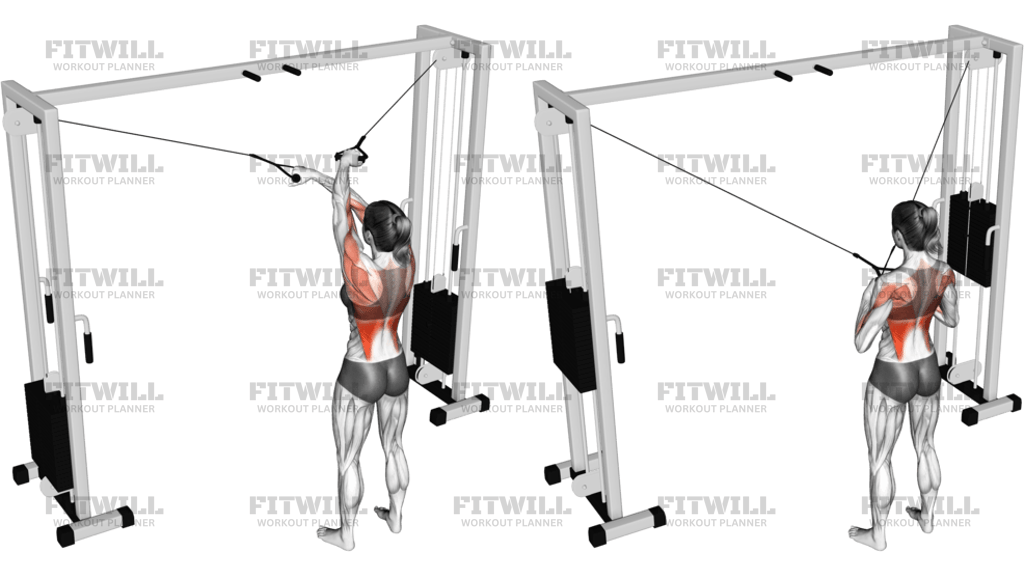
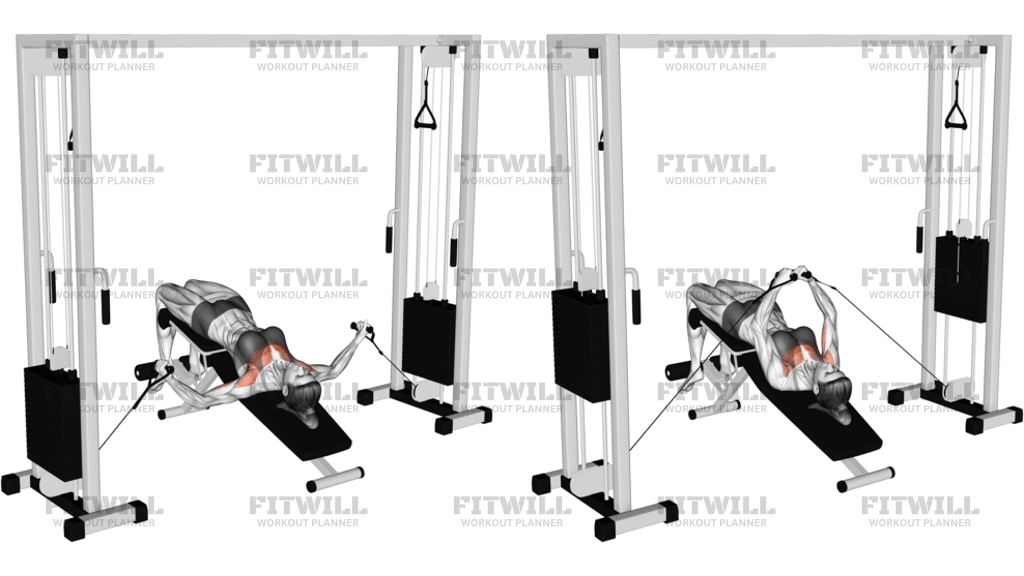
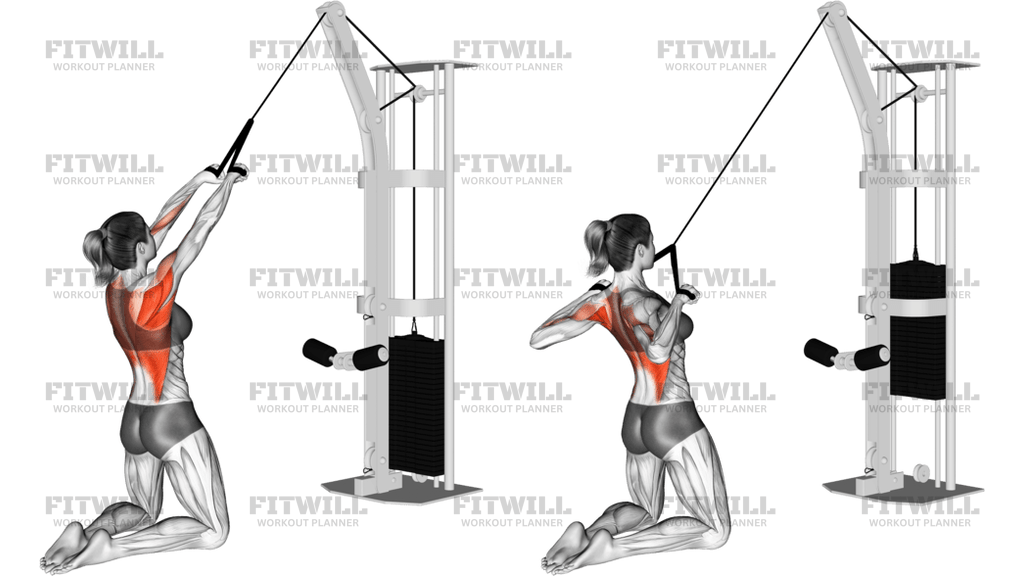
Cable Front Raise Rope Attachment
Cable Front Raise Rope Attachment is a cable-based shoulder isolation exercise that keeps tension on the front of the shoulders from the bottom of the rep to the top. The rope lets each hand travel independently, which can feel more natural than a straight bar and often reduces wrist irritation while still challenging the front delts.
This movement is useful when you want to build shoulder strength and control without loading the whole body with a heavy press. It fits well as accessory work after compound pressing, or as a lighter shoulder-focused drill when you want to train the front of the shoulders without much help from the legs, hips, or lower back.
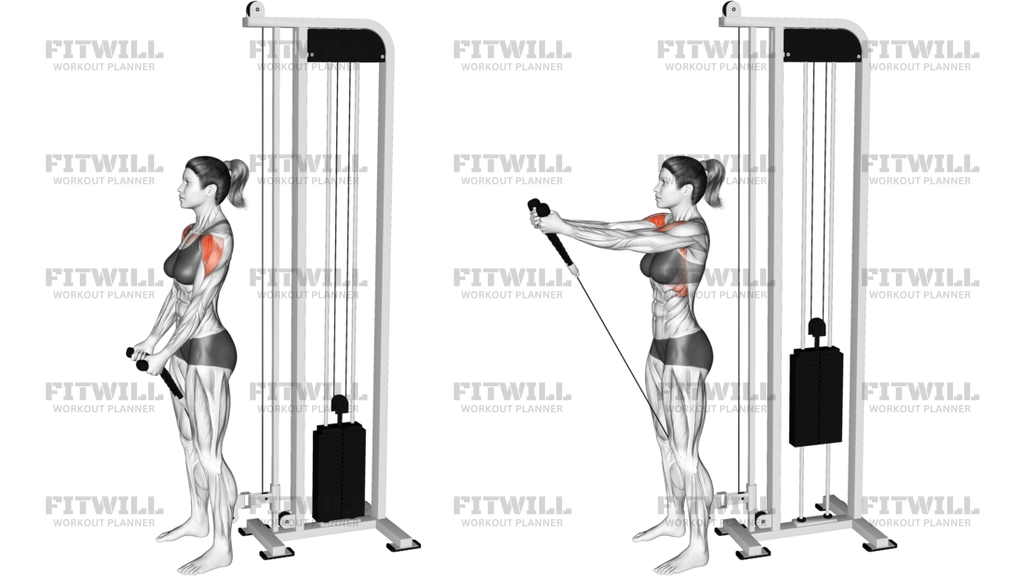
The setup matters because the cable line of pull determines whether the rep stays smooth or turns into a shrug-and-swing. Stand facing away from a low pulley with the rope clipped in, take a stable stance about hip width, and hold one end of the rope in each hand with your arms down in front of your thighs. Keep a small bend in the elbows and let your ribs stack over your pelvis before you start the first rep.
From there, raise the rope in a controlled arc until your hands reach about shoulder height or slightly lower, depending on how your shoulders feel. Keep the rope moving evenly, avoid letting the shoulders roll forward, and stop the rep before your traps take over. Lower the rope slowly so the cable keeps light tension through the return, then repeat with the same smooth path instead of chasing a bigger swing.
Cable Front Raise Rope Attachment is most effective when the reps look clean and repeatable rather than heavy and explosive. It is a good option for beginners using light resistance, and it can also work well for experienced lifters who want a precise front-deltoid finisher. If the front of the shoulders pinch or the neck starts helping, shorten the range slightly and reduce the load until the motion stays strict and comfortable.
[ Workout Log & Planner ]
Put your next workout in Fitwill
Keep your plan and training log ready when you are.


Instructions
- Clip a rope attachment to a low cable pulley and face away from the stack.
- Stand about one step in front of the pulley with your feet hip width apart and the rope hanging in front of your thighs.
- Hold one rope end in each hand with your palms facing in, and keep a soft bend in your elbows.
- Set your chest tall, ribs down, and shoulders relaxed before the first rep.
- Brace your midsection and lift the rope forward in a smooth arc without leaning back.
- Raise until your hands reach shoulder height or just below it, then pause for a moment at the top.
- Lower the rope slowly until your hands return to the start and the cable stays under control.
- Keep your breathing steady, exhaling as you lift and inhaling as you lower.
- Finish the set by letting the rope settle back to the start without jerking the stack.
Tips & Tricks
- Keep the cable just in front of your body instead of letting the rope drift far away from your thighs.
- If your traps take over, stop the raise a little lower and think about lifting from the front of the shoulders.
- A light forward lean is fine, but do not turn the rep into a standing swing.
- Keep the elbows slightly bent the whole time so the rope stays on the shoulders instead of the elbow joint.
- Use a lighter load than you would on a press; this exercise works best when the cable path stays smooth.
- Let the rope ends separate only as much as your shoulder comfort allows, not so far that the wrists flare back.
- Lower the rope slowly for at least as long as the lift so the front delts stay under tension.
- If the front of the shoulder pinches, shorten the top range and stop around chest or lower-chest height.
Frequently Asked Questions
What does Cable Front Raise Rope Attachment work most?
It mainly targets the front of the shoulders, with the rope and cable adding constant tension through the raise.
Why use a rope attachment instead of a straight bar?
The rope lets each hand move a little more naturally, which can feel easier on the wrists and still keep the front shoulders working hard.
How high should I raise the rope on Cable Front Raise Rope Attachment?
Stop around shoulder height or slightly below if that is where the movement stays smooth and pain-free. Going higher usually brings the traps in sooner.
Should my elbows stay straight on this exercise?
Keep a soft bend in the elbows and hold it there. Locking out the arms shifts the stress and usually makes the raise feel less controlled.
Is Cable Front Raise Rope Attachment good for beginners?
Yes, if the load is light and the body stays still. Beginners should focus on a small, clean arc instead of trying to lift the stack with momentum.
Why do I feel this in my neck or upper traps?
That usually means the shoulders are shrugging or the weight is too heavy. Lower the load, keep the ribs stacked, and stop the rep before the shrug takes over.
Can I lean back a little during Cable Front Raise Rope Attachment?
A slight forward or neutral stance is fine, but leaning back to swing the rope turns the exercise into a cheat rep. Keep the torso quiet and let the cable drive the movement.
Where does this fit in a shoulder workout?
It usually works best after compound pressing or as a light accessory finisher. Use it when you want direct front-shoulder work without heavy systemic fatigue.