Decline Knee Raise
Decline Knee Raise is a bodyweight core exercise performed on a decline bench, with the upper back supported and the legs starting long and low before the knees drive toward the torso. The decline angle increases the challenge on the abdominals because the pelvis has to stay controlled while the legs move through a long lever. It is a useful drill for training the lower abdominals, hip flexors, and the deep core muscles that stop the lower back from arching as the knees come in.
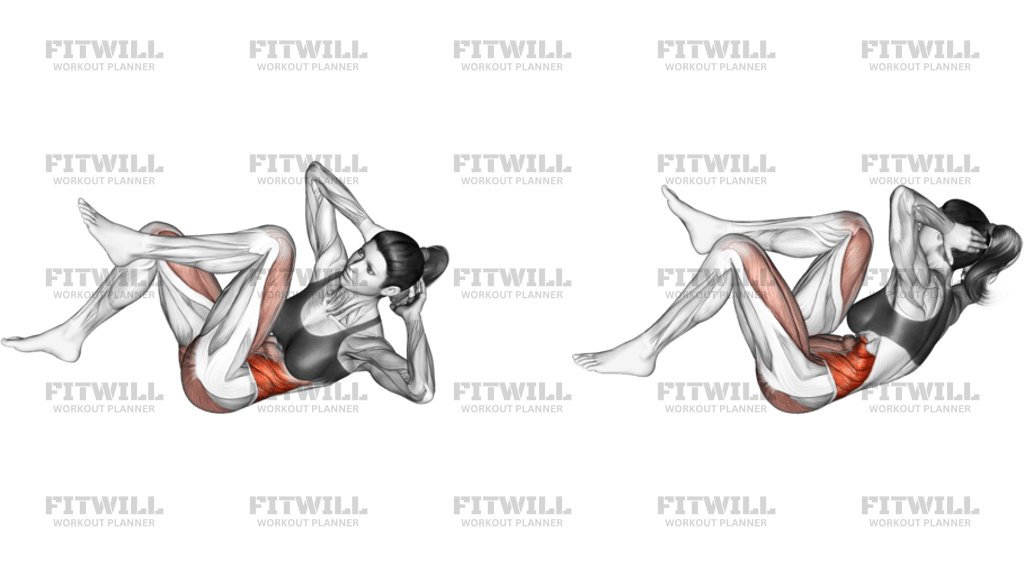
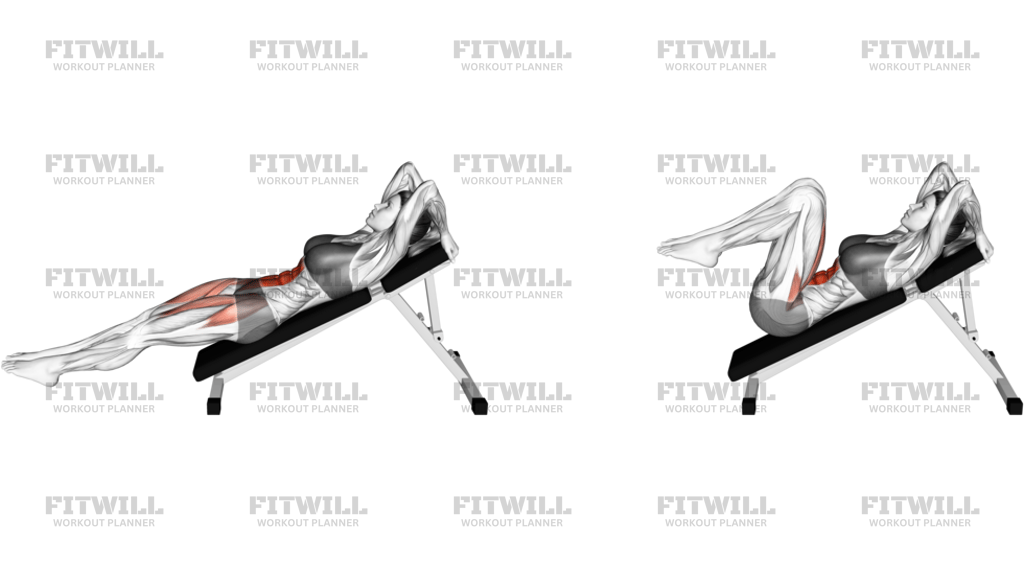
The setup matters because the bench angle, shoulder contact, and hand position decide whether the movement stays strict or turns into a swing. In the image, the torso is anchored on the pad and the legs move from a straight, extended position into a compact tuck. That means the exercise is less about kicking the legs and more about folding the hips while keeping the ribs down and the trunk stable. If the pelvis drifts or the lower back pops away from control, the set shifts from abs to momentum.
Each repetition should begin from a long, braced body line, then finish with the knees pulled up and the pelvis slightly curled. The best reps are smooth and deliberate: exhale as the knees travel up, keep the neck quiet, and avoid yanking the legs with the hip flexors alone. On the way down, lower the legs until you can still keep the abdomen engaged and the low back from overextending. That controlled return is where a lot of the training effect comes from.
Decline Knee Raise fits well in core-focused sessions, accessory work, or any program where you want a bodyweight abdominal movement that is harder than a flat-bench knee raise. It is also useful for people who want to build control before progressing to straighter-leg decline raises or hanging knee raises. Keep the range of motion honest and the tempo controlled so every repetition looks similar from start to finish.
[ Workout Log & Planner ]
Put your next workout in Fitwill
Keep your plan and training log ready when you are.


Instructions
- Set the decline bench to a moderate angle and lie back with your upper back and shoulders supported on the pad.
- Grip the bench or place your hands beside your head, then keep your chest open and your lower back gently pressed toward the pad.
- Extend your legs down the bench so your body starts in a long line with your hips controlled and your knees only slightly bent if needed.
- Exhale and draw your knees upward toward your chest by curling the pelvis, not by swinging your legs.
- Keep the movement smooth as the thighs come in and let the abs finish the tuck instead of arching the lower back.
- Pause briefly when the knees are highest and the pelvis is curled under.
- Inhale and lower the legs slowly until your torso is still stable and your abs stay engaged.
- Stop the descent before your lower back starts to arch hard or you lose control of the bench contact.
- Repeat for the planned number of reps, then lower the legs fully and sit up safely off the bench.
Tips & Tricks
- Think about rolling the pelvis up at the top; that keeps the abs involved instead of turning the rep into a leg lift.
- If your hips keep opening, reduce the bench angle or shorten the range so the lower back stays controlled.
- Keep the shoulders anchored on the pad and avoid pulling with the hands behind the head.
- Do not let the legs drop fast on the way down; the slow lowering phase is where the trunk has to resist extension.
- A small bend in the knees is fine if straightening the legs makes you lose pelvic control.
- If the hip flexors cramp, shorten the set and focus on exhaling as the knees travel upward.
- Use a tempo you can repeat without rocking the torso or bouncing off the decline bench.
- The top position should feel compact, not jammed into your neck or upper chest.
- Stop the set as soon as the lower back starts to arch off the bench or the reps turn into a swing.
Frequently Asked Questions
What does Decline Knee Raise work most?
It primarily trains the abdominals, especially the lower portion of the rectus abdominis, with the hip flexors assisting the knee drive.
Why use a decline bench instead of a flat bench?
The decline position increases the lever arm and makes it harder to keep the pelvis controlled, so the abs have to work harder.
Should my back stay on the pad the whole time?
Your upper back and shoulders should stay supported, but your pelvis should still curl and move under control as the knees come up.
How high should I raise my knees?
Lift them as high as you can without losing the tuck or letting your lower back arch hard off the bench.
Is it normal to feel this in my hip flexors?
Yes, the hip flexors help lift the thighs, but the exercise is best when the abs control the pelvic curl and the return phase.
What is the most common form mistake?
Swinging the legs and letting the lower back arch are the biggest mistakes because they remove tension from the abs.
Can beginners do this exercise?
Yes, beginners can use a smaller decline angle and a shorter range until they can control the tuck and lowering phase.
How can I make the movement harder?
Use a steeper decline, slow the lowering phase, or progress toward straighter legs while keeping the pelvis controlled.