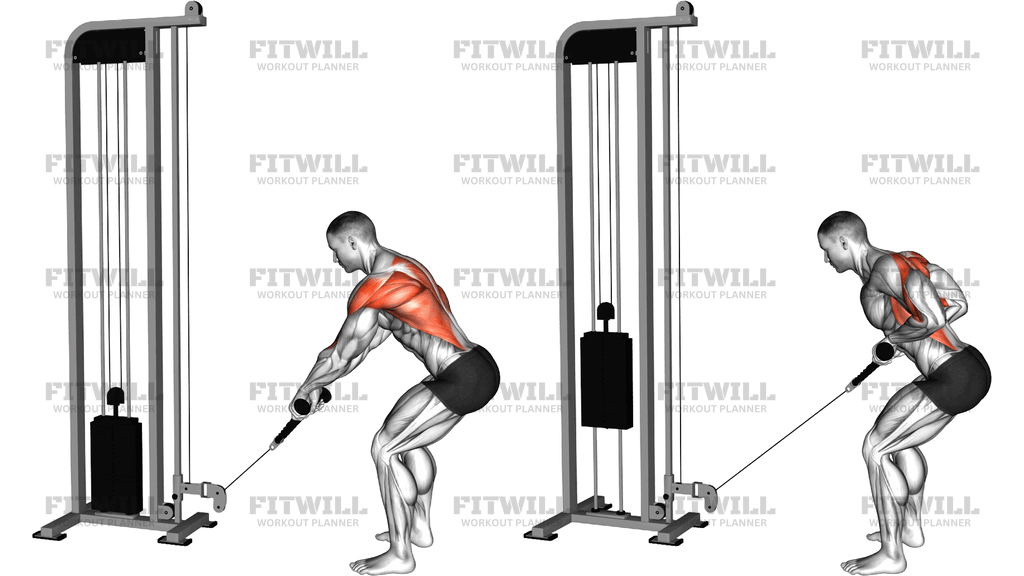
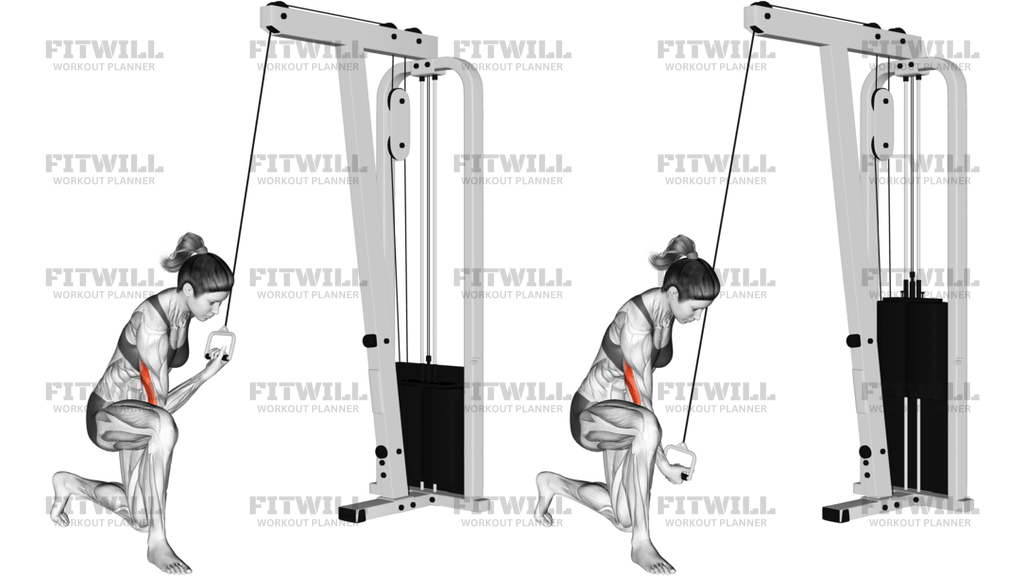
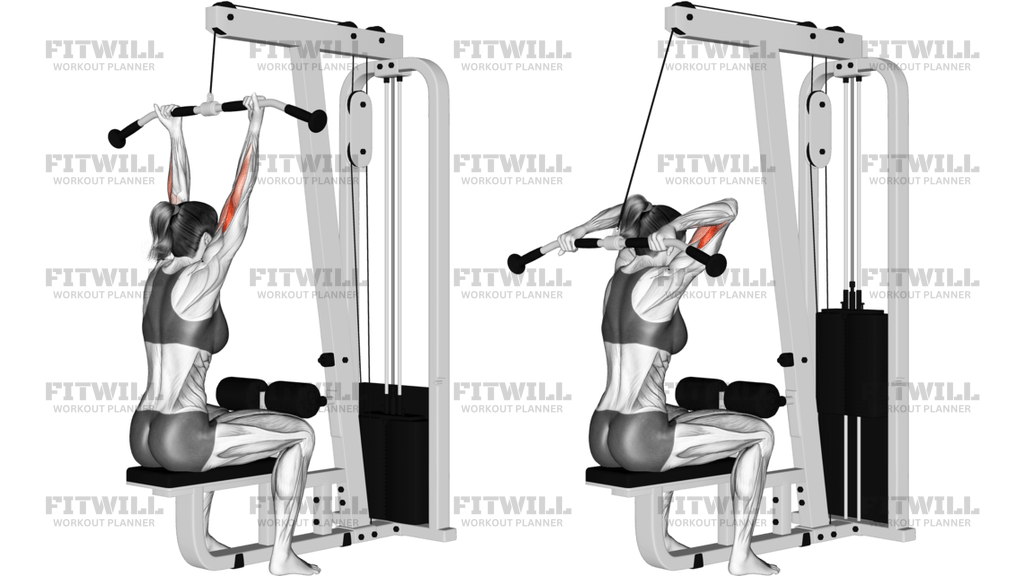
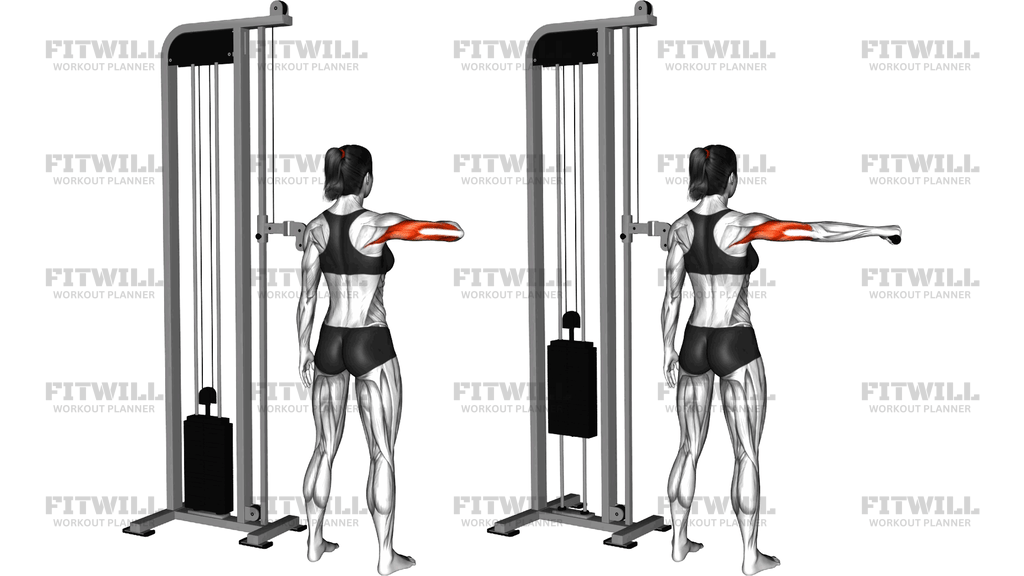
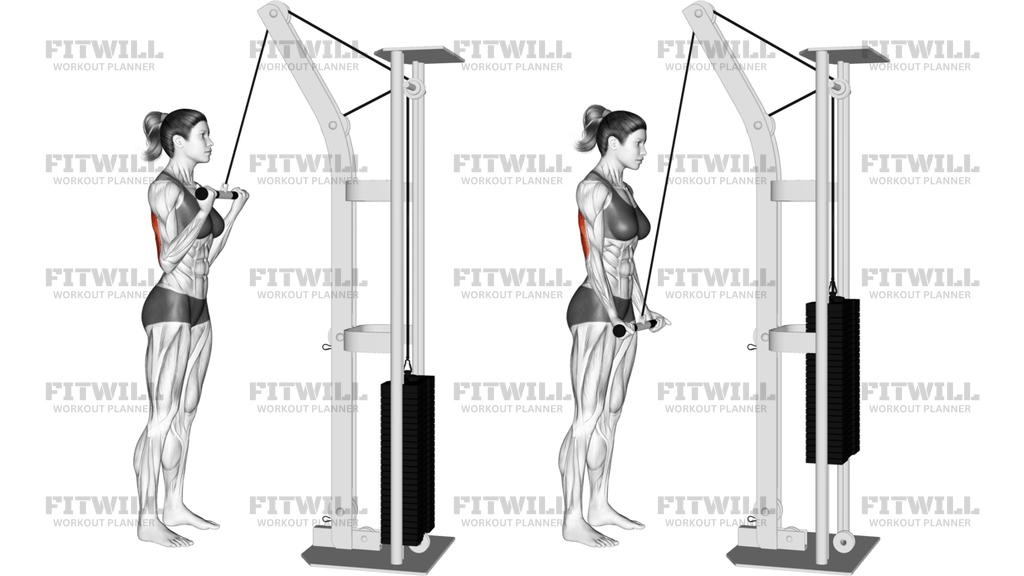
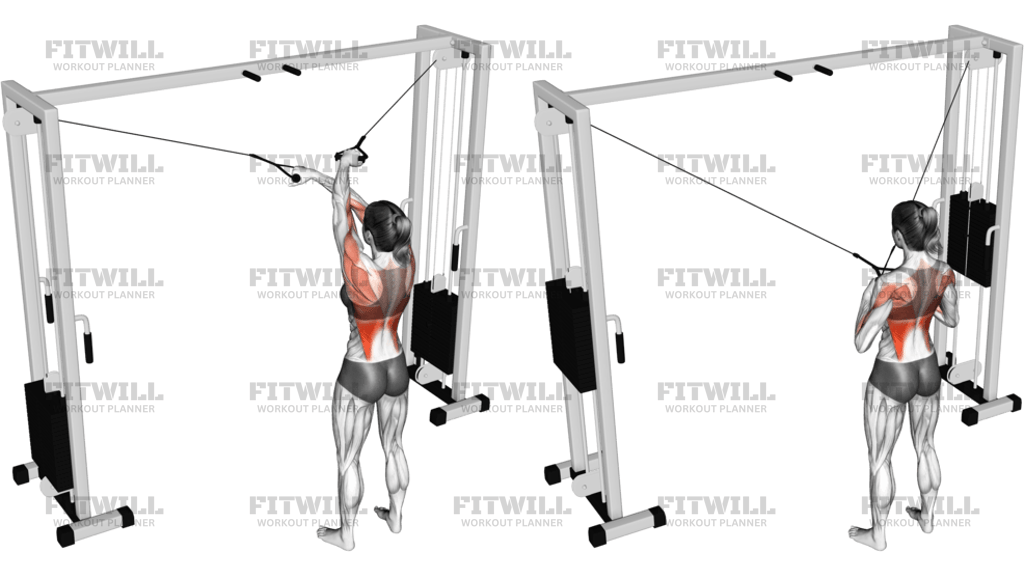
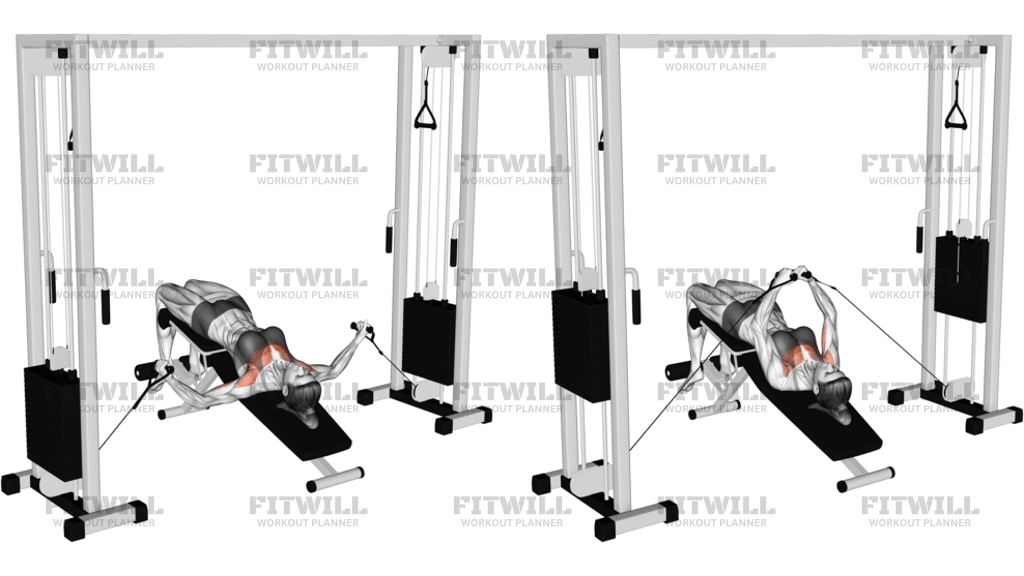
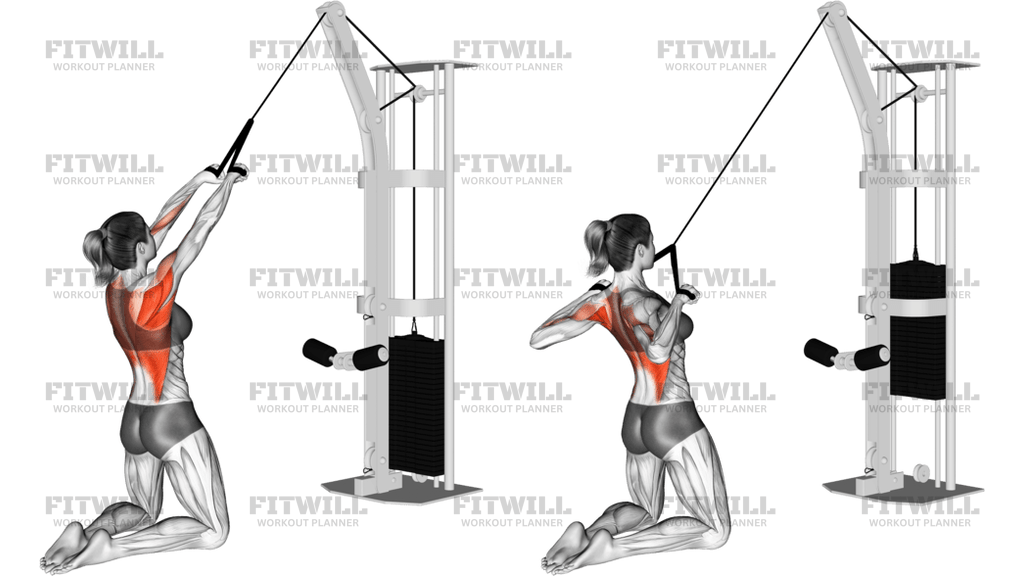
Cable High Pull With Rope Attachment
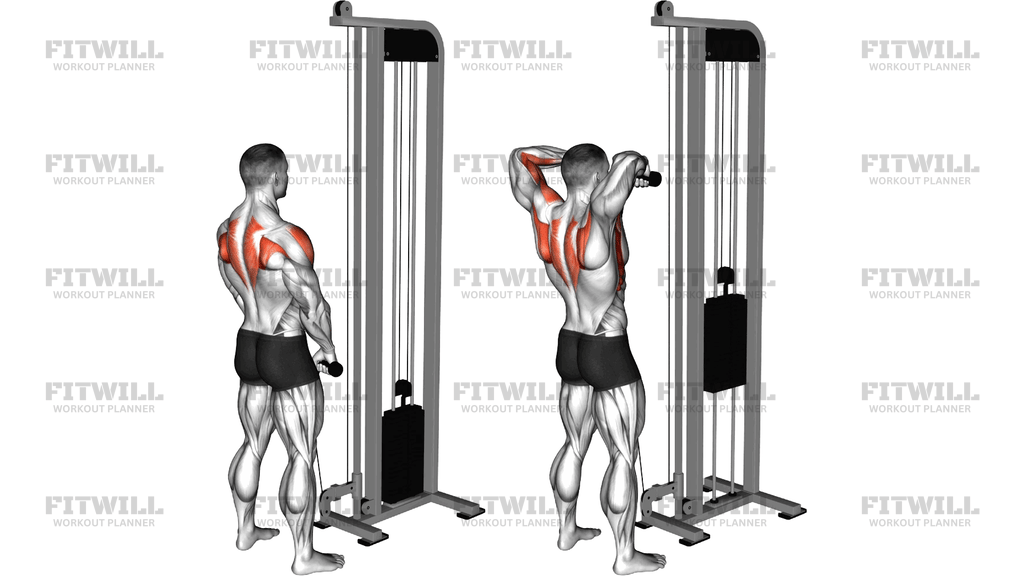
Cable High Pull With Rope Attachment is a standing cable pull that builds shoulder and upper-back strength with a rope attached to a low pulley. In the finished position the elbows are high and wide, the hands come up near the sides of the face or upper chest, and the shoulders stay packed rather than shrugged forward. The cable keeps tension on the whole rep, so the exercise is useful when you want a controlled pulling pattern instead of a fast, momentum-driven shrug.
The rope changes the feel of the movement. Each hand can travel slightly outside the line of the body, which helps the elbows rise naturally and lets the upper back, rear delts, traps, and arm flexors share the work. That makes the exercise a practical accessory for shoulder-focused sessions, upper-back work, or pull days when you want more vertical elbow drive without loading a barbell or machine too heavily. The setup matters because a cramped stance or a cable that starts too high tends to turn the rep into an awkward upright row with less room to accelerate the elbows.
A good rep starts with your feet planted, torso tall, and ribcage stacked over the pelvis. Pull the rope from the low position by leading with the elbows, not by curling the hands upward. The cable should travel close to the body as the elbows flare up and out, then the shoulder blades finish the rep by rotating and elevating under control. At the top, the neck stays long and the lower back stays quiet. On the way down, resist the stack and let the rope return smoothly so the next pull starts from a dead-still, organized position.
Use this movement when you want a shoulder-and-upper-back drill that still feels athletic and coordinated. It fits well in moderate rep ranges, as a warm-up for pulling work, or as assistance after heavier rows and presses. It is not a lift to rush. If the cable is yanking you forward, the elbows are dropping, or the torso is swinging to finish the pull, the load is too heavy or the pulley is set too high. Keep the motion clean, repeatable, and pain-free so the exercise trains the intended line of pull instead of irritating the shoulders.
[ Workout Log & Planner ]
Put your next workout in Fitwill
Keep your plan and training log ready when you are.


Instructions
- Attach a rope to a low cable pulley, stand facing the stack, and take a shoulder-width stance with soft knees and the rope hanging in front of your thighs.
- Hold the rope with a neutral grip, palms facing each other, and let your elbows point slightly out before you start.
- Set your chest tall, ribs down, and shoulder blades relaxed so the cable begins from a stable, upright posture.
- Pull by driving your elbows up and out, keeping the rope close to your torso as the hands travel toward your upper chest and face.
- Finish with the elbows high, the upper arms near shoulder height or a little above, and the neck long instead of shrugged forward.
- Pause for a brief moment at the top without leaning back or bouncing the stack.
- Lower the rope under control until your arms straighten and the weights settle back into the start position.
- Exhale as you pull and inhale as you return, then repeat for smooth, even reps.
Tips & Tricks
- Set the pulley low enough that the first inch of the pull is free instead of starting already at chest height.
- Keep the rope close to your body; if it drifts far forward, the pull usually turns into a front-delt lift instead of a high pull.
- Think about bringing the elbows up and out, not about hauling the hands straight up with the wrists.
- Stop the rep before your torso leans back to cheat the top position.
- Use a grip that lets the rope separate slightly at the finish so the shoulders can stay in a natural path.
- Keep the neck relaxed; shrugging the shoulders toward the ears too early can turn the upper traps on before the rest of the pull is organized.
- Lower the stack slowly enough that the shoulders are still loaded on the way down, not just on the pull.
- Choose a load that lets every rep reach the same top position without shortening the range as you fatigue.
Frequently Asked Questions
What muscles does the rope high pull train?
It mainly targets the shoulders and upper back, with the rear delts, traps, upper-back muscles, and arms all helping during the pull.
Why use a rope instead of a straight bar?
The rope lets the hands separate slightly at the top, which usually makes the elbow path feel smoother and keeps the shoulders from feeling jammed.
How high should the elbows go?
The elbows should finish high and wide, usually around shoulder height or a little above, as long as the neck stays relaxed and the lower back does not arch.
Should I lean back on the pull?
No. A small amount of body motion is normal on heavier reps, but the torso should stay mostly upright so the cable does not turn the rep into a swing.
Where should I feel the exercise most?
You should feel the side and rear shoulder area, the upper traps, and the upper back more than the arms alone.
Is this the same as an upright row?
It is closely related, but the rope and cable path usually make it feel more like a high pull with a stronger elbow drive and less fixed-bar restriction.
Can beginners do this exercise?
Yes, as long as the pulley is low and the load is light enough to keep the elbows moving cleanly without shrugging or swinging.
What is the biggest mistake with this movement?
Setting the cable too heavy or pulling with the hands instead of the elbows usually shortens the range and steals tension from the shoulders and upper back.