Diagonal Bend Hold
Diagonal Bend Hold is a standing bodyweight mobility drill that combines a wide stance, a diagonal fold, and a controlled cross-body reach. The pose lengthens the side of the trunk, opens the hip and back line on the bent side, and asks the torso to stay organized while the upper body moves toward the opposite foot. Because the position is held instead of bounced through, it is useful for teaching clean alignment and a calm breathing rhythm under stretch.
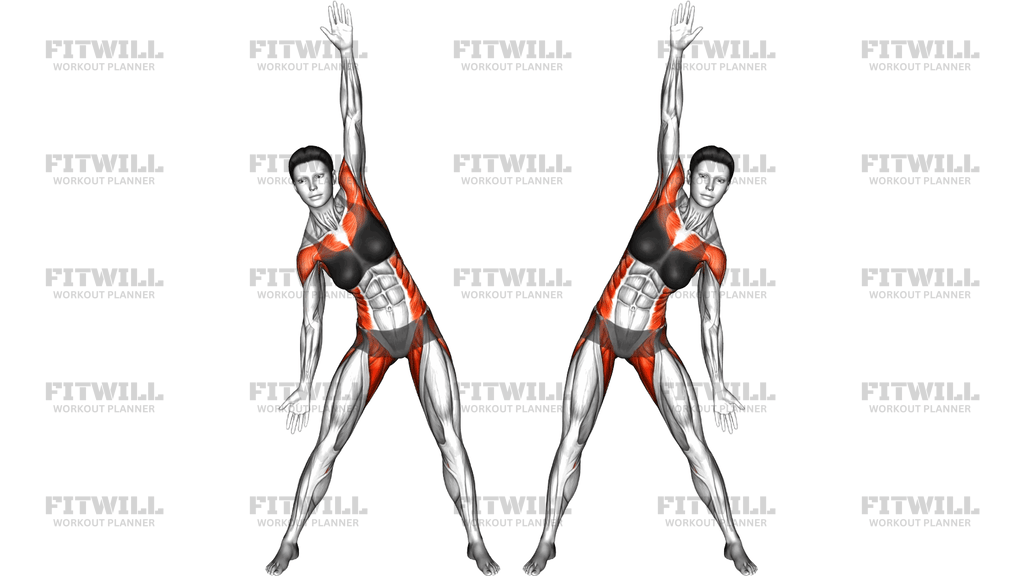
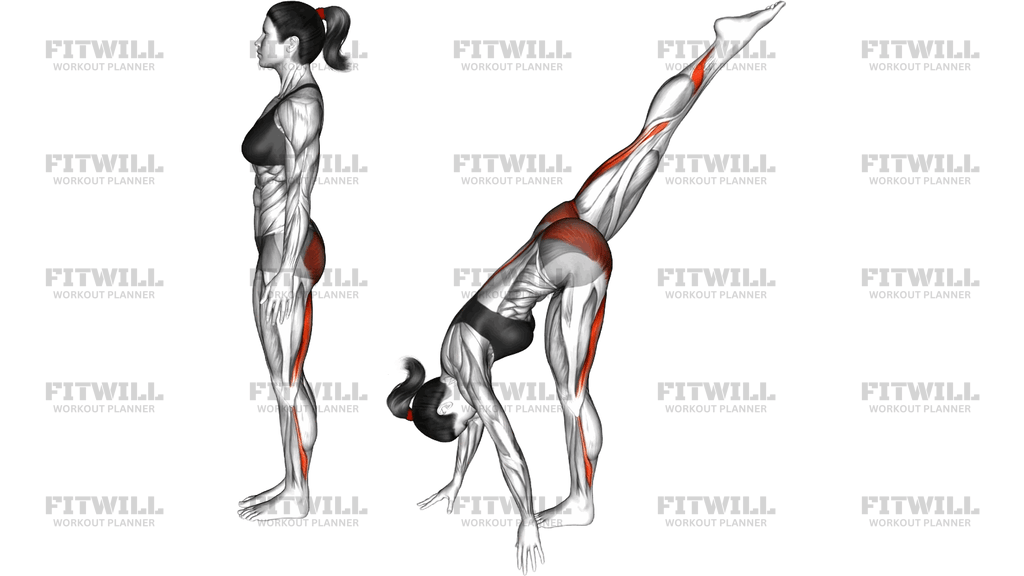
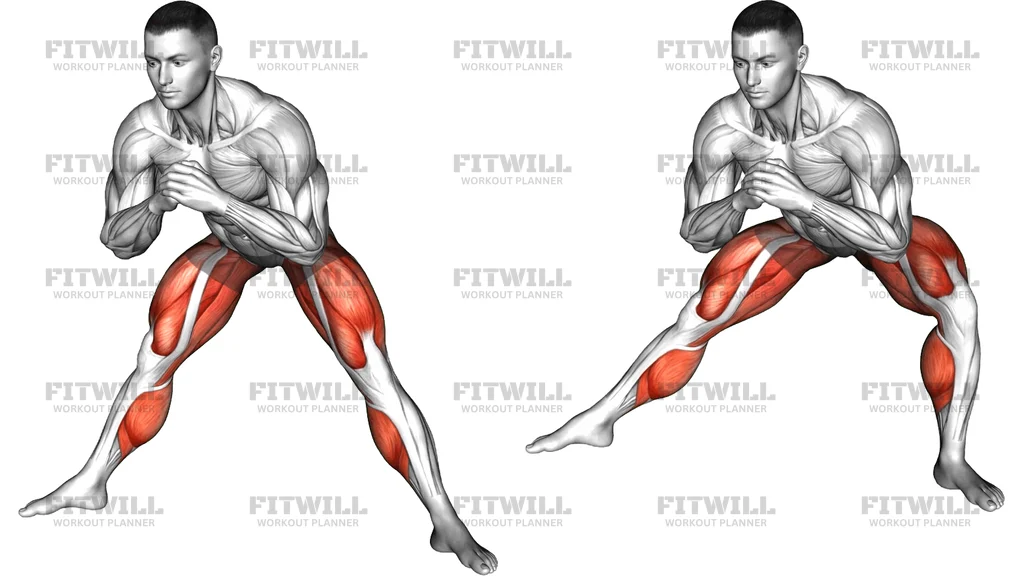
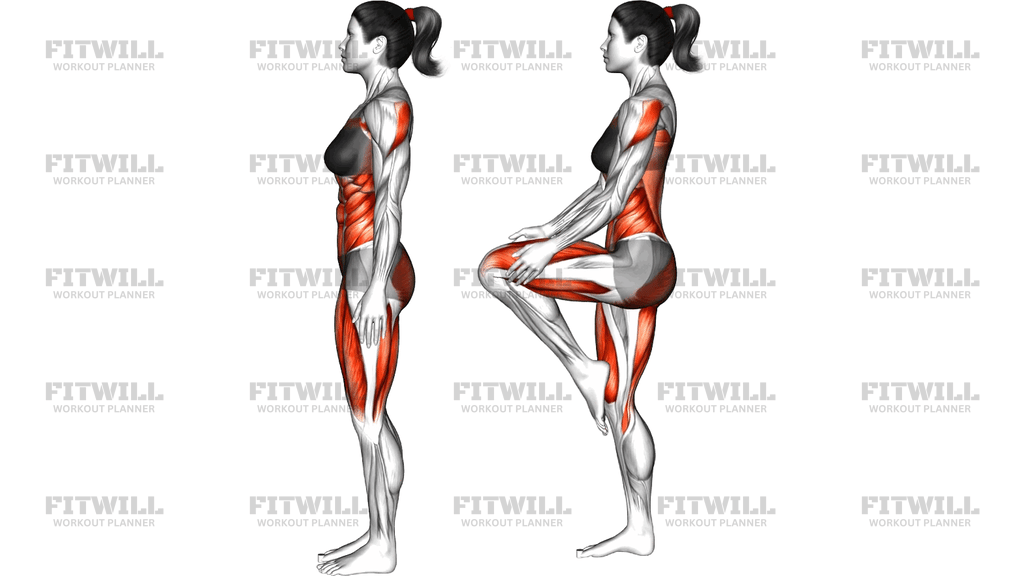
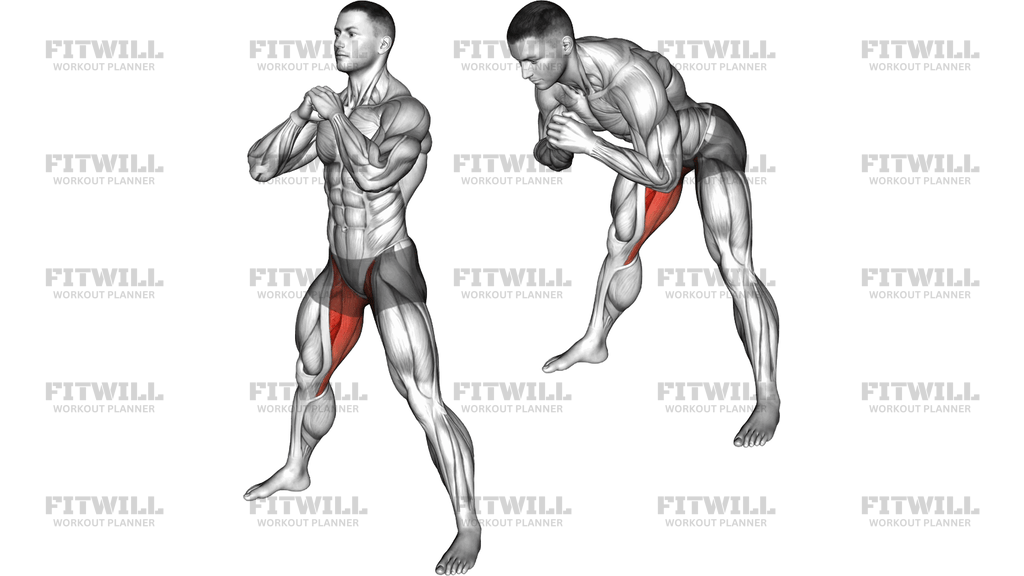
The wide stance matters because it gives you space to shift the hips back and keep the knees from collapsing inward as you fold. From the image, the torso stays long as it tips diagonally rather than simply dropping straight down. That diagonal path is what makes the movement feel different from a standard toe touch: the body rotates and reaches across the midline, so the trunk and posterior chain have to control the shape instead of letting gravity pull everything loose.
Perform the hold by setting the feet wide, grounding both heels, and hinging at the hips before reaching one hand toward the opposite shin or foot. Keep the spine long as you lower, then settle into the end position with tension still active through the legs and midsection. Hold the position without bouncing, breathe into the stretched side, and return to standing with control before repeating on the other side.
This exercise fits well in warm-ups, mobility circuits, or recovery work when you want a low-load stretch that still asks for coordination. It can also serve as a preparation drill before squats, lunges, or rotational training because it encourages a stable pelvis and an organized trunk. Keep the range comfortable, especially if your hamstrings, groin, or lower back are tight, and shorten the reach if the torso begins to round or twist aggressively.
The main goal is not to force depth but to maintain shape: wide feet, controlled hip hinge, calm breathing, and a deliberate diagonal line through the body. If the hold causes pinching in the back or sharp discomfort in the hip, reduce the range or stand taller. Clean positioning matters more than how close the hand gets to the floor.
[ Workout Log & Planner ]
Put your next workout in Fitwill
Keep your plan and training log ready when you are.


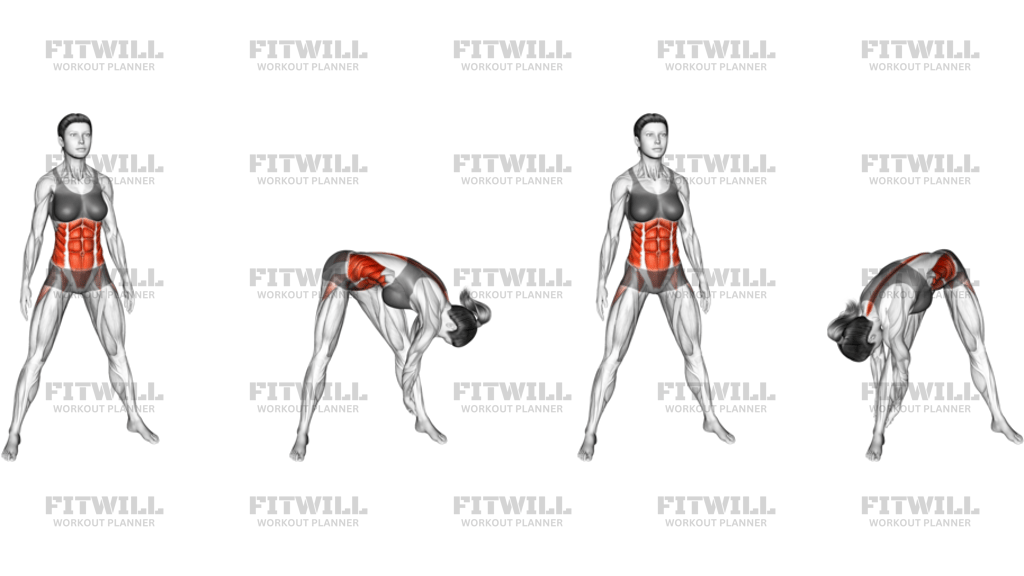
Instructions
- Stand with your feet wider than shoulder width and spread your weight evenly through both heels.
- Keep your knees softly bent and hinge at the hips so your pelvis moves back before your torso folds forward.
- Let one arm travel diagonally across your body toward the opposite shin or foot while the other arm stays relaxed for balance.
- Keep your chest long and your spine extended as you descend instead of collapsing through the lower back.
- Settle into the bottom position with your hips square and your weight still grounded through both feet.
- Hold the stretch without bouncing and breathe slowly into the side of the trunk and back of the leg you feel lengthening.
- Use a small amount of tension in the legs and midsection so the position stays active rather than hanging on the joints.
- Return to standing by driving through the heels and lifting the chest under control.
- Repeat on the other side with the same range and tempo.
- Finish the set if the torso starts to twist, the knees drift inward, or the back loses its long shape.
Tips & Tricks
- Keep the reach diagonal, not straight down, so you preserve the cross-body line shown in the image.
- Let the hips travel back first; if you fold only through the waist, the lower back usually takes over.
- A soft bend in the knees is usually better than locked legs, especially if the hamstrings feel restrictive.
- Ground both heels so the stance stays stable when your torso shifts toward one side.
- Think about lengthening the side body instead of chasing the floor with your hand.
- Breathe slowly through the hold and avoid holding your breath while the trunk is under stretch.
- If the shoulder reaches past comfort, shorten the arm line and keep the chest open rather than forcing the touch.
- Use a smaller range if you feel the stretch in the low back more than the side body or posterior chain.
- Move from side to side with the same control on each rep instead of dropping faster to one side.
- Stop before the posture becomes a rounded forward fold; the shape of the torso is more important than depth.
Frequently Asked Questions
What does Diagonal Bend Hold stretch most?
It mainly targets the side body, hips, and back line of the bent side while also asking the trunk to stay organized.
Can beginners perform this exercise?
Yes. Beginners usually do best with a shorter range, a softer knee bend, and a slower hold.
Do I need to touch the floor or opposite foot?
No. Reaching toward the shin or lower leg is enough if the spine stays long and the hips remain controlled.
Why is the stance so wide?
The wider base gives room for the diagonal fold and helps keep the knees and pelvis stable as you reach across the body.
Should I feel this in my hamstrings or side body?
Both can be involved, but the stretch should feel controlled and evenly distributed rather than sharp in one joint.
Is this a rotation exercise?
It has a cross-body reach, but the torso should stay organized. Avoid cranking into a big twist to get lower.
Where does this fit in a workout?
It works well in a warm-up, mobility sequence, or recovery block before lower-body training.
What should I do if my lower back feels it more than my legs?
Reduce the depth, soften the knees, and hinge back from the hips so the spine does not round forward.