Forward Bend Back Stretch
Forward Bend Back Stretch is a standing mobility stretch built around a controlled hip hinge, a long spine, and an open shoulder position. The exercise uses body weight and an exercise mat mainly for stable footing, so the movement stays calm and deliberate instead of turning into a rushed toe-touch. Done well, it gives a useful stretch through the hamstrings, lats, spinal muscles, glutes, and the backs of the shoulders.
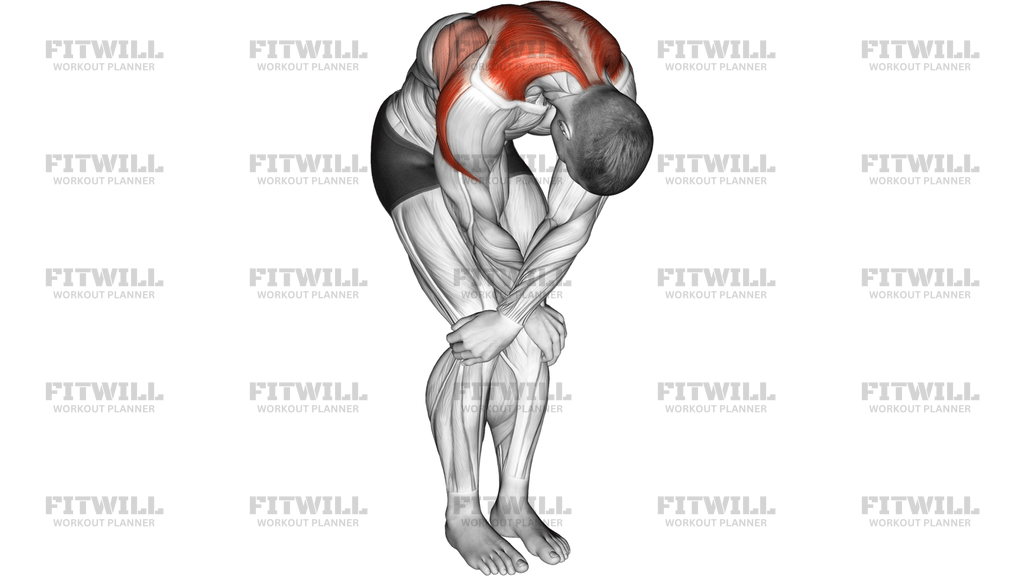
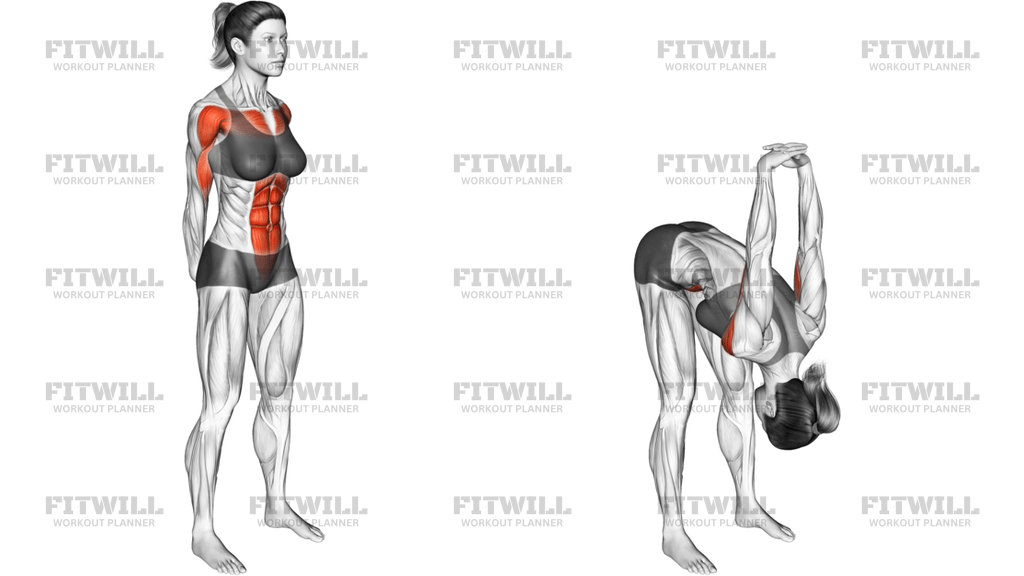
The setup matters because the hand position and torso angle determine where the stretch lands. Stand tall with your feet set firmly on the mat, then take the hands into the behind-the-body clasp shown in the image before you fold. Keeping the shoulders organized and the rib cage stacked over the pelvis helps the stretch stay in the back line of the body instead of dumping into the lower back. If the shoulders are tight, the clasp should stay low and relaxed rather than forced higher.
From there, the repetition is a slow hinge, not a collapse. Send the hips back, keep the knees softly unlocked if needed, and let the torso travel forward while the spine stays long. As you fold, the clasped arms should move away from the body only as far as the shoulders allow, with the neck staying relaxed and the weight balanced through the mid-foot and heels. Breathe out as you settle into the end range, then use an inhale to come back up under control.
This stretch works best in warmups, cooldowns, or mobility work before pulling, hinging, or overhead sessions. The goal is a repeatable stretch that feels open and organized, not a maximal depth test. If the lower back pinches, the knees lock hard, or the shoulders get yanked forward, reduce the range and reset the posture. The best reps look smooth, symmetrical, and easy to reproduce from one hold to the next.
[ Workout Log & Planner ]
Put your next workout in Fitwill
Keep your plan and training log ready when you are.


Instructions
- Stand on the mat with your feet about hip-width apart and place the hands into the behind-the-body clasp shown in the image.
- Keep your chest tall, neck long, and shoulders gently set down before you start the fold.
- Unlock the knees slightly so you can hinge cleanly instead of locking into the joint.
- Push the hips back and fold forward from the hip crease while keeping the spine long.
- Let the clasped arms drift away from the body only as far as your shoulders allow without strain.
- Keep your weight balanced through the heels and mid-foot as you settle into the stretch.
- Exhale into the end range, then hold for a calm breath or two without bouncing.
- Inhale to return by driving the hips forward and stacking the spine back to standing before resetting.
Tips & Tricks
- Think hip hinge first; if the low back rounds early, reduce the depth and send the hips farther back.
- A small bend in the knees usually makes the stretch better for the hamstrings and easier on the lower back.
- Keep the hand clasp low and relaxed; forcing the shoulders higher can turn the stretch into a front-of-shoulder pinch.
- Let the exhale lengthen the fold instead of trying to yank yourself deeper.
- Keep the ribs from flaring as you open the back line of the body.
- If balance feels shaky, widen the stance a little and keep the feet rooted to the mat.
- Stop the descent when the stretch is strong but still smooth; this movement should not feel sharp or jammed.
- Use a slower return than the descent so the spine stacks back up under control.
Frequently Asked Questions
What does the Forward Bend Back Stretch work most?
It mainly targets the posterior chain and shoulder girdle, especially the hamstrings, lats, glutes, spinal muscles, and the back of the shoulders.
Do I need to keep the hand clasp behind my back the whole time?
Yes. Keep the clasp behind the body and let the arms drift away only as far as your shoulders and wrists allow without strain.
Should my knees stay straight in this forward bend?
Not necessarily. A soft bend in the knees is usually better because it keeps the hinge clean and reduces tugging behind the knees.
Why do I feel this in my lower back instead of my hamstrings?
That usually means you are rounding early or folding too far. Hinge at the hips, keep the spine long, and shorten the range until the stretch moves out of the low back.
Is this stretch good before back or shoulder workouts?
Yes. It works well in a warm-up before pulling, hinging, or overhead work because it opens the back line without needing heavy effort.
How deep should I fold forward?
Only as deep as you can keep the shoulders relaxed, the chest organized, and the stretch smooth. Depth matters less than control here.
Can beginners use the Forward Bend Back Stretch safely?
Yes, as long as they start with a shallow hinge, soft knees, and no forcing through the shoulders or lower back.
What should I do if the clasp hurts my wrists or shoulders?
Reduce the grip tension, keep the hands lower, or shorten the range. The stretch should open the back of the body, not create joint pain.