Shoulder Internal Rotation Test
Shoulder Internal Rotation Test is a controlled screen for how well the shoulder turns inward while the upper arm stays organized. It is less about moving a load and more about comparing range, comfort, and control from one side to the other. A useful test gives you a clean picture of shoulder mobility before pressing, throwing, reaching, or overhead work.
The test checks how freely the humerus can rotate inward, how well the rotator cuff and posterior shoulder tolerate that motion, and whether the rib cage or torso tries to steal range. When the setup is consistent, the result tells you much more than a rushed reach or a twist through the trunk. That makes the test valuable for warm-ups, prehab sessions, and return-to-training checks.
Setup matters because this movement is easy to fake. If the shoulder rolls forward, the ribs flare, or the wrist bends to buy extra distance, the test stops being meaningful. Keep the neck long, let the shoulder blade stay gently set, and rotate only as far as the arm can move without pain or twisting. The goal is a repeatable end range, not the biggest possible reach.
Perform the test slowly and compare both sides with the same body position, tempo, and breathing. Stop at the first hard block, pinch, or sharp stretch. A small amount of muscular effort is normal, but the motion should feel smooth and controlled, not forced. If one side is clearly limited, use that information to guide mobility work and exercise selection instead of pushing through the restriction.
This test is especially useful after long periods of sitting, after shoulder-dominant training, or before a session that depends on clean overhead mechanics. Treat it as feedback, not a competition. The best result is a honest measurement that helps you decide whether the shoulder is ready for training and whether one side needs extra attention before you load it.
[ Workout Log & Planner ]
Put your next workout in Fitwill
Keep your plan and training log ready when you are.


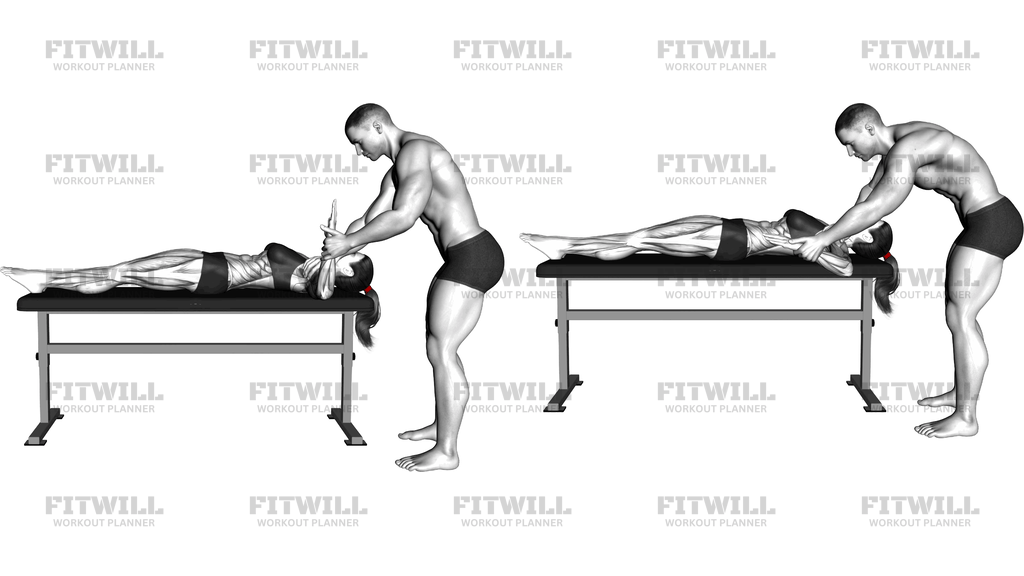
Instructions
- Stand or sit tall with your feet grounded and your ribs stacked over your pelvis.
- Bend the test elbow to 90 degrees and keep the upper arm close to your side.
- Set the shoulder blade gently back and down without pinching it hard together.
- Keep the wrist neutral and relax the forearm before you start the rotation.
- Rotate the forearm inward slowly while keeping the elbow and upper arm still.
- Stop when you feel a firm end range, a mild stretch, or the first sign the torso wants to twist.
- Hold the end position briefly, breathe out, and avoid shrugging or leaning.
- Return to the start with control and repeat the same path on the other side for comparison.
Tips & Tricks
- Match the setup on both sides before judging range, including elbow angle and trunk position.
- Keep the elbow pinned to your side; letting it drift forward will usually fake extra internal rotation.
- Do not flare the ribs or lean backward to buy range.
- A slow exhale often reveals a cleaner end range than holding your breath.
- Compare the sensation at the back of the shoulder, not just how far the hand moves.
- If the wrist bends hard, the forearm is compensating for a limited shoulder.
- Mild muscular effort is normal, but sharp pinching at the front of the shoulder is not.
- Retest after mobility work only if you can reproduce the same starting position exactly.
Frequently Asked Questions
What does Shoulder Internal Rotation Test evaluate?
It checks shoulder internal rotation range, side-to-side symmetry, and whether the torso stays quiet while the arm moves.
Should I feel a stretch in the back of the shoulder?
Often yes, especially near the posterior shoulder and rotator cuff, but it should feel controlled rather than sharp or pinchy.
Do I need equipment for this test?
No. This version is usually done as a bodyweight assessment using position, control, and range rather than load.
Why keep the elbow close to my side?
It reduces cheating through shoulder abduction and makes the internal rotation measurement more meaningful.
What if one side rotates much less than the other?
That usually points to a mobility or control difference worth addressing before heavy pressing or overhead work.
Is it normal for my torso to want to twist?
A small urge can happen, but the test should stay square so the shoulder is doing the work instead of the trunk.
Can beginners do this safely?
Yes, as long as they move slowly, avoid pain, and stop at the first clear restriction.
When should I avoid this test?
Skip it or get guidance if the motion causes sharp pain, numbness, or a strong front-shoulder pinch.